- Language
cat6a solid cable
Cat6a Solid Cable: Technical Specifications & Core Advantages
Cat6a Solid Cable, also known as Cat6a Solid Core Network Cable or Cat6a Solid Ethernet Cable, is a high-performance structured cabling solution designed in full compliance with TIA/EIA 568-C.2 and ISO/IEC 11801 standards. Unlike stranded cables (commonly used for patch cords), it features solid copper conductors, making it ideal for permanent, long-distance network infrastructure cabling. It is mainly used for horizontal and backbone wiring in local area networks (LANs), connecting network devices such as switches, routers, servers, and patch panels in enterprise computer rooms, data centers, office buildings, industrial parks, and high-definition surveillance systems. Focusing on the three core needs of high speed, stability, and anti-interference, the product breaks through the limitations of traditional solid cables, such as insufficient bandwidth, weak anti-interference ability, and poor signal integrity over long distances. Adopting precision solid conductor design, optimized twisting technology, and advanced shielding structure, it supports 10-Gigabit Ethernet transmission with a bandwidth of up to 550MHz, enabling stable high-speed data transmission within 100 meters. At the same time, it is backward compatible with older network devices and cabling systems such as Cat5e and Cat6, taking into account current usage needs and future network upgrade reserves, providing a reliable, durable, and future-proof transmission foundation for high-speed network applications such as big data, cloud computing, 4K/8K streaming media, and PoE power supply.
I. Core Hardware Configuration (Technical Parameters)
Cat6a Solid Cable adopts full-link standardized production process, strictly controlling conductor material, twisting precision, shielding effect, and insulation quality, balancing transmission performance, physical durability, and environmental adaptability. It is designed for long-term fixed installation, able to withstand wiring pulling, environmental erosion, and daily wear, adapting to various indoor and outdoor structured cabling scenarios (including wall cabling, pipeline cabling, and ceiling cabling), and meeting the high-speed, stable connection needs of large-scale network infrastructure.
Conductor Material & Structure: Adopting high-purity oxygen-free solid copper conductors with a wire gauge of 23AWG or 24AWG (solid core diameter: 0.57mm for 23AWG, 0.51mm for 24AWG), it has superior electrical conductivity, lower signal transmission attenuation, and minimal signal loss compared to stranded conductors, fully complying with global communication cable specifications, effectively improving the stability, fidelity, and transmission distance of data signals. It adopts a four-pair precision twisting design with encrypted and precisely controlled twist pitch; the twisting density and angle of each pair of twisted pairs are scientifically optimized to minimize near-end crosstalk (NEXT), far-end crosstalk (FEXT), and alien crosstalk (AXT) between wire pairs, while reducing the impact of external electromagnetic interference (EMI) and radio frequency interference (RFI) on transmission signals, ensuring no signal distortion or packet loss during high-speed, long-distance transmission.
Insulation & Sheath Material: The insulation layer of each conductor is made of high-density PE (Polyethylene) foam material with excellent insulation performance, which can effectively isolate signal interference between adjacent wire pairs, prevent signal leakage, and has good temperature resistance, pressure resistance, and wear resistance. The operating temperature range is -20℃~75℃, adapting to harsh installation environments such as high and low temperatures. The cable sheath is available in two environmentally friendly options: PVC (Polyvinyl Chloride) and LSZH (Low Smoke Zero Halogen). PVC sheath is cost-effective, flexible, and easy to install, suitable for general indoor cabling scenarios; LSZH sheath is non-toxic, flame-retardant, and low-smoke, producing no toxic halogen gas or dense smoke when burned, meeting high fire safety requirements of public buildings, data centers, and industrial sites. The sheath is thick and durable, resistant to aging, cracking, and chemical corrosion, ensuring a long service life of more than 20 years under normal use.
Transmission Performance Parameters: It supports a maximum bandwidth of 550MHz and a peak transmission rate of 10Gbps, far exceeding the performance of Cat6 solid cables (250MHz, 1Gbps), and can easily carry high-bandwidth network applications such as big data transmission, 4K/8K high-definition video surveillance, cloud computing, video conferencing, and smart building systems. The standard transmission distance is 100 meters, and it can stably maintain 10Gbps transmission rate within this range without the need for signal amplifiers or repeaters, which is significantly better than Cat6 solid cables (only supporting 10Gbps within 55 meters), making it suitable for long-distance horizontal and backbone cabling. Key transmission indicators meet international standards: signal attenuation ≤24dB/100m (100MHz), near-end crosstalk (NEXT) ≥40dB, far-end crosstalk (FEXT) ≥35dB, return loss ≥15dB, and alien crosstalk (AXT) ≥30dB. Each batch of cables undergoes strict Fluke channel and permanent link testing before leaving the factory to ensure consistent performance and eliminate unqualified products.
Shielding Type & Anti-Interference Performance: Three shielding specifications are available to adapt to different interference environments: Unshielded (UTP), Foil-Shielded (FTP), and Screened Foil-Shielded (SSTP/SFTP). UTP Cat6a solid cable adopts optimized four-pair twisting technology without additional shielding layer, featuring light weight, easy installation, and moderate cost, suitable for cabling scenarios with low interference such as general office areas and residential buildings. FTP Cat6a solid cable is wrapped with aluminum foil around the four pairs of twisted pairs, effectively isolating external EMI/RFI interference and reducing signal radiation, suitable for scenarios with moderate interference such as small data centers and surveillance rooms. SSTP/SFTP Cat6a solid cable adopts double shielding design (aluminum foil + tinned copper braid), providing enhanced anti-interference performance, which can effectively resist strong electromagnetic interference from industrial equipment, power cables, and radio signals, making it ideal for high-interference environments such as industrial sites, large data centers, and communication machine rooms.
Cable Specifications & Dimensions: The outer diameter of the cable is 6.3±0.4mm (UTP) / 6.8±0.4mm (FTP) / 7.2±0.4mm (SSTP), with moderate thickness, easy to pull through pipelines, trunking, and wall holes, facilitating structured cabling and later maintenance. The cable is supplied in continuous reels (usually 305 meters per reel, 1000 feet), which can be cut according to actual cabling length, avoiding waste and cable redundancy. The core wire color sequence follows the T568B standard (white/orange, orange, white/green, blue, white/blue, green, white/brown, brown), ensuring compatibility with various network devices and patch cords, and facilitating on-site wiring and identification.
Compatibility & Additional Functions: It is fully compatible with IEEE 802.3ab, IEEE 802.3ae, and other network standards, supporting 10Base-T, 100Base-TX, 1000Base-T, and 10GBase-T Ethernet protocols, and can be seamlessly connected with Cat5e, Cat6, and Cat6a network devices, patch panels, and patch cords, reducing network upgrade costs and realizing "one-time cabling, long-term adaptation". It supports PoE/PoE+/PoE++ (IEEE 802.3af/at/bt) power supply, capable of transmitting both data and power through a single cable, providing power for PoE devices such as IP cameras, wireless APs, IP phones, and smart sensors, eliminating the need for separate power wiring, reducing cabling costs and construction difficulty, and improving cabling flexibility.
II. Core Advantages & Application Advantages
Compared with traditional Cat6 solid cables and Cat6a stranded patch cords, Cat6a solid cable has obvious advantages in transmission performance, durability, and applicability, making it the preferred choice for large-scale network infrastructure cabling, and effectively solving the pain points of traditional cabling such as unstable long-distance transmission, poor anti-interference, and short service life.
Superior Long-Distance Transmission Performance: The solid copper conductor has lower signal attenuation and better signal integrity than stranded conductors, enabling stable 10Gbps transmission within 100 meters, which is suitable for horizontal cabling (between floor distribution frames and workstations) and backbone cabling (between building distribution frames and main distribution frames) in large buildings, avoiding signal degradation caused by long-distance transmission and ensuring the stability of the entire network.
Strong Anti-Interference Ability: Optimized four-pair twisting technology combined with optional multi-layer shielding design effectively suppresses crosstalk (NEXT/FEXT/AXT) and external EMI/RFI interference, ensuring that the cable can maintain stable transmission even in complex environments with dense power cables, industrial equipment, and radio signals, which is particularly important for high-sensitivity devices such as surveillance cameras and servers.
Durable & Reliable: The solid conductor is not easy to break or deform, and the thick, wear-resistant sheath is resistant to aging, corrosion, and mechanical damage, able to withstand the pulling force during cabling and long-term environmental erosion, with a service life of more than 20 years, which is much longer than that of stranded patch cords, reducing the cost of later maintenance and replacement.
Cost-Effective & Future-Proof: As a permanent cabling solution, it is supplied in large reels, which is more cost-effective than using a large number of stranded patch cords for long-distance cabling. At the same time, it supports 10Gbps transmission and is backward compatible with existing network devices, meeting the needs of future network upgrades (such as 5G, 8K, and cloud computing), avoiding the waste of repeated cabling and realizing long-term investment returns.
Easy to Install & Maintain: The cable is flexible and easy to pull through pipelines and trunking, and the standard color sequence facilitates on-site wiring, identification, and maintenance. The solid conductor is easy to terminate with patch panels and keystone jacks, ensuring stable contact and reducing termination failures. It is suitable for large-scale structured cabling projects, improving construction efficiency and reducing construction costs.
III. Applicable Scenarios & Technical Support
Applicable Scenarios: Cat6a solid cable is mainly used for permanent structured cabling of network infrastructure, suitable for various mid-to-high-end scenarios such as enterprise computer rooms, data centers, office buildings, industrial parks, smart campuses, smart communities, high-definition surveillance systems, and smart buildings. It is especially suitable for long-distance cabling scenarios that require high transmission speed, stability, and anti-interference, such as horizontal cabling between floors, backbone cabling between buildings, and cabling in industrial production areas with strong interference.
Technical Support: We provide strict quality control and comprehensive technical support. All cables comply with international standards and pass CE, FCC, UL, and national 3C certifications, ensuring product quality and safety. We offer OTA-related technical guidance, including cabling design, termination operation, and performance testing, to help customers avoid common problems during construction. Our professional technical team responds to customer questions (cabling solutions, performance debugging, product maintenance, etc.) within 24 hours. We also provide customized services, including custom cable length, sheath color, and shielding type, to meet the personalized cabling needs of different projects.
-
-
-
-
-
-
-
-
-
-
Single-Port Network Panel
May 15, 2026327
-
CAT6 Ethernet Crossover Cable
May 14, 2026254
-
CAT6 Outdoor Shielded Cable
Apr 17, 2026244
-
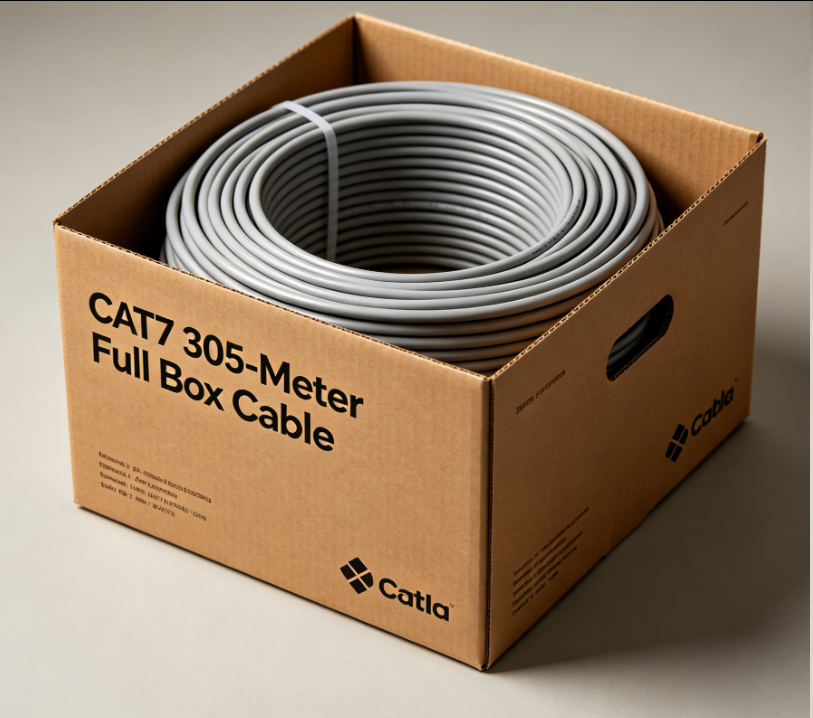
CAT7 305-Meter Full Box Cable
Apr 15, 2026238
-
Outdoor 10G Network Patch Cord Cat6a
May 19, 2026236