- Language
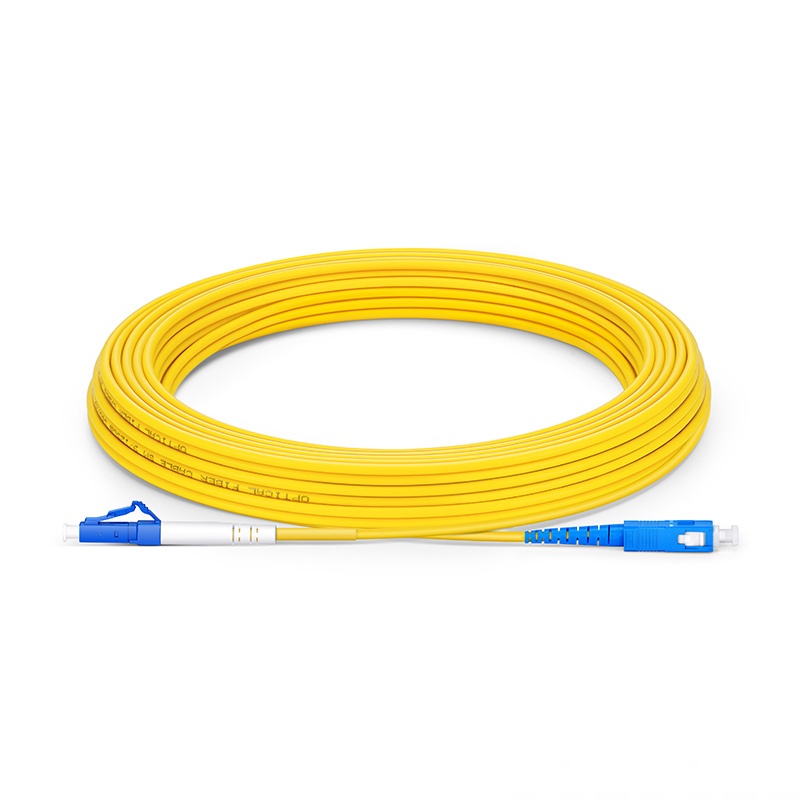
5G base station dedicated outdoor fiber optic cable
1. Product Overview
The 5G base station dedicated outdoor fiber optic cable is specifically designed for outdoor deployment scenarios of 5G macro base stations, micro base stations, and small cells. It is optimized to support high-speed data transmission for 5G services (e.g., Massive MIMO, edge computing, and ultra-reliable low-latency communication), while withstanding the rigors of outdoor environments such as temperature extremes, wind loads, and moisture. The cable combines low transmission loss, excellent mechanical stability, and anti-interference performance, ensuring long-term reliable operation of 5G base station backhaul and fronthaul networks.
2. Core Structural Features
• Fiber Configuration: Adopts ITU-T G.652D/G.657A2/G.657B3 low-loss fibers, available in 4–96 core counts. The fibers feature a tight-buffered (900μm) or loose-tube design; loose tubes are filled with water-blocking gel and wrapped in longitudinal water-blocking tape to achieve full-length water resistance. G.657A2/B3 fibers offer a small bending radius (≥7.5D static, ≥15D dynamic), adapting to the limited installation space of base station towers and equipment cabinets.
• Central Strength Member: High-modulus FRP (Fiber Reinforced Plastic) or galvanized steel wire serves as the central core, providing superior tensile strength (1200N–2000N) and anti-buckling performance. It ensures structural integrity during aerial suspension (on base station towers), duct installation, or direct burial, preventing fiber damage from external forces.
• Protective Sheath: Uses UV-resistant, abrasion-resistant, and corrosion-resistant HDPE (High-Density Polyethylene) or LSZH (Low Smoke Zero Halogen) sheath. The sheath is engineered with enhanced toughness to withstand wind vibration, impact, and rodent bites; optional steel tape armor is available for direct burial scenarios, improving crush resistance (≥3500N/100mm) and anti-rodent performance.
• Anti-Interference Design: Non-metallic structure option (FRP strength member + non-metallic sheath) eliminates electromagnetic interference (EMI) and radio frequency interference (RFI), avoiding signal disruption from 5G base station antennas and other electronic equipment. Metallic armor version features grounding compatibility for additional protection against static electricity.
• Compact & Lightweight Structure: Optimized stranding and sheath design reduces the cable’s outer diameter and weight (≤12mm for 24-core, ≤16mm for 48-core), facilitating installation on base station towers and in narrow ducts, while reducing load on mounting brackets.
3. Key Technical Advantages
• Low Latency & High Bandwidth: Complies with ITU-T standards, featuring ultra-low insertion loss (≤0.35dB/km at 1310nm, ≤0.21dB/km at 1550nm) and high return loss (≥55dB). Supports 100G/200G/400G Ethernet and WDM systems, meeting the high-bandwidth requirements of 5G base station backhaul (e.g., 5G-A 10Gbps+ fronthaul links).
• Superior Mechanical Reliability: Designed to withstand the mechanical stresses of base station deployment: tensile strength up to 2000N (steel core), excellent anti-torsion and anti-bending performance, and resistance to wind-induced vibration fatigue. The cable maintains stable performance under repeated bending during installation and maintenance.
• Extreme Environmental Adaptability: Operates reliably in a wide temperature range of -40℃ to +85℃, adapting to harsh outdoor conditions such as deserts, plateaus, coastal areas, and high-humidity regions. UV stabilization and ozone resistance extend the service life to over 30 years, matching the operational lifecycle of 5G base stations.
• Anti-Interference & Safety: Non-metallic structure avoids EMI/RFI, ensuring clean signal transmission in the electromagnetic environment of 5G base stations. LSZH sheath option provides flame retardancy and low toxicity, suitable for base stations in residential areas or public spaces.
• Easy Installation & Scalability: Lightweight and flexible design simplifies aerial, duct, and direct burial installation, reducing labor and equipment costs. The modular fiber configuration supports on-demand capacity expansion (e.g., upgrading from 12-core to 24-core) without replacing the entire cable, adapting to the evolving needs of 5G networks.
4. Typical Applications
• 5G macro base station, micro base station, and small cell backhaul/fronthaul networks
• Aerial installation on base station towers, duct deployment in urban underground pipelines, and direct burial in suburban/rural areas
• 5G communication infrastructure in industrial parks, transportation hubs (airports, railways), and smart cities
• Edge computing node connections for low-latency 5G services (e.g., autonomous driving, remote healthcare)
• 5G network extension and capacity expansion projects in urban and rural areas
• Outdoor communication links between 5G base stations and core networks/aggregation nodes
-
-
-
-
-
-
-
-
-
-
Network Patch Cord Cat8
Oct 23, 202592
-
Network Rack Wall Mount with Glass Door
Jan 07, 202679
-
Network Rack Wall Mount 9U
Jan 06, 202675
-

Network Cable Management Tray
Oct 30, 202573
-
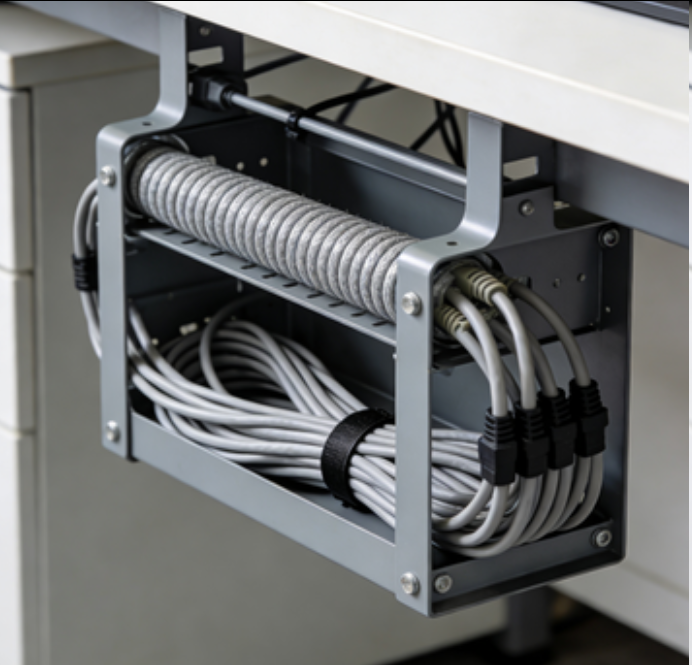
Network Cable Management Under Desk
Dec 25, 202572