- Language
LSZH jacket outdoor fiber optic cable
1. Product Overview
The LSZH jacket outdoor fiber optic cable is specifically engineered for outdoor communication networks where safety, environmental friendliness, and reliability are critical. Its core advantage lies in the LSZH sheath material, which eliminates halogen-containing components and minimizes smoke emission during combustion, ensuring low toxicity and reduced fire hazards. Combined with robust mechanical structure and optimized fiber protection, the cable delivers stable transmission performance in diverse outdoor environments, supporting high-speed data, voice, and video services for long-term operation.
2. Core Structural Features
• LSZH Sheath: The outer sheath is made of high-grade LSZH compound, compliant with IEC 60332-3 and IEC 60754 standards. It features flame retardancy (vertical flame test passed), low smoke density (maximum smoke density ≤ 200), and zero halogen emission, avoiding toxic gas release in fire incidents. The sheath also offers excellent UV resistance, abrasion resistance, and corrosion resistance, adapting to harsh outdoor conditions.
• Central Strength Member: High-modulus FRP (Fiber Reinforced Plastic) or galvanized steel wire serves as the central strength component, providing superior tensile strength (up to 1800N for steel core) and anti-buckling performance. It ensures structural integrity during aerial, duct, or direct burial installation, preventing fiber damage from external forces.
• Fiber Configuration: Available in loose tube or tight-buffered designs, accommodating 2–144 fiber cores (compatible with ITU-T G.652D/G.657A1/G.657A2 fibers). Loose tube version uses water-blocking gel filling and longitudinally water-blocking tape to prevent moisture ingress; tight-buffered fibers (900μm) offer enhanced mechanical protection for direct termination.
• Buffer Layer & Armor (Optional): For harsh outdoor scenarios (e.g., direct burial, rodent-prone areas), an optional steel tape or aluminum tape armor layer is integrated between the sheath and buffer layer, improving crush resistance (≥3500N/100mm) and anti-rodent performance without compromising flexibility.
• Water-Blocking System: Double water-blocking design (longitudinal water-blocking tape + water-blocking gel in loose tubes) achieves full-length water resistance, preventing moisture penetration and extending the cable’s service life.
3. Key Technical Advantages
• Safety & Environmental Friendliness: LSZH sheath emits minimal smoke and no toxic halogenated gases when exposed to fire, reducing risks to human health and equipment. It meets environmental protection requirements for green communication infrastructure, suitable for eco-sensitive areas.
• Superior Mechanical Reliability: Tensile strength ranges from 1000N to 1800N (depending on strength member), with excellent crush resistance and anti-torsion performance. The small bending radius (≥10D static, ≥20D dynamic) enables flexible routing in confined spaces such as ducts or building corners.
• Low Transmission Loss: Complies with ITU-T G.652D/G.657 standards, featuring low insertion loss (≤0.36dB/km at 1310nm, ≤0.22dB/km at 1550nm) and high return loss (≥50dB). It supports 10G/40G/100G Ethernet, WDM, and SDH systems, ensuring high-speed and stable data transmission.
• Extreme Environmental Adaptability: The LSZH sheath is UV-stabilized and resistant to ozone, acid, and alkali. The cable operates reliably in a wide temperature range (-40℃ to +70℃), adapting to outdoor environments such as deserts, plateaus, coastal areas, and high-humidity regions. Service life exceeds 25 years.
• Easy Installation & Compatibility: Lightweight and flexible design simplifies aerial, duct, and direct burial installation. The LSZH sheath is compatible with standard cable accessories (connectors, splice closures) and supports on-site termination, reducing deployment time and labor costs.
4. Typical Applications
• Fiber-to-the-Home (FTTH), Fiber-to-the-Building (FTTB), and access network deployments in residential areas, schools, and hospitals (safety-sensitive locations)
• Metropolitan area networks (MAN), backbone networks, and industrial park communication infrastructure
• Outdoor duct, aerial, and direct burial installations, including rodent-prone and eco-sensitive areas
• Communication systems in tunnels, subway stations, and high-rise building peripheries
• Emergency communication networks and temporary outdoor deployment requiring safety compliance
-
-
-
-
-
-
-
-
-
-
Network Patch Cord Cat8
Oct 23, 202592
-
Network Rack Wall Mount with Glass Door
Jan 07, 202679
-
Network Rack Wall Mount 9U
Jan 06, 202675
-

Network Cable Management Tray
Oct 30, 202573
-
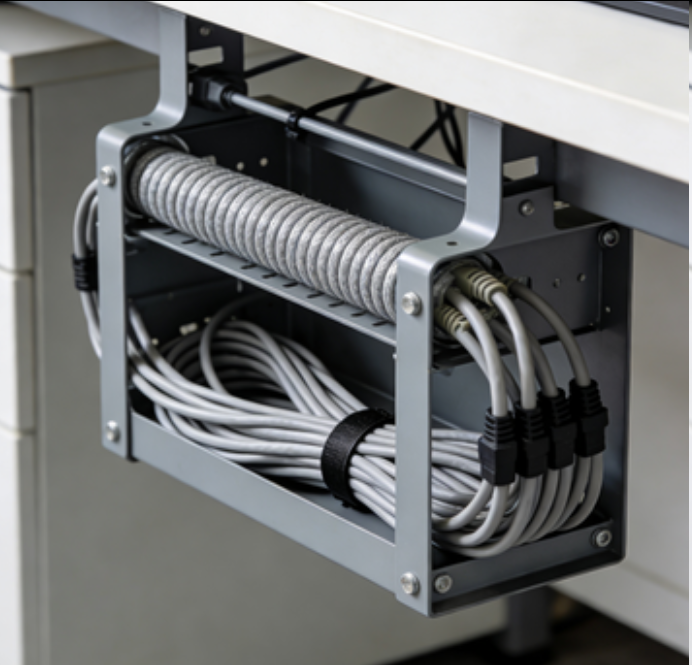
Network Cable Management Under Desk
Dec 25, 202572