- Language
outdoor fiber optic cable
Outdoor Fiber Optic Cable: Universal Solution for Rugged, High-Speed Outdoor Connectivity
As the backbone of modern outdoor communication infrastructure, outdoor fiber optic cable is engineered to deliver uncompromised performance, durability, and versatility across diverse harsh environments. Designed to adapt to aerial, underground, direct burial, or duct deployment, this cable integrates advanced optical technology with rugged construction—catering to the connectivity needs of telecom operators, enterprise networks, smart cities, and industrial systems worldwide. Whether facing extreme temperatures, moisture, UV radiation, or physical impact, it ensures stable, low-loss data transmission for critical applications.
Core Technical Features
Fiber Configuration & Performance
Available in both single-mode (SMF-28e/G.652D/G.657A1/A2) and multimode (OM3/OM4/OM5) variants, the cable supports flexible bandwidth and distance requirements. Single-mode fibers enable long-haul transmission (up to 80 km) with ultra-low attenuation (<0.35 dB/km at 1310 nm; <0.20 dB/km at 1550 nm), ideal for telecom backbones and remote connectivity. Multimode options deliver high bandwidth (up to 100Gbps) for short-to-medium distances, suiting enterprise campuses and data center interconnections. All fibers are color-coded for easy identification and housed in loose buffer tubes to minimize microbending loss and absorb mechanical stress.
Robust Structural Design
A high-tensile central strength member (glass fiber reinforced plastic [FRP] or galvanized steel) provides exceptional tensile and compressive strength, preventing fiber breakage during installation and operation. The cable features a multi-layer protective structure:
Water-blocking system: Gel-filled loose tubes or dry water-swellable tape eliminates moisture intrusion, safeguarding fibers from hydrolysis and corrosion.
Protective armor (optional): Steel tape armor (STA) for crush resistance and rodent protection, or steel wire armor (SWA) for enhanced tensile strength in aerial/direct burial scenarios.
Outer sheath: High-density polyethylene (HDPE) for superior UV, chemical, and abrasion resistance; low-smoke zero-halogen (LSZH) for environmental safety in populated or sensitive areas.
The cable operates reliably across a wide temperature range of -40°C to +70°C, adapting to freezing winters, scorching summers, and high-humidity regions. Fiber counts range from 2 to 144 cores, offering scalable capacity for projects of all sizes.
Key Performance Advantages
Superior optical performance: Low insertion loss and high return loss (>50 dB) ensure minimal signal degradation, supporting high-speed data, video, and voice transmission.
Exceptional durability: Resists UV radiation, extreme weather, chemical corrosion, rodent damage, and physical impact, reducing maintenance and replacement costs.
Flexible deployment: Compatible with aerial (self-supporting or messenger wire), underground duct, direct burial, and indoor-outdoor transition installations, adapting to diverse terrain and project requirements.
Broad compatibility: Works seamlessly with standard transceivers (10GBASE-LR/SR, 40GBASE-LR4/SR4, 100GBASE-LR4) and PON systems (GPON, XG-PON, XGS-PON), enabling easy integration with existing infrastructure.
Long service life: Exceeds 25 years under normal operating conditions, delivering a cost-effective, future-proof investment for network operators.
Application Scenarios
Engineered for universal outdoor use, this fiber optic cable is widely deployed in:
Telecommunications networks: Serving as backbones for regional telecom operators, connecting central offices, cell towers, and access points across urban, suburban, and rural areas.
FTTH/FTTB projects: Delivering high-speed broadband, IPTV, and voice services to residential complexes, commercial buildings, and rural communities via aerial or direct burial deployment.
Industrial & energy sectors: Supporting data transmission for oil & gas fields, mining operations, power plants, and smart grids—withstanding extreme temperatures, vibration, and chemical exposure.
Smart city infrastructure: Enabling connectivity for traffic management systems, public safety networks, smart lighting, and environmental monitoring sensors.
Enterprise & campus networks: Linking remote offices, data centers, and campus buildings, providing reliable backbone connectivity for businesses, universities, and healthcare facilities.
Security & surveillance: Connecting remote cameras, sensors, and monitoring systems in perimeter security, highway surveillance, and critical infrastructure protection.
Remote area connectivity: Bridging broadband gaps in offshore facilities, mountainous regions, and rural areas where traditional infrastructure is impractical.
Whether for large-scale telecom rollouts, industrial critical communication, or community broadband initiatives, outdoor fiber optic cable offers an unrivaled combination of performance, durability, and adaptability. It empowers network operators to build resilient, high-speed infrastructure that endures the harshest outdoor challenges, meeting the growing demands of the digital age.
-
-
-
-
-
-
-
-
-
-
Network Patch Cord Cat8
Oct 23, 202592
-
Network Rack Wall Mount with Glass Door
Jan 07, 202679
-
Network Rack Wall Mount 9U
Jan 06, 202675
-

Network Cable Management Tray
Oct 30, 202573
-
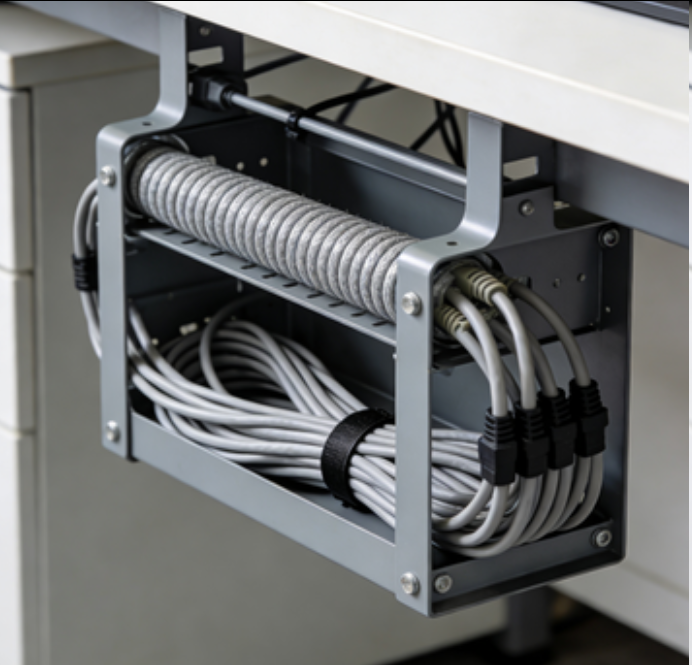
Network Cable Management Under Desk
Dec 25, 202572