- Language
Cat5e Network Patch Cord
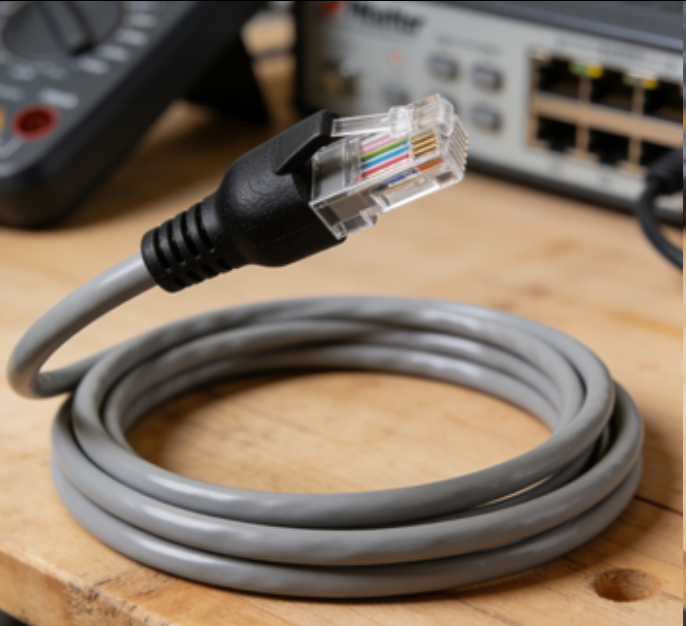
Cat5e network patch cords are a cost-effective and widely used solution for establishing Ethernet connections in homes, offices, and small businesses. The "e" in Cat5e stands for "enhanced," indicating improvements over the original Cat5 standard, such as reduced crosstalk and better signal quality. These cables support frequencies up to 100 MHz, making them suitable for 1 Gigabit Ethernet (1GBase-T) applications over distances of up to 100 meters.
Cat5e patch cords are constructed with four twisted pairs of copper conductors, which help minimize interference from external sources and between adjacent pairs. While they lack the advanced shielding of higher-category cables like Cat6A or Cat8, they are sufficient for most everyday networking tasks, such as internet browsing, file sharing, and VoIP calls. Their affordability and versatility have made them a staple in both residential and commercial installations.
When selecting Cat5e patch cords, it’s important to choose cables with stranded or solid-core conductors based on the application. Stranded cables are more flexible and better suited for frequent movement, such as connecting laptops or devices in conference rooms. Solid-core cables, on the other hand, offer better performance over longer runs and are commonly used for permanent installations. Additionally, ensuring the cables are TIA/EIA-568-B compliant guarantees they meet industry standards for performance and reliability.
Read recommendations:
LEG 77272 Multi-support Double Socket Mosaic - 2 x 2P+E Automatic Terminals German Standard Red
High-Precision Multi-Functional Network Cable Engineering Tester
-

-

-

-

-

-

-

-

-

-

Office Printer Network Patch Cord 6
Nov 24, 20262069
-

Dustproof Cover Equipped Network Patch Panel
Oct 10, 20261117
-

How to wire a French switch outlet
Oct 28, 20261113
-

Network Cable Break Point Detector Tester
Oct 09, 20261089
-

Cat6 Lan Cable Length Limit for Gigabit
Oct 24, 20261086