- Language
Anti-rodent steel armored outdoor fiber optic cable
1. Product Overview
The anti-rodent steel armored outdoor fiber optic cable is designed for outdoor communication deployments in rodent-prone areas (e.g., suburbs, farmlands, forests, and industrial parks). Its core design highlight is the integrated steel armor layer, which provides physical resistance against gnawing by rats, mice, squirrels, and other rodents. Combined with weather-resistant materials and optimized fiber protection structures, the cable ensures long-term stable transmission of high-speed data, voice, and video signals in harsh outdoor environments, making it suitable for backbone networks, access networks, and various outdoor communication infrastructure.
2. Core Structural Features
• Anti-Rodent Steel Armor Layer: Adopts double-layer galvanized steel tape or interlocked steel armor design, with a thickness of 0.8–1.2mm. The armor layer features high hardness and toughness, forming a physical barrier that effectively resists rodent gnawing and mechanical damage. The interlocked structure enhances structural integrity, preventing armor separation during bending or installation.
• Central Strength Member: High-modulus FRP (Fiber Reinforced Plastic) or galvanized steel wire serves as the central core, providing superior tensile strength (1500–2000N) and anti-buckling performance. It maintains the cable’s structural stability during direct burial, duct, or aerial installation, avoiding fiber breakage caused by external tension.
• Fiber Configuration: Compatible with ITU-T G.652D/G.657A1/G.657A2 low-loss fibers, available in 4–144 core counts. Adopts loose-tube design with water-blocking gel filling; each loose tube contains 2–12 fibers, wrapped in longitudinal water-blocking tape to achieve full-length water resistance. Tight-buffered (900μm) fiber option is available for scenarios requiring direct termination.
• Protective Outer Sheath: Coated with UV-stabilized, corrosion-resistant, and abrasion-resistant HDPE (High-Density Polyethylene) or LSZH (Low Smoke Zero Halogen) sheath. The sheath is tightly bonded to the steel armor, enhancing moisture resistance and preventing corrosion of the armor layer. It also withstands extreme temperatures and harsh weather conditions.
• Water-Blocking System: Integrates longitudinal water-blocking tape (around the loose tube bundle) and water-blocking gel (inside loose tubes), achieving dual water-blocking protection. It effectively prevents moisture ingress along the cable length and radial direction, extending the cable’s service life.
3. Key Technical Advantages
• Superior Anti-Rodent Performance: The steel armor layer passes international anti-rodent test standards, resisting gnawing by rodents with sharp teeth. It avoids fiber damage and signal interruption caused by rodent attacks, reducing maintenance costs and network downtime.
• Exceptional Mechanical Reliability: Tensile strength up to 2000N (steel core version) and crush resistance ≥4000N/100mm, withstanding external impacts during direct burial and construction. The anti-torsion and anti-bending design (static bending radius ≥15D, dynamic bending radius ≥25D) ensures stable performance during installation and operation.
• Low Transmission Loss: Complies with ITU-T standards, featuring low insertion loss (≤0.36dB/km at 1310nm, ≤0.22dB/km at 1550nm) and high return loss (≥50dB). Supports 10G/40G/100G Ethernet and WDM systems, meeting the requirements of high-speed and large-capacity data transmission.
• Extreme Environmental Adaptability: The steel armor and outer sheath are resistant to UV radiation, ozone, acid, alkali, and salt spray. The cable operates reliably in a wide temperature range of -40℃ to +70℃, adapting to harsh outdoor environments such as deserts, wetlands, coastal areas, and cold regions. Service life exceeds 25 years.
• Versatile Installation Compatibility: Suitable for direct burial (the most common scenario for anti-rodent needs), duct deployment, and aerial installation (with additional suspension accessories). The lightweight and flexible design (compared to traditional heavy armor cables) simplifies transportation and installation, reducing labor intensity.
4. Typical Applications
• Outdoor communication networks in rodent-prone areas: suburbs, farmlands, forests, grasslands, and industrial parks
• Direct burial installations for backbone networks, metropolitan area networks (MAN), and access networks (FTTH/FTTB)
• Duct and aerial deployment in areas with high rodent activity (e.g., near garbage dumps, warehouses, or green belts)
• Communication infrastructure for rural broadband, smart agriculture, and forestry monitoring
• Industrial communication links in factories, mines, and logistics parks (prone to rodent infestation)
• Long-distance outdoor fiber optic links requiring protection against both rodents and mechanical damage
-
-
-
-
-
-
-
-
-
-
Single-Port Network Panel
May 15, 2026327
-
CAT6 Ethernet Crossover Cable
May 14, 2026254
-
CAT6 Outdoor Shielded Cable
Apr 17, 2026244
-
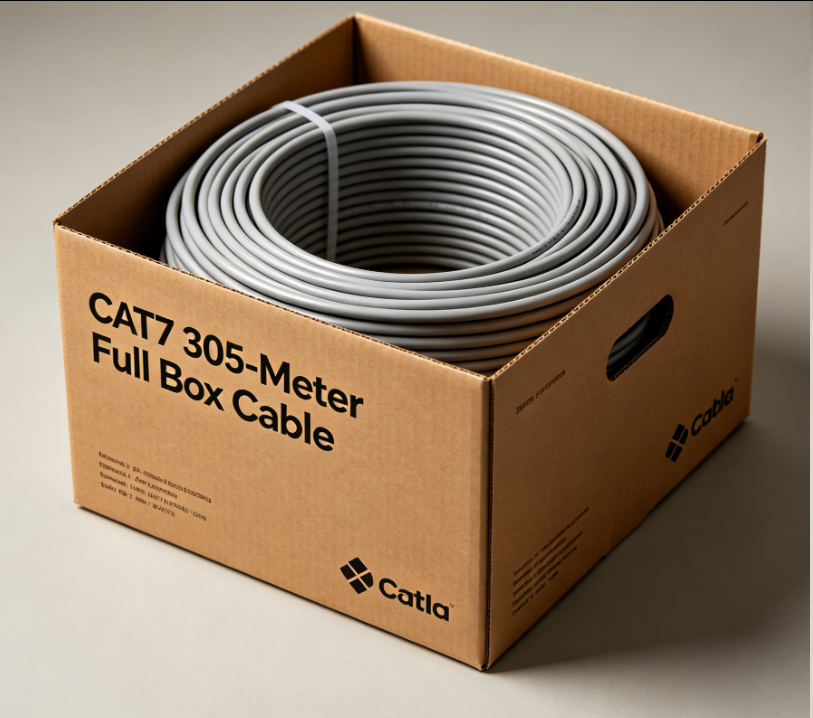
CAT7 305-Meter Full Box Cable
Apr 15, 2026238
-
Outdoor 10G Network Patch Cord Cat6a
May 19, 2026236