- Language
CAT6 Cable 305m
With the continuous advancement of smart city construction, enterprise park expansion, commercial complex upgrading and intelligent renovation of large communities, full-domain structured cabling has become the core foundation of digital infrastructure. Compared with short-distance household connecting cables, large-scale network engineering has stricter standards for cable length specifications, transmission stability, construction adaptability and overall consistency. As a universally used cabling base material in the industry, standard bulk engineering cables have become the preferred choice for large and medium-sized network projects, systematic weak current construction and full-domain intelligent networking by virtue of standardized length specifications, stable Category 6 transmission performance and unified process quality. They effectively solve common industry pain points such as signal loss, hidden faults and messy construction caused by segmented connection.
In accordance with industrial structured cabling specifications, the standard 305-meter bulk size is a universal dimension for engineering wiring, complying with the design standards of most building weak current constructions, and perfectly adapting to long-distance construction scenarios such as building horizontal wiring, floor backbone wiring and cross-regional park wiring. Traditional segmented wiring requires frequent joint docking, which not only increases the probability of network signal attenuation, packet loss and delay, but also raises hidden dangers of line faults and poor contact in the later stage, increasing operation and maintenance costs. In contrast, integrated bulk cables eliminate intermediate connection, minimize line breakpoints, maintain the integrity and continuity of wiring links, and improve the stability, safety and service life of the entire network system structurally, making them suitable for large-area, long-distance and high-density networking projects.
In terms of core transmission performance, industrial-grade Category 6 cables strictly comply with international industry standards, with a rated bandwidth of 250MHz, double that of Category 5e cables, capable of easily supporting various current high-speed network services. It can stably support 10Gbps high-speed transmission in short and medium-distance scenarios, maintaining full network speed without stuttering. It perfectly meets high-intensity network requirements such as multi-channel 4K/8K ultra-high-definition video transmission, large-scale cloud data synchronization, high-density terminal device networking and real-time intelligent data collection. Adopting an accurate twisted pair twisting process with strictly controlled pitch errors, the cables effectively suppress near-end crosstalk, far-end crosstalk and signal attenuation. They can maintain pure and stable signal transmission and avoid network speed fluctuation and data transmission errors even under long-distance and full-load operating conditions.
The standardized upgrading of material technology serves as the core guarantee for industrial-grade cables to adapt to long-term commercial and industrial scenarios. Made of high-purity oxygen-free copper conductors, the cables feature low resistance, excellent conductivity and low transmission loss. They are not prone to oxidation or attenuation during long-term operation and can maintain stable transmission efficiency for years. The internal insulating layer adopts high-density environmentally friendly polyethylene with excellent insulation performance and sufficient toughness, which effectively eliminates hidden dangers such as short circuits, electric leakage and signal crosstalk to ensure safe and stable link operation. The outer sheath is made of high-strength flame-retardant and environmentally friendly materials with wear resistance, tensile resistance, aging resistance, moisture and corrosion resistance, as well as high and low temperature resistance. It adapts to conventional closed wiring environments such as indoor computer rooms, office buildings, shopping malls and residences, as well as complex concealed construction scenarios including ceilings, wall pipelines and weak current shafts, featuring outstanding weather resistance and a service life of more than ten years.
In terms of engineering construction and operation and maintenance, standardized bulk cables have irreplaceable practical value. The unified bulk specification simplifies construction procedures, shortens the construction period and improves the efficiency of large-scale cabling projects without repeated cutting and splicing, adapting to standardized batch operations. With moderate flexibility, the cables are easy to bend and route, adapting to complex wiring paths such as wall corners, pipelines and ceilings with strong construction adaptability. Meanwhile, they are fully compatible with mainstream PoE power supply protocols, enabling stable power supply for surveillance cameras, wireless access points, intelligent sensors and building automation terminals while transmitting high-speed data. There is no need for separate power line layout, which simplifies the wiring structure, reduces line redundancy, standardizes the overall cabling system, and lowers the difficulty of later fault troubleshooting and daily maintenance.
This industrial cable covers full-scenario applications including commercial, civil, industrial and security fields, adapting to various large and medium-sized networking projects. In enterprise parks and office buildings, it is applicable to full-building universal wiring, supporting simultaneous networking of multi-station office equipment, high-definition conference systems and cloud office terminals to ensure high-speed, unobstructed and stable office networks. In large communities and whole-house intelligent projects, it realizes unified whole-house networking, adapting to the coordinated operation of smart home appliances, security monitoring, e-sports entertainment and private cloud storage equipment, building a full-house high-speed intelligent network system. In data centers and weak current computer rooms, it serves as the core horizontal backbone wiring material, supporting high-density server and switch cluster networking and ensuring 24-hour uninterrupted high-speed data interaction. In smart parks, factory workshops and commercial complexes, it adapts to large-scale security monitoring networking and intelligent device data transmission, providing stable network support for intelligent operation.
As a long-term concealed infrastructure, network wiring determines the network experience and operation and maintenance costs for subsequent years depending on cable quality and construction integrity. Although non-standard inferior cables and segmented splicing wiring reduce short-term construction costs, they easily cause problems such as substandard network speed, frequent network disconnection, excessive line aging and recurring faults, resulting in high later repair and maintenance costs. With the comprehensive advantages of standard specifications, stable performance, low loss, low crosstalk, high compatibility and long service life, standardized Category 6 bulk industrial cables perfectly adapt to various large-scale systematic cabling projects and reserve sufficient performance redundancy to meet the iterative upgrading needs of network equipment in the coming years. With the continuous improvement of digital infrastructure, high-quality industrial-grade cabling cables will continue to empower the digital and intelligent upgrading of various industries, consolidate the underlying foundation for full-domain high-speed, stable and secure intelligent network systems, and promote the steady development of the structured cabling industry toward standardization, high quality and long-term effectiveness.
-

-

-

-

-

-

-

-

-

-

Dustproof Cover Equipped Network Patch Panel
Oct 10, 20261117
-

How to wire a French switch outlet
Oct 28, 20261112
-

Network Cable Break Point Detector Tester
Oct 09, 20261089
-

Cat6 Lan Cable Length Limit for Gigabit
Oct 24, 20261085
-
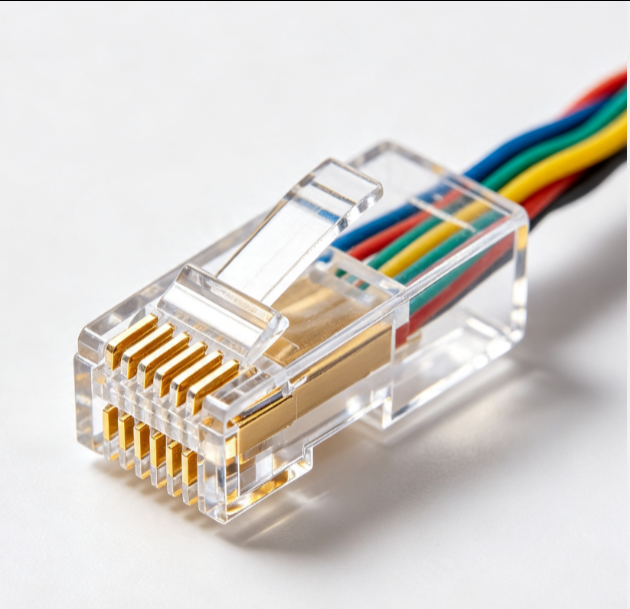
RJ45 Connector Cat6 for DIY Cable Making
Nov 20, 20261032