- Language
Cat6 UTP patch cable
Cat6 UTP patch cable: Performance Benchmarking, Selection Logic and Full-Scenario Wiring Guide Based on Cat6a Technical Standards
In the structured integrated wiring system, the Cat6 UTP patch cable is a universal Ethernet connection cable manufactured in accordance with ANSI/TIA-568.2-D and ISO/IEC 11801 Class E standards. It is widely used in conventional network scenarios such as home networking, office wiring, weak current equipment room docking, and terminal equipment interconnection. As the most popular mid-range high-speed jumper product on the market, its unshielded twisted pair (UTP) structure, flexible multi-strand core design and universal RJ45 interface take into account wiring flexibility, cost performance and basic high-speed transmission capability, making it a mainstream standard cable for gigabit networking. As an augmented Category 6 upgrade standard, Cat6a represents the iterative optimization of Cat6 UTP patch cables. Clarifying the standard differences, performance boundaries and adaptation scenarios between the two is the core key to accurate wiring, scientific selection and avoidance of network performance bottlenecks.
Many users make selection mistakes in network construction, believing that there is little difference between Cat6 and Cat6a cables and they can be used interchangeably. In fact, they belong to two generations of wiring standards with essential gaps in core bandwidth, anti-interference capability, transmission distance and 10-gigabit stability. The Cat6 UTP patch cable adopts a classic four-pair eight-core unshielded twisted pair structure with a rated operating bandwidth of 250MHz. It supports 10Gbps 10-gigabit transmission within a short distance of 50 meters, and only stably maintains 1000Mbps gigabit speed under a 100-meter standard link, failing to meet the needs of long-distance high-speed transmission. In contrast, the Cat6a augmented standard doubles the bandwidth to 550MHz, fully optimizes the wire pair twisting process and crosstalk suppression structure, and realizes stable 10-gigabit transmission over the entire 100-meter link, fundamentally solving the core shortcomings of Cat6 UTP patch cables such as long-distance attenuation, dense wiring crosstalk and unstable high-load transmission.
In terms of product positioning, Cat6 UTP patch cables focus on high cost performance, lightweight networking and adaptation to conventional interference-free scenarios, achieving basic anti-crosstalk capability through accurate twisted pair pitch design and cross skeleton isolation structure to meet popular high-speed network demands. Cat6a standard cables, by contrast, focus on professional-grade, long-term, high-load and complex scenario adaptation, serving as iterative products optimized for 10-gigabit networks, high-density wiring and long-term uninterrupted operation. The two share the same technical system with full compatibility but distinct performance levels and working condition adaptability. In-depth analysis of the advantages and disadvantages of Cat6 UTP patch cables from the Cat6a technical perspective helps users accurately distinguish wire demands for ordinary and high-end networking, avoid insufficient or redundant performance, and achieve the optimal balance between wiring cost and network performance.
All technical parameters of Cat6 UTP patch cables fully comply with industry Category 6 standards. Although they achieve leapfrog upgrades compared with Cat5e cables, they have obvious performance limitations when benchmarked against Cat6a augmented standards, which serves as the core basis for distinguishing the two generations of cables. In terms of basic transmission parameters, Cat6 UTP patch cables feature a 250MHz operating bandwidth, supporting 10Gbps transmission within 50 meters and stable gigabit transmission over 100 meters, with delay skew ≤45ns/100m and DC resistance unbalance ≤5%. They fully meet the performance requirements of gigabit broadband, conventional high-definition video transmission and basic office data interaction. Adopting 23AWG multi-strand high-purity oxygen-free copper conductors with a copper purity of ≥99.95%, paired with environmentally friendly PVC or LSZH low-smoke zero-halogen outer sheath, the cables have basic flame-retardant, wear-resistant and anti-aging properties, suitable for indoor conventional wiring environments.
In terms of anti-interference design, Cat6 UTP patch cables achieve basic protection through process optimization of the UTP unshielded structure. The four wire pairs are independently twisted with differentiated pitches and isolated by a built-in cross skeleton, effectively reducing near-end and far-end crosstalk between wire pairs and controlling the crosstalk value below -54dB. They can resist slight electromagnetic interference in daily environments and adapt to conventional scenarios such as open offices and indoor home environments without strong interference. However, limited by basic standard constraints, the structure without metal shielding cannot resist strong electromagnetic interference caused by high-voltage wires, industrial equipment and mixed strong and weak current wiring. It is prone to signal coupling, transmission distortion and network fluctuation in high-density cabinet and complex weak current environments, which is the core shortboard compared with Cat6a cables.
Benchmarked against Cat6a augmented technical standards, the core iteration advantages are reflected in three major dimensions. First, upgraded bandwidth and transmission stability: Cat6a’s 550MHz ultra-high bandwidth realizes full-distance stable 10-gigabit transmission, completely solving the problems of speed reduction and signal attenuation of Cat6 UTP patch cables beyond 50 meters. Second, comprehensively enhanced anti-interference capability: both shielded and unshielded Cat6a versions optimize alien crosstalk suppression technology, with anti-crosstalk performance improved by more than 60% compared with Cat6, adapting to high-density complex wiring scenarios. Third, upgraded long-term operation and power supply performance: Cat6a cables feature optimized PoE power supply stability, high temperature resistance, aging resistance and bending resistance, more suitable for 7×24-hour uninterrupted operation, while Cat6 UTP patch cables only support conventional intermittent operation and are prone to slight heating and speed fluctuation under long-term high-load power supply.
In terms of power supply adaptation, Cat6 UTP patch cables are compatible with conventional IEEE 802.3af/at PoE power supply protocols, supporting a maximum stable power supply of 60W, which can meet the power demands of low-power devices such as ordinary wireless APs, conventional surveillance cameras and network access control. However, they cannot adapt to PoE++ 100W high-power equipment, with potential risks of unstable power supply and wire heating under high-power loads. In contrast, Cat6a cables are fully compatible with all series of PoE protocols, delivering stable high-power power supply without loss and adapting to more intelligent equipment networking demands with higher power supply safety and stability. Meanwhile, Cat6 UTP patch cables adopt standard gold-plated contacts that can withstand hundreds of plugging and unplugging cycles, meeting conventional durability needs. Nevertheless, compared with Cat6a cables with thickened gold-plated contacts and reinforced boot craftsmanship, they have shorter service life and lower stability under frequent plugging and unplugging working conditions.
To accurately define the selection boundaries of the two cables, this paper conducts an all-round benchmarking of Cat6 UTP patch cables and Cat6a cables from five dimensions: technical standards, transmission performance, anti-interference capability, adaptation scenarios and cost performance, so as to clarify their applicable scenarios and limitations. Firstly, transmission performance differences: Cat6 UTP patch cables support 10-gigabit speed only within short distances of 50 meters and drop to gigabit speed over long distances, lacking long-distance high-speed networking capability; Cat6a cables maintain full 10-gigabit speed over the entire 100-meter link, with 550MHz large bandwidth supporting high-concurrency data transmission of multiple devices, featuring no distance speed limit or bandwidth congestion and a longer technical iteration life cycle.
Secondly, anti-interference and wiring adaptation differences: the fully unshielded structure of Cat6 UTP patch cables only achieves basic anti-interference through internal process optimization, suitable only for single weak current environments without strong electromagnetic interference. When applied to complex environments such as dense cabinet wiring and mixed strong and weak current wiring, they easily cause network packet loss, delay fluctuation and picture stuttering. Cat6a cables, with both shielded and unshielded versions available, greatly improve anti-crosstalk capability through upgraded isolation technology for unshielded models and fully isolate electromagnetic interference with double-layer shielding for shielded models, maintaining stable networks in both conventional civil and complex professional scenarios with far stronger wiring adaptability.
Thirdly, service life and operation and maintenance cost differences: Cat6 UTP patch cables adopt popular craftsmanship with medium flexibility, high temperature resistance and aging resistance, prone to sheath aging and core loss under frequent bending, long-term power-on and dense extrusion, with a service life of about 5-6 years. Cat6a cables adopt engineering-level sophisticated craftsmanship with thickened environmentally friendly outer sheath, reinforced core structure and anti-corrosion gold-plated contacts, boasting a service life of 8-10 years, reducing frequent replacement and long-term operation and maintenance costs. For short-term networking, temporary wiring and low-cost small-scale networking projects, Cat6 UTP patch cables have significant cost performance advantages; for long-term fixed networking scenarios, Cat6a cables deliver better comprehensive cost performance.
Finally, compatibility and iteration space differences: both cables are fully compatible with universal RJ45 interfaces and backward compatible with all old Cat5e and Cat5 network devices with no compatibility defects. In terms of future iteration, Cat6 UTP patch cables only meet current mainstream gigabit network demands and cannot adapt to future upgrades such as full-house 10-gigabit networks, big data transmission, 8K streaming media and high-end e-sports networking, with obvious performance bottlenecks. Cat6a cables reserve sufficient performance margin to adapt to network upgrades in the next 5-10 years without secondary wiring renovation, serving as the preferred solution for long-term networking.
Based on the performance advantages and iterative shortcomings of Cat6a technical standards, the optimal adaptation scenarios of Cat6 UTP patch cables can be accurately defined to realize scientific selection and precise wiring. Firstly, home basic high-speed networking scenarios: ordinary home users mainly use networks for web browsing, short video playback, online office and conventional gaming with low network load and no complex electromagnetic interference. The gigabit stability and short-distance 10-gigabit performance of Cat6 UTP patch cables fully meet daily usage needs. Compared with higher-priced Cat6a cables, they greatly reduce home wiring costs without compromising user experience, making them a cost-effective choice for ordinary home networking. Only high-end e-sports, multi-device NAS synchronization and 8K audio-visual enthusiasts need to upgrade to Cat6a cables to break performance limits.
Secondly, small office, studio and store networking scenarios: such scenarios have a limited number of equipment, loose wiring spacing, simple electromagnetic environment, and network demands focused on conventional file transmission, video conferencing and office system operation. Cat6 UTP patch cables perfectly adapt to daily office networking with stable performance, low failure rate and convenient construction. For core machine rooms of large and medium-sized enterprises, multi-layer building integrated wiring and high-density workstation networking, dense equipment and complex wiring bring numerous interference sources, and ordinary Cat6 UTP jumpers are prone to network instability. Therefore, high-stability Cat6a cables must be selected to ensure long-term stable operation of enterprise networks.
Thirdly, temporary networking, equipment commissioning and short-term project wiring scenarios: temporary office points, short-term project networking and equipment debugging require low cost, easy storage and convenient replacement with short service cycles. Cat6 UTP patch cables are soft, portable, affordable and flexible for plugging and unplugging, fully adapting to short-term usage demands. Cat6a cables, with higher cost and unutilized long-term performance advantages, suffer from obvious performance surplus and are not suitable for temporary scenarios.
Fourthly, conventional security and lightweight intelligent networking scenarios: low-power and low-load intelligent equipment such as ordinary indoor surveillance cameras, small wireless APs and conventional network access control have small data transmission volume and low operation pressure, and the PoE power supply and transmission performance of Cat6 UTP patch cables can ensure stable equipment operation. However, high-end high-definition surveillance, IoT sensor clusters, industrial intelligent equipment and other high-power, high-concurrency devices operating 7×24 hours require extremely high wire stability, anti-interference and power supply safety, and professional-grade Cat6a cables are mandatory to avoid equipment offline, data loss and picture stuttering faults.
The quality of Cat6 UTP patch cables on the market varies greatly, with a large number of falsely marked and inferior products confusing consumers, failing to meet formal Category 6 standards or basic Cat6a process requirements, resulting in frequent network stuttering, poor contact and easy damage after use. When purchasing genuine Cat6 UTP patch cables, first check the wire marking: formal products are clearly printed with standard parameters of Cat6, 250MHz and 10Gbps (50m) with wear-resistant and non-fading fonts, equipped with complete CE, ROHS and EL compliance certifications, and pass basic Fluke link tests with fully compliant parameters. Unmarked, uncertified and vague low-cost products are non-standard inferior wires with poor core materials and rough craftsmanship and should be rejected.
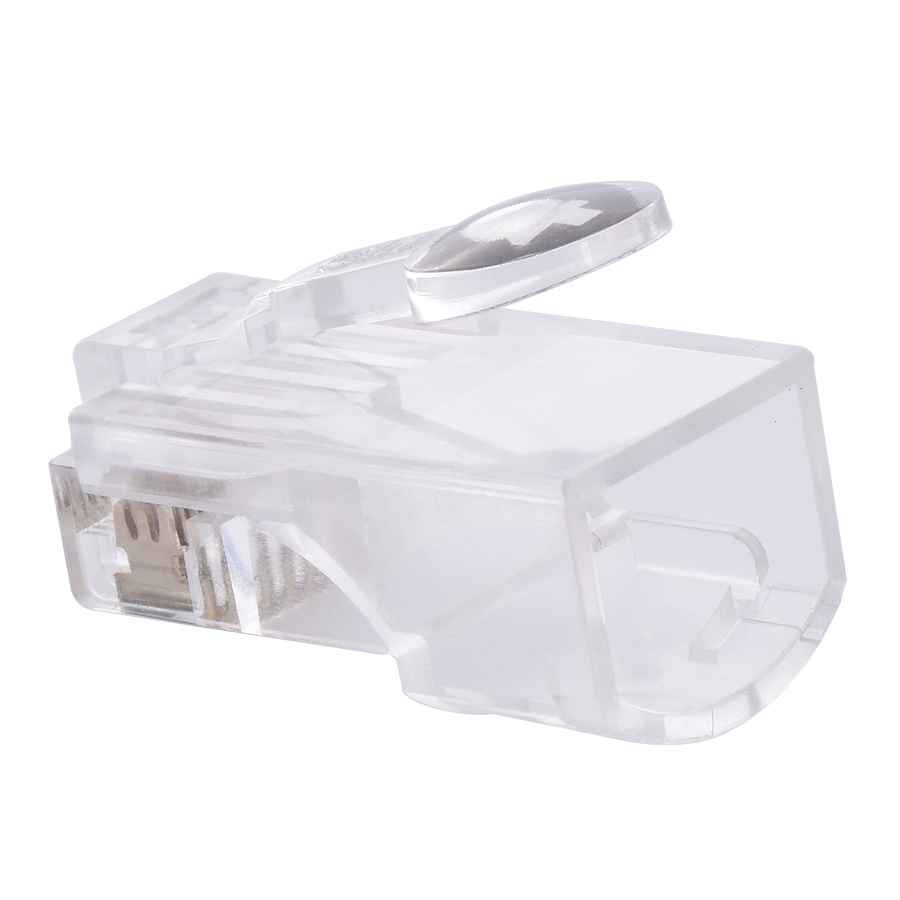
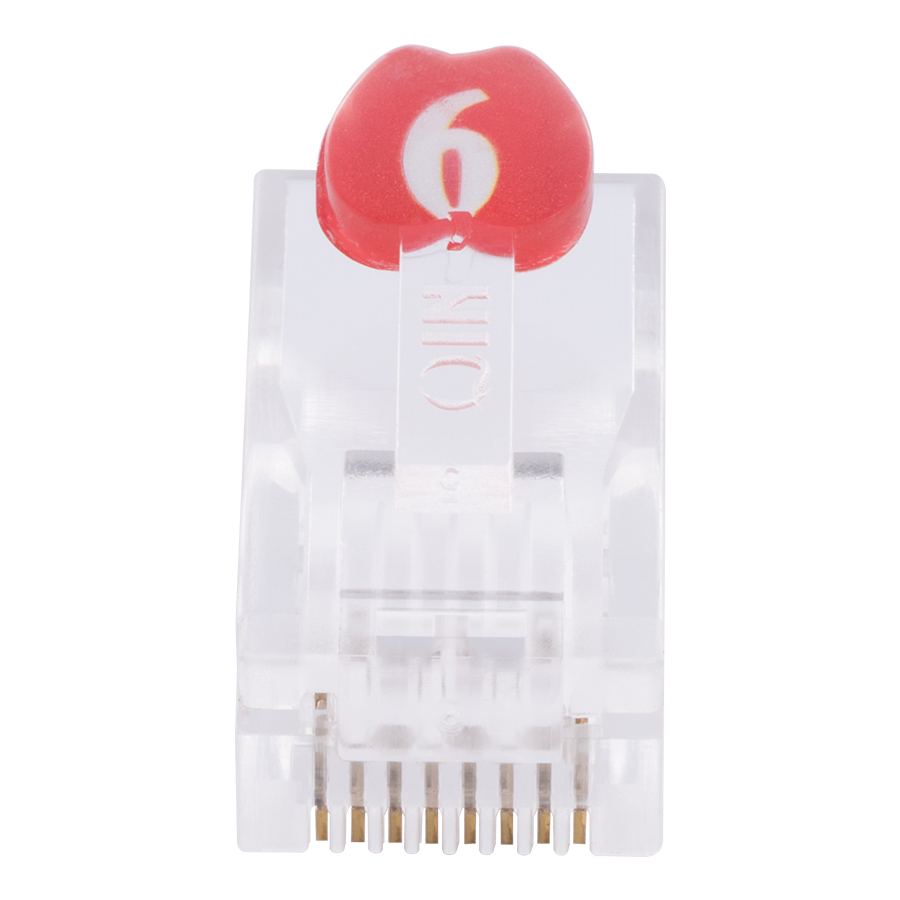
Secondly, identify wire materials and craftsmanship: genuine Cat6 UTP patch cables adopt 23AWG high-purity oxygen-free copper eight-core wires with uniform thickness, bright luster and sufficient toughness, resistant to breakage after bending. Equipped with independent cross skeleton isolation structure, the wire pairs are tightly and evenly twisted without looseness or distortion. The RJ45 connectors have thick and uniform gold-plated layers with smooth plugging and excellent oxidation resistance. Inferior products mostly adopt copper-clad aluminum or impure copper materials with dull and uneven cores prone to oxidation and breakage, without skeleton isolation structure leading to severe crosstalk, and rough outer sheaths prone to cracking and aging, with substandard transmission performance and safety. Benchmarked against Cat6a sophisticated craftsmanship, genuine Cat6 UTP jumpers feature standardized basic processes and solid materials to ensure stable use, distinct from non-standard inferior products.
In the wiring and construction stage, standardized operations must be followed to maximize the performance advantages of Cat6 UTP patch cables and make up for inherent performance shortcomings. Avoid violent bending, excessive pulling and 90-degree right-angle hard bending during construction to prevent internal core deformation and skeleton damage that affect crosstalk suppression effect. Separate strong and weak current cables with reasonable spacing to reduce external electromagnetic interference and compensate for the insufficient anti-interference capability of the UTP unshielded structure. Minimize ultra-long-distance links; select Cat6a cables for wiring over 50 meters to avoid speed reduction of Cat6 cables over long distances. Hold the connector body during plugging and unplugging instead of pulling the cable to prevent core disconnection and poor contact.
In daily maintenance, keep the cable dry and clean, avoid long-term exposure to humid, high-temperature and sunlight environments to prevent sheath aging and core oxidation. Arrange wiring regularly to avoid dense extrusion and winding for reduced wear and signal interference. Unplug cables for idle equipment to reduce connector oxidation. Standard use and maintenance can effectively extend the service life of Cat6 UTP patch cables and stabilize transmission performance, while accurately avoiding all performance shortcomings compared with Cat6a cables, achieving low-cost and high-stability conventional networking effects.
In summary, Cat6 UTP patch cables are the most balanced popular networking cables in the current gigabit mainstream era. With mature craftsmanship, stable basic performance, affordable price and flexible wiring advantages, they perfectly adapt to most ordinary network scenarios such as home conventional networking, small office use, short-term projects and lightweight intelligent security, becoming the mainstream choice for civil and small and medium-sized commercial wiring. Their basic high-speed transmission, elementary anti-crosstalk and conventional PoE power supply performance fully meet daily public network demands without performance waste, delivering superior cost performance.
Meanwhile, through benchmarking analysis with Cat6a augmented technical standards, the performance boundaries and upgrade space of Cat6 UTP patch cables are clearly defined. Their shortcomings including long-distance transmission attenuation, weak anti-interference in complex environments, insufficient high-load stability and limited technical iteration space determine their inadaptability to 10-gigabit long-term networking, high-density professional wiring and complex industrial weak current scenarios. Cat6a cables perfectly make up for all the shortcomings of Cat6 UTP patch cables with core advantages of doubled bandwidth, full-domain 10-gigabit speed, superior anti-interference, long-term durability and stable high-power power supply, serving as the core solution for high-end networking, long-term wiring and future network upgrades.
In actual wiring selection, there is no need to blindly pursue high-end cables or make do with basic cables. Prioritize Cat6 UTP patch cables for ordinary conventional scenarios to balance user experience and cost control; upgrade to Cat6a cables for professional complex scenarios, long-term networking and 10-gigabit upgrades to consolidate network stability. The two complement each other with clear division of labor. The selection logic based on Cat6a technical standards enables more scientific, efficient and cost-effective network wiring for different scenarios, adapts to network usage demands of different levels, and assists in the construction of standardized and refined modern network wiring systems.
-
-
-
-
-
-
-
-
-
-
Flange Type Fixed Fiber Optic Adapter for Rack Panel
Sep 19, 2026955
-
Fiber Pigtail 12 Cores SC UPC Single Mode
Sep 04, 2026930
-
12 Port Cat6 Patch Panel Small Cabinet
Sep 12, 2026929
-
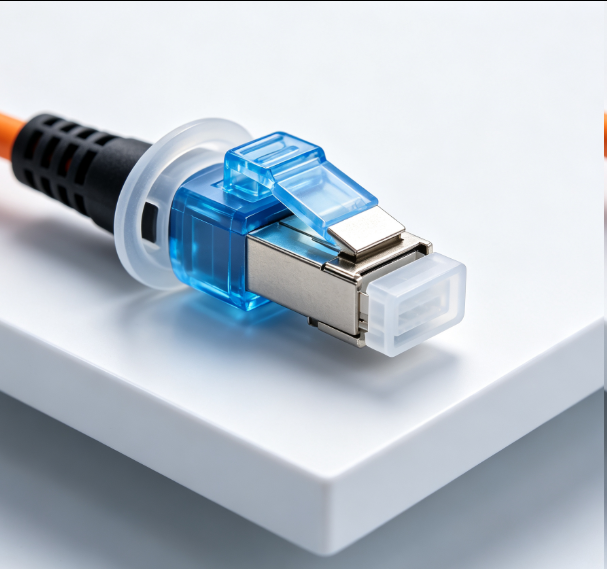
Dust Cap Equipped Fiber Patch Cable Protective
Sep 03, 2026929
-
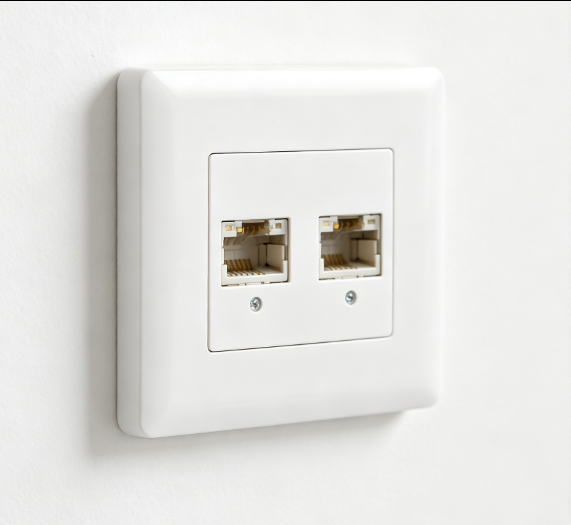
EU Standard Network Faceplate
Sep 11, 2026927