- Language
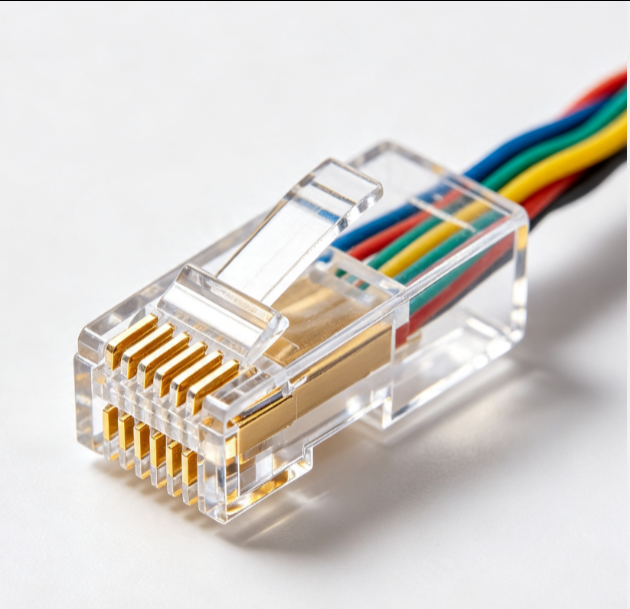
Cat6 copper SFTP patch cord
In structured cabling systems, the patch cord is a key component connecting various network devices and terminals, and its quality directly affects the speed and stability of data transmission. As enterprise networks place increasingly higher requirements on bandwidth and reliability, choosing high-quality patch cords has become an important part of ensuring network performance. Patch cords using Category 6 copper conductors with a shielded structure, with their stable transmission characteristics and strong anti-interference ability, have become a common choice in data centers, enterprise offices, security monitoring and other scenarios.
Patch cords can be divided into different categories according to shielding design. Unshielded patch cords have a simple structure and a friendly cost, suitable for conventional environments with less interference. Shielded patch cords add a shielding layer on the outside of the conductor, effectively isolating external electromagnetic interference and ensuring clear and stable signal transmission. In places with complex electromagnetic environments such as equipment rooms and industrial sites, the advantages of shielded patch cords are especially obvious, reducing the impact of interference on network signals and improving data transmission quality and the stability of the overall network.
The selection of copper conductors provides a solid foundation for patch cord performance. Copper has excellent electrical conductivity and low signal attenuation, supporting high-frequency high-speed transmission and meeting the demand of modern networks for large bandwidth. Category 6 patch cords are designed according to corresponding standards and support higher transmission rates, adapting to gigabit networks and application scenarios with higher bandwidth, such as high-definition video, cloud services and big data processing. Their good crosstalk control and stable transmission performance provide reliable support for high-load network operation.
In data center scenarios, a large number of servers, switches and storage devices need high-speed stable connections. Equipment rooms have dense equipment and complex electromagnetic environments, and ordinary patch cords may suffer signal degradation due to interference. Category 6 shielded patch cords can effectively resist interference and ensure signal quality in high-density environments, supporting continuous and stable operation of business systems. The connectors of patch cords are reliably connected and easy to plug and unplug, facilitating quick adjustment and maintenance by operation and maintenance personnel and improving the management efficiency and network flexibility of data centers.
Enterprise office networks also benefit from the application of shielded patch cords. Office environments contain many electronic devices, and wireless signals and power lines all generate electromagnetic interference that may affect data transmission quality. Using Category 6 shielded patch cords to connect computers, servers and network devices can effectively reduce the impact of interference, ensure stable operation of office systems and reduce data errors or network interruptions caused by signal problems. Stable network connections also help improve employee working efficiency and the overall informatization level of enterprises.
Security monitoring systems also have high requirements for patch cord performance. Monitoring devices need continuous transmission of video data, and signal quality directly affects the clarity and smoothness of images. In monitoring environments, power lines and network lines are interwoven, and the risk of electromagnetic interference is high. With good anti-interference ability, Category 6 shielded patch cords ensure stable video signal transmission, avoid image stuttering or data loss and provide a guarantee for the reliable operation of security monitoring systems.
When upgrading enterprise networks, choosing Category 6 shielded patch cords can balance current needs and future development. Category 6 systems support high bandwidth and have good expansion space. The shielded structure improves adaptability to complex electromagnetic environments and ensures long-term stable system operation. Standardized cabling, reasonable bending radius and reliable connections of patch cords are all important conditions for maintaining stable transmission performance. Choosing reliable shielded patch cords and using them in a standardized way can significantly improve the overall performance and stability of network systems.
In summary, Category 6 copper shielded patch cords, with their stable transmission performance, good anti-interference ability and wide scenario adaptability, have become an indispensable connecting component in modern network construction. From high-density data centers to daily office networks, and from security monitoring to enterprise-level applications, shielded patch cords ensure high-quality transmission of data signals in various scenarios. Combining scientific selection, standardized construction and reasonable maintenance can fully realize the performance of patch cords and provide a solid guarantee for efficient and stable network system operation.
-

-

-

-

-

-

-

-

-

-

Dustproof Cover Equipped Network Patch Panel
Oct 10, 20261117
-

How to wire a French switch outlet
Oct 28, 20261112
-

Network Cable Break Point Detector Tester
Oct 09, 20261089
-

Cat6 Lan Cable Length Limit for Gigabit
Oct 24, 20261085
-
RJ45 Connector Cat6 for DIY Cable Making
Nov 20, 20261032