- Language
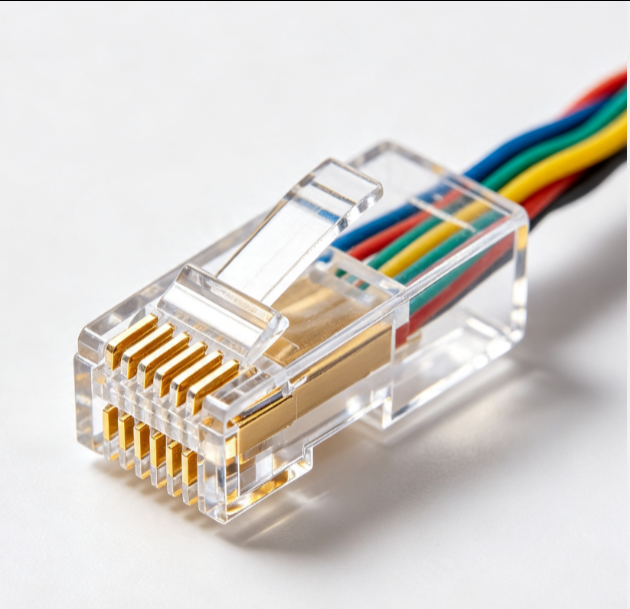
Cat6 copper UTP patch cable
In the structured cabling engineering system, as core terminal connection components for equipment interconnection and cabinet wiring, patch cords determine the construction efficiency, acceptance pass rate, layout standardization and long-term operation and maintenance costs of the entire weak current project. Common engineering problems such as complicated construction, delayed project duration, messy wiring, excessive crosstalk and difficult later maintenance mainly stem from mismatched patch cords that fail to adapt to on-site working conditions, topological structures and construction standards. As the most popular, highly adaptable and fully standardized mid-range gigabit wiring accessory, Cat6 Copper UTP Patch Cords perfectly fit most civilian and commercial standardized wiring scenarios. With lightweight structure, tool-free simple installation, full topological compatibility and high-density wiring adaptability, they build an efficient, standardized, low-cost and iterable cabling system for engineering contractors, decoration teams and system integrators.
Optimized exclusively for on-site engineering implementation, the structural design of Cat6 pure copper UTP patch cords eliminates the pain points of complicated construction and low fault tolerance of shielded cables, greatly lowering wiring thresholds. Unlike SFTP and STP shielded patch cords with additional metal shielding layers, braided nets and grounding structures, Cat6 UTP features a minimalist four-pair unshielded design with slimmer outer diameter, softer texture and stronger bending toughness. It enables higher pipe penetration rates and smoother routing in concealed ceiling wiring, wall pipe threading, weak current well wiring and narrow cabinet layout, adapting perfectly to concealed home wiring, old pipeline renovation and compact weak current box wiring. Shielded cables require professional grounding construction; improper or missing grounding will trigger reverse electromagnetic interference, causing excessive crosstalk and network fluctuation and demanding high professional skills for constructors with frequent manual risks. In contrast, Cat6 UTP unshielded cabling requires no grounding treatment, eliminating multiple procedures including shielding termination, grounding wiring and grounding detection. It simplifies construction processes, reduces manual error rates by over 60% and improves construction efficiency by more than 40%, making it ideal for large-scale batch wiring projects.
With standardized wiring parameters and universal topological compatibility, Cat6 UTP patch cords adapt to full-scenario wiring architectures and enable seamless upgrading of new and old projects. Complying strictly with ISO/IEC 11801 and TIA568 international wiring standards and adopting universal RJ45 interfaces and T568A/B standard wire sequence, they are fully compatible with Cat5e and Cat6 wiring systems and mainstream star, tree and layered network topologies, supporting seamless connection for old computer room renovation, building weak current upgrading and mixed new-old equipment networking. Most enterprise, campus and park networks feature alternating new and old systems with inconsistent backbone cables and equipment, easily causing compatibility and adaptation failures. Cat6 UTP patch cords deliver excellent backward compatibility, supporting stable gigabit transmission and short-distance 10G transmission within 55 meters. They meet current mainstream gigabit networking needs and reserve space for future short-range 10G upgrades, enabling network performance improvement merely through terminal patch cord replacement without backbone cabling renovation, greatly reducing project transformation difficulty and costs. Meanwhile, its 250MHz standard bandwidth far exceeds the 100MHz limit of Cat5e cables, providing sufficient link margin to avoid bandwidth congestion and structural bottlenecks during multi-device concurrent and multi-thread data transmission, ensuring stable operation of the entire wiring system.
Strong high-density wiring adaptability enables Cat6 UTP patch cords to fit modern intensive weak current engineering scenarios. Modern office buildings, smart parks, campus computer rooms and commercial complexes generally adopt high-density intensive wiring modes with closely arranged and bundled cables in weak current wells, cabinets and ceiling pipelines, imposing strict requirements on cable anti-crosstalk capability and structural compactness. Low-end unshielded cables with rough twisting technology and disordered pair spacing suffer severe internal and external alien crosstalk in dense wiring, leading to failed Fluke acceptance and unstable network transmission. In contrast, genuine Cat6 Copper UTP patch cords adopt precision staggered twisting technology and independent cross isolation frames to separate four wire pairs physically with differentiated twist pitches, fundamentally restraining internal crosstalk. The optimized outer diameter and insulation structure effectively resist electromagnetic interference from adjacent cables during high-density parallel and bundled layout, maintaining compliant link parameters and pure signal quality. Compared with bulky and easily deformable shielded cables, the slim and flexible Cat6 UTP realizes high-density cabinet wiring and standardized weak current box arrangement, delivering neat wiring layout, convenient label classification and line sorting, and greatly improving engineering standardization.
From the perspective of engineering cost performance, Cat6 UTP pure copper patch cords balance construction quality, budget control and long-term stability as the optimal wiring solution. Under unified gigabit engineering standards, the UTP unshielded design omits metal shielding layers, grounding accessories and shielding termination modules, reducing comprehensive procurement costs by 30%-50% compared with shielded patch cords. It also eliminates professional grounding construction and detection procedures, cutting labor and duration costs significantly, perfectly suiting small and medium-sized commercial projects, home wiring, campus networking and security monitoring projects with controlled budgets. Adopting 99.99% high-purity solid oxygen-free copper cores and wear-resistant flame-retardant PVC or LSZH environmentally friendly outer sheaths, Cat6 UTP cables resist pulling, bending and abrasion during construction, avoiding skin damage, core breakage and deformation to reduce construction loss and secondary rework costs. Superior to low-cost non-standard cables such as copper-clad aluminum wires, genuine pure copper Cat6 UTP patch cords deliver stable link performance and high compliance rate, ensuring one-time Fluke approval and eliminating additional costs from later fault rectification and rewiring, achieving outstanding comprehensive engineering cost performance.
Convenient operation and maintenance and long-term structural stability make Cat6 UTP patch cords ideal for long-term wiring projects. A qualified cabling project must not only meet completion acceptance standards but also ensure convenient long-term maintenance and stable operation for years. Featuring a minimalist and standardized structure, Cat6 UTP wiring supports quick fault location, disassembly and replacement during network upgrades, equipment replacement and line maintenance without complex operations, greatly reducing later maintenance difficulty and costs. Its stable physical structure and pure copper conductivity support 8-10 years of long-term stable operation, avoiding severe attenuation, rising crosstalk and poor contact caused by aging and maintaining balanced system performance throughout the service life. For long-term scenarios including whole-house smart home wiring, commercial store operation, campus sustained maintenance and office daily networking, one-time standardized wiring realizes years of maintenance-free operation and completely avoids frequent inspection and replacement troubles.
In conclusion, shielded cables are only applicable to harsh scenarios such as industrial strong electromagnetic interference and ultra-high-density computer rooms, while Cat5e cables can only meet basic low-speed networking needs. Precisely catering to the mainstream wiring market, Cat6 Copper UTP Patch Cords cover more than 90% of civilian and commercial gigabit wiring scenarios with standardized structure, simplified construction, full-scenario compatibility and high cost performance. They perfectly adapt to new house pre-buried wiring, old building weak current renovation, enterprise office networking, campus park wiring, security monitoring system construction and equipment interconnection wiring. Balancing construction efficiency, acceptance quality, budget control and long-term maintenance value, Cat6 UTP pure copper patch cords serve as indispensable foundational core wires in modern standardized structured cabling engineering.
-

-

-

-

-

-

-

-

-

-

Dustproof Cover Equipped Network Patch Panel
Oct 10, 20261117
-

How to wire a French switch outlet
Oct 28, 20261112
-

Network Cable Break Point Detector Tester
Oct 09, 20261089
-

Cat6 Lan Cable Length Limit for Gigabit
Oct 24, 20261085
-
RJ45 Connector Cat6 for DIY Cable Making
Nov 20, 20261032