- Language
Cat6A Copper UTP Patch Cord Signal Analysis: Lossless Signal Fidelity Solution for High-Frequency 10G Transmission
With the comprehensive popularization of 10G digital networking, the core standards for network experience and engineering acceptance no longer focus merely on speed compliance, but on full-time, full-bandwidth and full-distance signal integrity. Hidden network faults in enterprise computer rooms, smart buildings, high-definition security systems and cloud computing networks, such as insufficient 10G bandwidth, high-frequency packet loss, video screen tearing, equipment linkage delay and insufficient Fluke test margin, do not stem from underperforming switches or terminals, but from signal-level defects including signal distortion, excessive attenuation and crosstalk interference. Ordinary Cat6 cables are only suitable for low-frequency transmission below 250MHz with weak high-frequency signal control capability, failing to support long-term stable 10G networking. Developed exclusively for 500MHz ultra-high-frequency signal transmission, Cat6A Copper UTP Patch Cords overcome the high-frequency crosstalk and signal attenuation limitations of unshielded cables through pure copper conductors, precise physical structure and ultra-low-loss signal design. They realize pure, low-loss, synchronized and stable transmission of full-link signals, serving as core high-cost-performance wiring accessories that balance convenient deployment and ultimate signal quality in civilian and engineering 10G networking.
Signal attenuation is the fundamental indicator measuring network transmission quality, referring to the energy loss of electrical signals during cable transmission, which directly determines transmission distance and speed ceiling. Cat6A UTP patch cords achieve leapfrog upgrades in high-frequency signal loss control compared with ordinary Cat6 cables, thoroughly solving the long-standing problem of excessive high-frequency signal attenuation. Traditional Cat6 cables maintain controllable attenuation at 250MHz, but suffer from sharp energy loss once the frequency exceeds 300MHz, resulting in speed collapse and signal distortion beyond 55 meters, which cannot support full-range 100-meter 10G transmission. In contrast, genuine Cat6A UTP patch cords adopt 23AWG thickened high-purity solid oxygen-free copper conductors with a purity of 99.99%, ultra-low resistivity and uniform conductivity, minimizing heat loss and energy consumption during signal transmission at the physical level. Equipped with low-dielectric-loss environmentally friendly insulation materials, they greatly reduce medium adsorption loss of high-frequency signals. Standard tests verify that their 100-meter attenuation value at 500MHz is far below the limits of ISO/IEC international standards, with high-frequency signal loss reduced by more than 40% compared with ordinary Cat6 cables. They support zero-differential and low-attenuation 10G signal transmission over the entire 0-100m range, breaking the distance limitation of high-frequency transmission for traditional cables.
Crosstalk interference is the primary cause of damaged signal integrity. By adopting precise physical structure optimization, Cat6A UTP cables suppress internal pair crosstalk (NEXT/FEXT) and external alien crosstalk (ANEXT) simultaneously, reaching the signal anti-interference ceiling for unshielded wires. Ordinary unshielded cables feature loose structures and disordered twist pitches, leading to narrow spacing between four wire pairs and severe electromagnetic coupling interference during transmission, which distorts signal waveforms and garbles data. In high-density bundled computer room wiring scenarios, adjacent cables generate intense external crosstalk, further undermining signal purity — a key reason why traditional Cat6 UTP cables cannot be applied in high-end high-density 10G computer rooms. Cat6A UTP patch cords adopt an upgraded integrated cross isolation spline to physically separate the four twisted pairs completely and eliminate internal crosstalk caused by wire fitting and extrusion. Meanwhile, the precision differentiated staggered twisting design with optimized and encrypted twist pitches offsets electromagnetic resonance during high-frequency transmission, fundamentally weakening internal near-end and far-end crosstalk. The optimized wire structure and balanced impedance design independently suppress external signal interference from adjacent cables, delivering far superior ANEXT performance than ordinary Cat6 cables. Without metal shielding layers, it achieves shield-level signal anti-interference capability, eliminating the inherent high-frequency interference defect of unshielded wiring.
Superior signal synchronization and impedance stability ensure delay-free and error-free transmission during multi-device concurrent operation, adapting to high-precision intelligent networking scenarios. Modern network systems feature multi-terminal and multi-thread concurrent transmission. Cloud data synchronization, 4K/8K ultra-high-definition monitoring, industrial intelligent control and multi-user cloud office scenarios impose extremely high requirements on signal real-time performance and synchronization. Slight impedance fluctuations will cause signal timing deviation, leading to data packet loss, instruction delay and screen stuttering. Ordinary cables with uneven core thickness and rough twisting craftsmanship suffer from drastic link impedance fluctuations, resulting in unsynchronized signal transmission speeds and frequent signal dislocation and data verification errors during high-frequency operation. Featuring standardized solid copper cores and precise twisting technology, Cat6A pure copper UTP patch cords maintain consistent full-link impedance with minimal fluctuation errors, ensuring accurate timing synchronization of all signal groups and eliminating signal faults caused by timing deviation. Supported by excellent signal delay balance capability with strictly standardized propagation delay difference, they keep signals regular and orderly during multi-device networking, bulk data transmission and alternating high-frequency data flow, completely avoiding signal disorder and loss and guaranteeing the transmission accuracy of the entire network system.
Full-band signal compatibility and long-term signal stability support one-time wiring and lifelong signal fidelity. Network signal iteration is rapid, and transmission standards range from gigabit, 2.5G and 5G to 10G. Different rates and frequency bands require adaptive cable performance. Ordinary Cat6 cables have poor high-frequency compatibility, prone to insufficient speed and signal mismatch after network upgrades. Cat6A UTP patch cords feature a 500MHz ultra-wide frequency bandwidth, fully backward compatible with gigabit, 2.5G, 5G and all other 10G Ethernet signals, realizing lossless transmission of all frequency bands and eliminating signal exclusion and rate negotiation abnormalities during new and old equipment iteration. Furthermore, the anti-oxidation and aging-resistant pure copper and premium outer sheath maintain stable signal transmission performance during long-term 7×24-hour continuous operation, avoiding common aging faults such as rising impedance, aggravated crosstalk and fluctuating network speed of outdated cables. They sustain high-fidelity signal operation for 8-12 years, delivering outstanding long-term signal stability.
In practical engineering and commercial scenarios, the superior signal advantages of Cat6A Copper UTP Patch Cords perfectly meet the demands of modern high-density, high-precision and long-distance networking. In high-density data center cabinet wiring, its powerful alien crosstalk resistance ensures zero mutual signal interference during parallel transmission of massive cables, maintaining full-speed 10G bandwidth operation. In long-distance smart building and enterprise park wiring scenarios, ultra-low attenuation realizes lossless 100-meter full-range signal transmission without repeaters, simplifying the link structure while ensuring top-tier signal quality. In high-definition security and industrial automatic control scenarios, precise signal synchronization and low distortion completely eliminate signal-induced faults such as screen stuttering, instruction delay and equipment offline. Compared with shielded cables that suffer from complex construction, grounding faults and signal failure caused by shielding layer oxidation, Cat6A UTP provides a simpler, more stable and easier-to-maintain signal solution with lower labor and failure costs, serving as the most cost-effective high-end signal-grade wiring option.
In conclusion, the core value of Cat6A UTP patch cords lies in its comprehensive signal integrity control system. It solves signal attenuation with low-loss pure copper conductors, eliminates crosstalk interference with precise isolation and twisting structure, guarantees signal synchronization accuracy with balanced impedance design, and adapts to full-scenario signal transmission with wide-band compatibility. As 10G networking becomes the standard infrastructure configuration, Cat6A Copper UTP Patch Cords deliver full-time, full-distance and full-bandwidth lossless signal transmission, fundamentally eliminating most network signal faults and building a high-fidelity, high-stability and iterable premium network signal link for commercial, engineering, computer room and smart building applications.
-
-
-
-
-
-
-
-
-
-
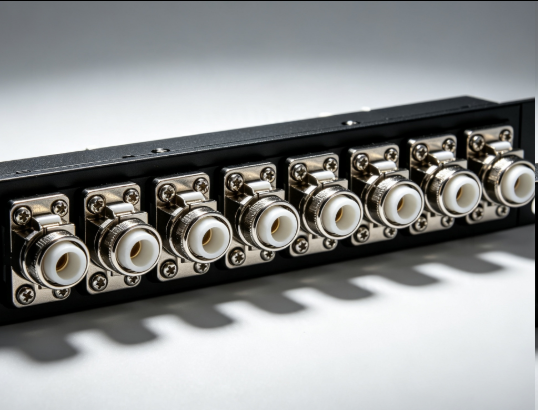
Flange Type Fixed Fiber Optic Adapter for Rack Panel
Sep 19, 2026956
-
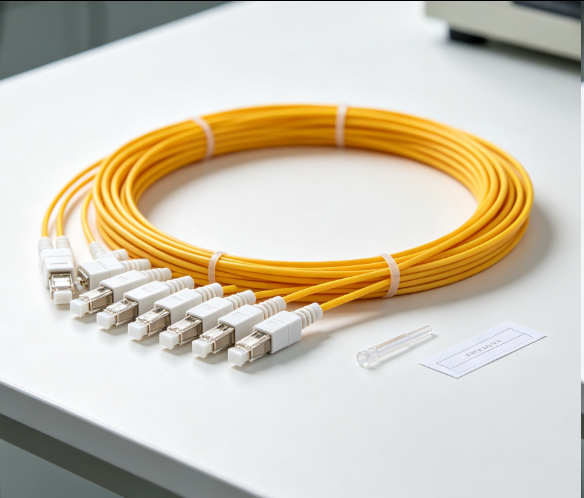
Fiber Pigtail 12 Cores SC UPC Single Mode
Sep 04, 2026930
-
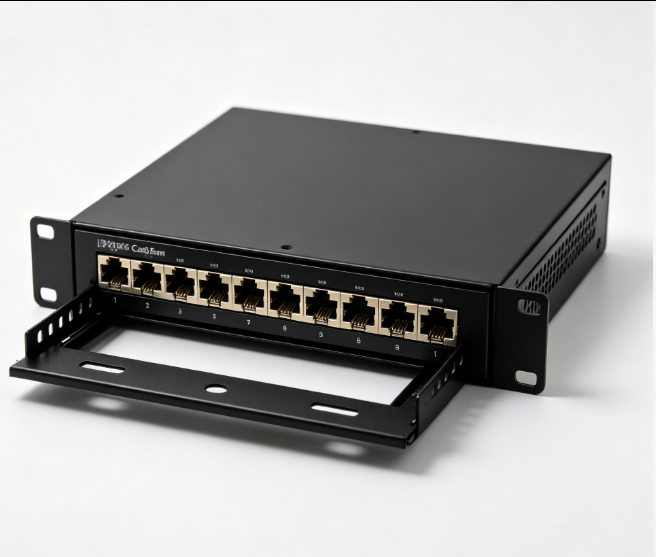
12 Port Cat6 Patch Panel Small Cabinet
Sep 12, 2026929
-
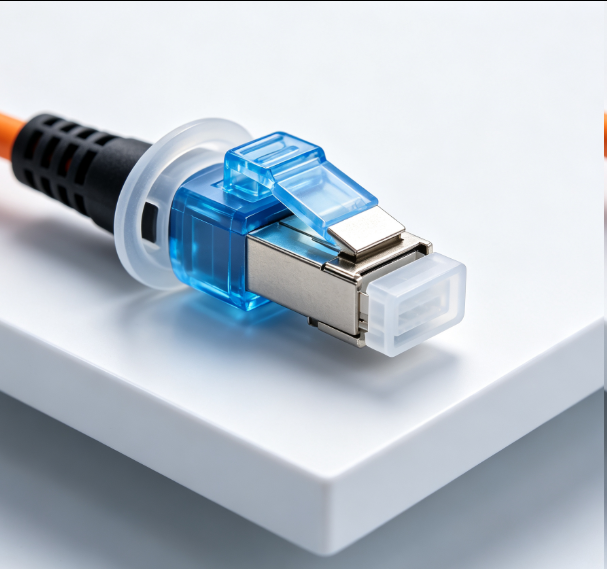
Dust Cap Equipped Fiber Patch Cable Protective
Sep 03, 2026929
-
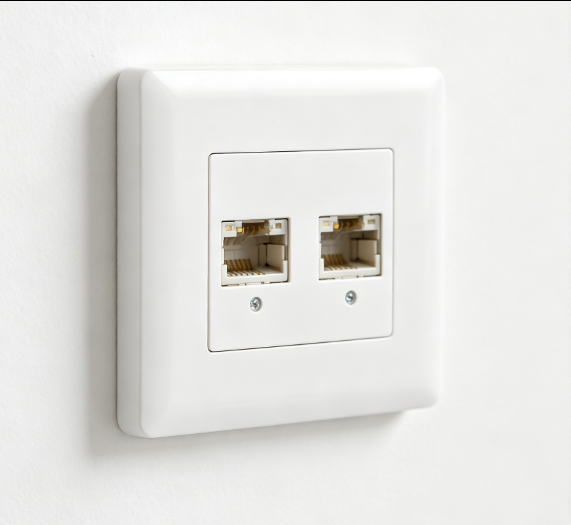
EU Standard Network Faceplate
Sep 11, 2026927