- Language
Cat6a Solid Cable vs Stranded for Wall Installation
When conducting home wall embedded wiring, choosing between Cat6a solid cable and stranded cable is critical to the long-term stability and service life of the home network. Solid cables are made of single solid copper core for each wire pair, while stranded cables are composed of multiple thin twisted copper wires. The two types of cables have huge differences in structural characteristics, bending resistance, signal transmission performance, and applicable scenarios, and solid cables are undoubtedly the preferred choice for long-term wall installation, while stranded cables are more suitable for mobile short-distance connections.
Cat6a solid cables have outstanding advantages in fixed wall wiring scenarios. The single solid copper core structure makes the cable have stronger signal transmission stability, lower resistance, and smaller signal attenuation, which can maintain ultra-high bandwidth and 10Gbps high-speed transmission performance for a long time after being embedded in the wall. Wall wiring is a one-time fixed construction, and the cable will be sealed in the wall pipe for decades without replacement. Solid cables have better compression resistance and aging resistance, are not easy to deform after long-term extrusion by line pipes, and can effectively avoid network failure caused by wire core deformation and signal interruption. In terms of anti-crosstalk performance, solid cables have more stable internal structure, which can better adapt to the complex electromagnetic environment inside the wall.
Cat6a stranded cables are designed for flexible mobile use, with multiple thin copper strands making the cable soft and bendable, suitable for frequent bending, plugging, and moving scenarios such as desktop jumpers and device temporary connections. However, stranded cables have higher signal attenuation and poorer long-term stability, and are prone to internal wire strand breakage after long-term fixed extrusion in wall pipes, leading to unstable network speeds and intermittent disconnection. In summary, for standardized home wall embedded wiring, Cat6a solid cable is the only professional choice with longer service life and more stable performance; stranded cable is only used for terminal device connection and cannot replace solid cable for hidden wall wiring.
-

-

-

-

-

-

-

-

-

-

Dustproof Cover Equipped Network Patch Panel
Oct 10, 20261117
-

How to wire a French switch outlet
Oct 28, 20261112
-

Network Cable Break Point Detector Tester
Oct 09, 20261089
-

Cat6 Lan Cable Length Limit for Gigabit
Oct 24, 20261085
-
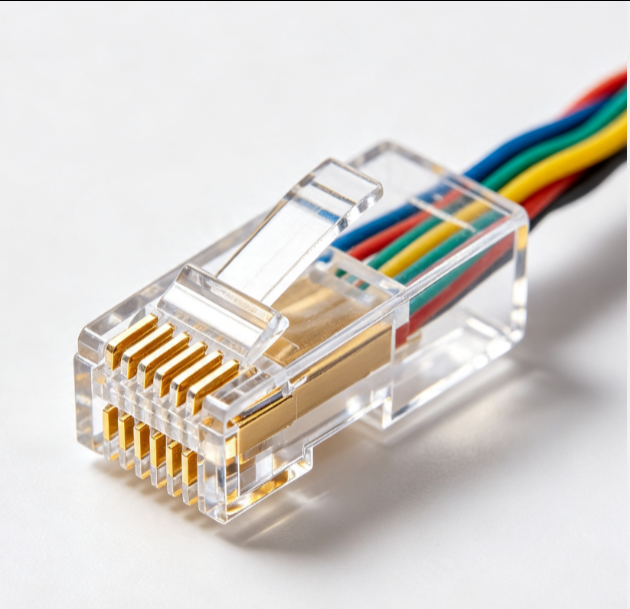
RJ45 Connector Cat6 for DIY Cable Making
Nov 20, 20261032