- Language
Dongguan cable manufacturer
As a key manufacturing hub in the Guangdong-Hong Kong-Macao Greater Bay Area, Dongguan benefits from a complete upstream and downstream cable industrial chain, mature automated manufacturing infrastructure and abundant third-party testing resources, home to many large-scale cable manufacturers. In the global cable trade and engineering supporting market, many buyers mistakenly equate certification logos with full compliance. Professional Dongguan cable manufacturers, however, adhere to a standard-first principle. Standardization runs through seven core stages: raw material selection, product structural design, manufacturing processes, inline inspection, finished-product testing, system management and delivery documentation. Standardization is far more than certificates; it forms a fully repeatable, verifiable and traceable production and quality control system. Whether for domestic GB national standards and CCC mandatory certification, or international specifications including IEC, EN, TIA/EIA, ISO, UL and VDE for overseas exports, Dongguan cable manufacturers strictly align with global multi-standard systems. We supply parameter-compliant, batch-stable and fully documented cables for system integrators, overseas traders, data centers, security, industrial automation and new-energy projects, fundamentally mitigating common industry risks such as falsely marked specifications, non-compliant performance, project acceptance failures and customs clearance obstacles.
The first layer of standardization lies in standard benchmarking at product design phase. All product development is built on authoritative regional specifications rather than empirical design. As flagship products of Dongguan cable factories, Cat5e, Cat6 and Cat6A structured cabling cables are manufactured in compliance with ANSI/TIA-568.2-D and ISO/IEC 11801 Class D/E/EA global cabling standards, which fully define bandwidth, impedance, attenuation, near-end crosstalk, far-end crosstalk, return loss and delay skew. During structural design, conductor gauge, insulation thickness, twist pitch of twisted pairs and cross isolation spline are determined according to standard requirements, ensuring all transmission indicators stay within allowable tolerance under 250MHz and 500MHz high frequency. Power cables and control cables follow IEC 60227, IEC 60502 and GB/T standards, specifying conductor cross-sectional area, insulation material, voltage resistance grade and sheath thickness. Special cables such as UL electronic wires, high-flex drag-chain cables, photovoltaic cables and automotive wiring harnesses comply with dedicated standards including UL758, UL444, TUV and IATF16949.
Standards vary greatly across regions: North America emphasizes UL safety regulations and VW-1 flame resistance; European projects implement EN flame retardant classes, LVD low voltage directive, RoHS and REACH hazardous substance control; domestic projects require CCC compulsory certification. At the early project stage, Dongguan cable manufacturers lock the full standard list according to the target market of customers, and output standardized drawings and BOM material lists to guarantee design compliance from the start. It avoids costly rework caused by non-compliance discovered only after mass production.
Raw material incoming inspection standards form the second critical checkpoint of standardized production. Around 80% of finished cable compliance depends on raw material quality. Falsely-specified low-cost cables mostly originate from non-standard raw materials. Dongguan cable manufacturers implement standardized IQC incoming inspection protocols. All raw materials including copper, plastic pellets, insulation compounds, aluminum foil, braid shielding and filling materials must pass physical, chemical and electrical testing before warehousing. Copper conductors are tested for purity and DC resistance as specified by standards, rejecting substitute conductors such as copper-clad aluminum and copper-clad steel. PVC, LSZH low-smoke zero-halogen, TPU and PUR sheath pellets are verified for melt index, tensile strength, elongation at break, flame retardancy and hazardous substance content. Recycled materials are assessed strictly according to standards, and unqualified recycled feedstock is forbidden for export engineering cables. Insulation materials are tested for dielectric strength and insulation resistance, and shielding materials for coverage and conductivity. Sample retention and test records are archived for every batch of raw materials to realize full batch traceability. Any raw material failing standard limits will be rejected directly and prohibited from entering production lines. Standardized IQC eliminates finished-product standard fluctuation caused by inconsistent raw material batches, maintaining stable compliance even for large-volume orders.
Third, standardized manufacturing processes. Automated production lines solidify process parameters into standard SOP work instructions for repeatable standardized production. Dongguan cable factories deploy MES manufacturing execution systems, embedding standard parameters of each cable model into workflows. Drawing, stranding, insulation extrusion, cabling, sheath extrusion, armoring, printing and coiling all operate within defined standard process windows. Key parameters including conductor twist pitch, insulation concentricity, sheath outer diameter, line speed and temperature are monitored in real time, triggering automatic alerts once out of standard range. For Cat6 network cables, twist pitches of four twisted pairs are fixed according to TIA standards, and cross spline forming processes are stabilized to prevent excessive crosstalk caused by arbitrary manual adjustment. Workshops follow standardized SOP strictly; operators are prohibited from modifying processes without authorization. IPQC inspectors sample products periodically following standardized checklists to test outer diameter, appearance, printing and conductor diameter, correcting process deviation timely. Standardized production unifies not only appearance, but guarantees that electrical, mechanical and environmental performance of every meter of cable remains consistently within standard ranges, avoiding performance fluctuations caused by manual experience-based operation in small workshops.
Fourth, standardized finished-product laboratory testing. Full type tests and batch sampling inspections are conducted against corresponding standards, verifying compliance with objective measured data. Dongguan cable factories build standardized in-house laboratories equipped with DC resistance bridges, network cable analyzers, high voltage withstand testers, thermal cycling aging chambers, tensile testers, combustion test devices and salt spray testers, operated under ISO/IEC17025 laboratory management specifications. Finished cables are sampled for OQC outgoing inspection in the ratio specified by standards for each batch. Data cables are tested for complete transmission parameters including attenuation and crosstalk. Power cables undergo conductor resistance, insulation resistance and power frequency withstand voltage tests. Flame-retardant cables complete single-cable and bundled combustion tests per EN and UL standards. Weather-resistant cables pass thermal aging, low-temperature bending and salt spray aging tests. Type tests cover full-range indicators and simulate performance after years of aging to verify long-term compliance. Original test data of all tests are archived automatically and standardized test reports are issued. Reports strictly reference clauses of corresponding international standards and can be directly applied for overseas project bidding, engineering acceptance and customs review. Non-conforming batches are isolated and reworked under standardized procedures, and defective goods will never be delivered. Standardized laboratory testing rejects appearance-only judgement; compliance conclusions are supported by measured data, eliminating the common industry issue of compliant samples but non-compliant mass production goods.
Fifth, standardized management systems. Supported by international system certifications, sustainable standardized management capability is established. Reputable Dongguan cable manufacturers widely adopt ISO9001 quality management system, ISO14001 environmental management system and ISO45001 occupational health and safety management system. For automotive harness clients, IATF16949 is implemented. IECQ QC080000 system controls hazardous substances for RoHS, REACH and SVHC compliance. System standards streamline R&D, procurement, production, testing, warehousing, delivery and after-sales services into documented standardized workflows. Regular internal audits and management reviews are carried out to correct non-conformities continuously. System certification is not a one-time certificate acquisition, but long-term consistent implementation to ensure standards are not interrupted by personnel turnover. For export orders, standardized document management systems are built to provide certificates, test reports, material declarations, RoHS statements and REACH declarations upon request, supporting customer factory audits, project acceptance and customs inspection.
Sixth, standardized delivery and documentation management bridges the gap between product standards and project acceptance. Many overseas projects fail acceptance not due to cable performance defects, but non-compliant supporting documents. Dongguan cable manufacturers deploy standardized delivery protocols. Cable printing follows specification requirements, clearly marking model, specification, standard number, manufacturer logo and meter marking for on-site verification by engineering inspectors. Packaging, labels and shipping marks are produced under export standard specifications. A full standardized technical document package is delivered with each order: datasheet, batch outgoing test report, compliance statement and certified copies of certificates. For large bidding projects, technical documents can be customized to match local standard formats of customers, and witness tests by third-party organizations are available. The standardized document system enables customers to quickly complete standard verification during tendering, site acceptance, final inspection and customs clearance, cutting communication costs and lowering project acceptance risks.
Supported by the full standardized system, Dongguan cables serve diversified application scenarios. Structured cabling network cables follow TIA/ISO standards for data centers, enterprise computer rooms, PoE security and smart homes. Power and control cables comply with IEC and national standards for building power distribution and municipal infrastructure. UL electronic wires and high-flex drag-chain cables meet UL and TUV standards for automated equipment and robots. LSZH low-smoke zero-halogen cables satisfy EN flame retardant requirements for subways, hospitals and large commercial complexes. Photovoltaic and new-energy cables follow TUV special standards for PV power stations and energy storage equipment. OEM and ODM customization is available within standard boundaries, while all customized development strictly adheres to selected target specifications without arbitrary modification of structures or materials.
In the global cable market competition, low-cost products often cut corners on standards, leading to undersized conductors, insufficient insulation thickness, falsely marked flame retardant grades and non-compliant transmission parameters. Although procurement cost is low in short term, such products may cause network failures, safety hazards and costly project acceptance losses. The core competitive advantage of professional Dongguan cable manufacturers lies in uncompromising commitment to standards. We implement global specifications throughout design, raw material control, manufacturing, testing, system management and delivery. Every reel of cable delivered to customers meets pre-agreed standards with repeatable performance, traceable data and verifiable documentation. Whether for large domestic infrastructure projects or transnational engineering exports to Europe, America, Southeast Asia, the Middle East and Australia, selecting a standardized Dongguan cable manufacturer means adopting a cable solution fully aligned with international specifications, under full-process standard control and trouble-free for acceptance. It builds a solid foundation of standard compliance for communication, power, industrial automation and new-energy projects worldwide.
-
-
-
-
-
-
-
-
-
-
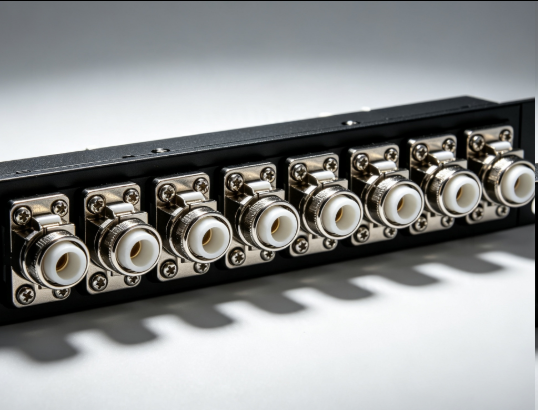
Flange Type Fixed Fiber Optic Adapter for Rack Panel
Sep 19, 2026955
-
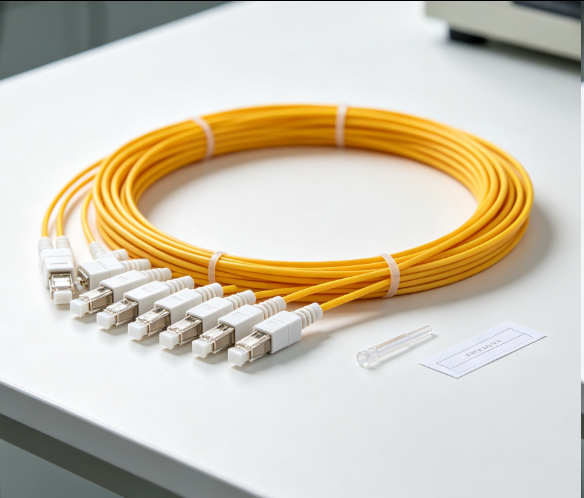
Fiber Pigtail 12 Cores SC UPC Single Mode
Sep 04, 2026930
-
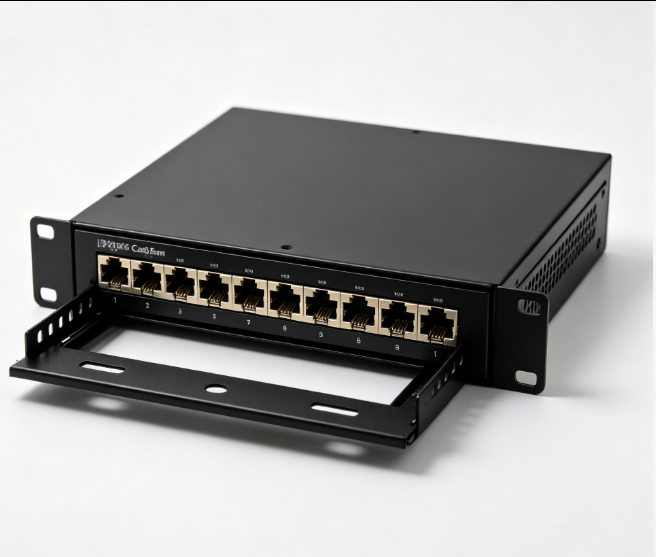
12 Port Cat6 Patch Panel Small Cabinet
Sep 12, 2026929
-
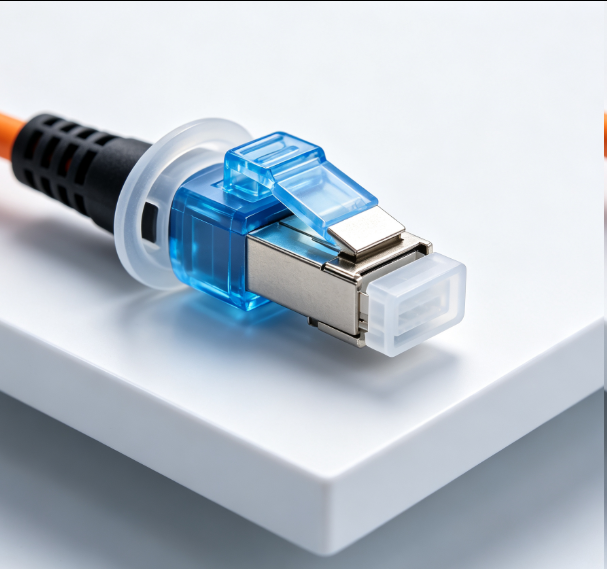
Dust Cap Equipped Fiber Patch Cable Protective
Sep 03, 2026929
-
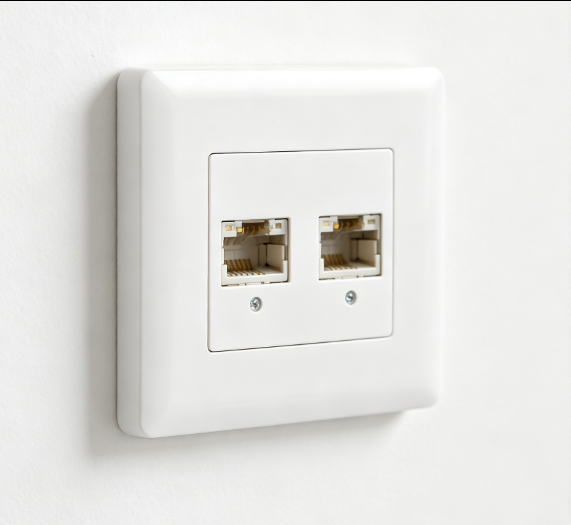
EU Standard Network Faceplate
Sep 11, 2026927