- Language
From Sample to Volume: The Cable Manufacturing Ecosystem in Shenzhen and How to Screen a Supplier
Anyone building hardware has met the same situation: the drawing is signed off, the enclosure is prototyped, and everything stalls on a cable — the specification cannot be found, the lead time slips, or consistency falls apart in volume. Cables look like supporting parts, yet they decide assembly efficiency, reliability, and whether certification passes at all. Shenzhen and its surroundings host a dense population of cable and harness firms, from electronic wire and ribbon cable to high-frequency cable and automotive harnesses, ranging from small processing workshops to manufacturers with full test capability. Understanding the structure of that ecosystem lowers sourcing risk more than comparing prices does. This article addresses the Shenzhen cable manufacturer question by covering what the cluster does well, how to reason about product families, how to judge factory capability, and which steps in cooperation most often go wrong.
1. Why the Industry Clusters Here
The supply radius is short. Upstream sits copper conductor, insulation compound, shielding material, and connectors; downstream sits consumer electronics, appliances, automotive electronics, industrial equipment, and new energy. The Pearl River Delta has scale in all of these, so material movement during sampling is measured in hours rather than weeks.
Sampling is fast. Repeated revision before a design freezes is normal, and a local supplier can turn a sample in days, which matters far more to project rhythm than a small difference in unit price.
Process coverage is broad. Cutting, stripping, crimping, soldering, overmoulding, braiding, wrapping, printing, and taping are spread across firms of different scale, so a buyer can assemble the steps needed or work with a factory that runs the full sequence.
Cost structure is transparent. Copper, compound, labour, and tooling add up clearly, and quoted differences can usually be traced to a specific step.
2. Product Families and What to Look At
Electronic wire and ribbon cable. Sizes are marked in AWG, and selection goes beyond gauge to conductor construction (solid or stranded), insulation (PVC, PE, silicone, fluoropolymer), and temperature class. Flexibility and flex life usually affect assembly more than the nominal datasheet numbers.
Connector harnesses. Terminals, housings, and crimp quality decide contact reliability; crimp height, pull force, and terminal plating are the control points. Automotive and industrial harnesses add water resistance, oil resistance, and vibration tolerance.
High-frequency and data cable. Impedance, attenuation, crosstalk, and shielding structure govern signal integrity, and USB, HDMI, coaxial, and differential pairs each follow their own specification, so selection should lean on test reports rather than appearance.
Power and charging cable. Conductor cross-section, insulation thickness, and withstand voltage follow current and environment, and charging products also need flame resistance and temperature rise considered.
Customised assemblies. Overmoulded heads, ferrite beads, and labels often need tooling, so mould ownership and amortisation should be stated at quotation stage.
3. Judging a Factory's Real Capability
No single item below is decisive, but together they draw the profile of a Shenzhen cable manufacturer within a single site visit.
Check the scope of certification. ISO 9001 is the baseline, automotive work usually requires IATF 16949, and the product side involves UL, CCC, CE, plus RoHS and REACH. Certificates should match the actual product category rather than one document standing in for everything.
Incoming control shows in records. Whether copper is checked per batch for conductivity and diameter, whether compound arrives with material certificates and RoHS reports, whether terminal plating thickness is sampled — those records reveal whether incoming inspection actually happens.
Process control shows on the floor. Cut length accuracy, strip length consistency, crimp cross-section checks, and soldering profiles are the heart of harness quality, and first-article, patrol, and last-piece records say more than the number of flow charts on the wall.
Test capability shows in equipment and scope. Continuity, hipot, insulation resistance, pull test, flex cycling, salt fog, and thermal cycling: which are available, whether the equipment is in use, and whether reports can be traced all set the floor of outgoing quality.
Traceability shows in numbering. Whether wire batch, terminal batch, and finished serial number link together decides how fast a complaint can be located; without traceability, the only remedy is replacement.
4. Practical Points in Cooperation
Sampling and tooling fees should be explicit. Which charges are refundable, under what conditions, who owns the mould and how it transfers — better written into the contract.
MOQ and tiered pricing should match real demand. Low prices usually assume large volumes, and forcing them down during a pilot run tends to buy either a downgraded build or a delayed shipment.
Lead time should be confirmed process by process. Cutting and crimping are quick, overmoulding and braiding are slow, and special terminals take longer to procure, so the bottleneck is usually an accessory rather than the main line.
Change management needs a procedure. Material substitution, terminal changes, and print modifications should go through written change requests and sample approval, since verbal agreement is hard to trace later.
Compliance documents should ship with the goods. RoHS, REACH, material declarations, and conflict-mineral statements, if missing, surface during a customer audit or at export.
-

-

-

-

-

-

-

-

-

-

Dustproof Cover Equipped Network Patch Panel
Oct 10, 20261117
-

How to wire a French switch outlet
Oct 28, 20261112
-

Network Cable Break Point Detector Tester
Oct 09, 20261089
-

Cat6 Lan Cable Length Limit for Gigabit
Oct 24, 20261085
-
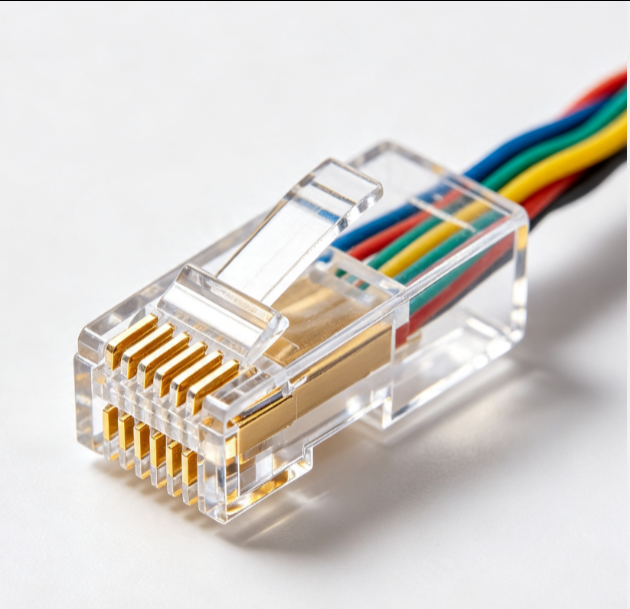
RJ45 Connector Cat6 for DIY Cable Making
Nov 20, 20261032