- Language
German Double socket
German double earthed sockets are widely deployed in European residences, commercial premises and international construction projects. Wiring planning of the full power circuit directly governs long-term operational safety and load capacity. Most models are rated 16A at 250V. Although the two outlets share internal interconnections, wiring practice cannot be treated simply as two separate single sockets in parallel. Compliance with electrical standards covers cable selection, circuit allocation, termination craftsmanship, protective arrangements and acceptance testing. Common site faults including overheating terminals, unintended RCD tripping and abnormal voltage drop under load usually stem from non-standard wiring work.
Cable specification forms the foundation of wiring. Standard residential socket circuits normally use 3-core cables with protective earth; 1.5 mm² conductors work with 16A protective devices. Kitchens, workbenches or long cable runs with many high-power appliances benefit from upgrading to 2.5 mm² to reduce temperature rise and voltage loss under heavy current. Core colours follow harmonised rules: brown for live conductor, blue for neutral conductor, and green-yellow exclusively for protective earth. The earth wire must never be cut or interrupted randomly and shall maintain continuous conductivity throughout the circuit. While internal links inside the double socket energise both outlets once the main terminals are fed, the protective earth path still requires reliable continuity and must not rely solely on internal socket contacts.
Circuit topology and load balancing are essential. Radial wiring is preferred for this type of socket; unrestricted daisy-chain extension is not recommended. A maximum number of outlets applies for each residential circuit. Fewer outlets are permitted in kitchens and workshops with concentrated high-power loads. High-consumption appliances such as microwave ovens and water heaters should be assigned dedicated circuits. Even though both outlets sit on one faceplate, they count as two accessible tapping points for load calculation. Total circuit margin must account for both positions instead of treating the assembly as a single socket. Multiple double sockets chained along one circuit create progressive voltage drop at downstream outlets, leading to protective trips and terminal overheating when several devices run at full load simultaneously.
Back box installation and cable routing affect termination space and heat dissipation. Box depth and internal volume must suit double socket modules and leave slack cable without tight cramming or sharp bending. When running cables inside conduits, maintain separation from data and fibre lines to limit electromagnetic interference. Conduit bends follow minimum bend radii to avoid insulation damage. A suitable service loop is left inside each box for future maintenance. Stripped length matches terminal requirements; exposed copper must not extend beyond terminals, and stray strands must not touch adjacent contacts to prevent short-circuit risks.
Termination quality is critical for safety. Each terminal has a recommended tightening torque. Excessive torque crushes conductors while insufficient torque raises contact resistance and causes thermal buildup under sustained load. The green-yellow earth conductor connects first to the earth terminal to guarantee earth engagement before live contacts close. For spur wiring from one double socket onward, incoming and outgoing cables land on separate terminals, and earth branches remain continuous. Do not overload one terminal with excessive conductors beyond its designed capacity. After wiring, remove copper debris and foreign objects and verify proper insulation before mounting modules and faceplates.
Protection devices must be correctly specified. Overcurrent protection matching the circuit sits upstream, paired with residual current protection to cut supply quickly during earth faults. Zones exposed to moisture such as bathrooms and balconies require higher ingress-rated units and sealed conduit entries to stop humidity entering boxes and corroding conductors. Protection settings vary by location instead of using identical configurations everywhere.
Acceptance testing after installation is mandatory. Simple power-on with a plugged appliance is not sufficient. Professional testers verify earth continuity, insulation resistance, polarity and voltage drop. Poor earth resistance means failed fault protection, while low insulation resistance creates leakage hazards. Every outlet is logged for bulk projects for acceptance records. Periodic maintenance checks monitor faceplate temperature and terminal tightness; simultaneous heavy loads on both outlets should be avoided for extended periods.
To conclude, wiring for this double socket is a rigorous electrical task rather than a basic three-wire connection. Cable sizing, load planning, box placement, torque control, earth continuity, protective hardware and post-install testing are interdependent. Standard-compliant wiring with controlled circuit loading and intact earth paths reduces hazards such as overheating, leakage and tripping. This supports stable rated operation for residential and commercial installations across international markets.
-

-

-

-

-

-

-

-

-

-

Dustproof Cover Equipped Network Patch Panel
Oct 10, 20261117
-

How to wire a French switch outlet
Oct 28, 20261112
-

Network Cable Break Point Detector Tester
Oct 09, 20261089
-

Cat6 Lan Cable Length Limit for Gigabit
Oct 24, 20261085
-
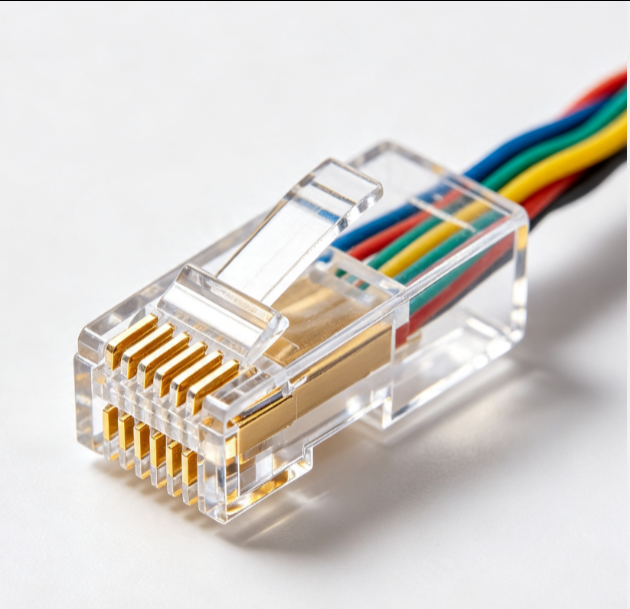
RJ45 Connector Cat6 for DIY Cable Making
Nov 20, 20261032