- Language
Hongkong Cable Factory: Observations on Cable Supply Chain and Compliance Management under a Trade Hub Model
Hong Kong has limited land space for large-scale heavy industrial production, so the structure of its wire and cable sector differs significantly from manufacturing-oriented plants in mainland regions. Many local operators do not focus on full-range heavy manufacturing as their core positioning. Instead, they leverage port resources, free-trade policies and mature international certification services to build a cross-border coordinated supply chain. For many overseas purchasers, the appeal of these operators lies not in ultra-low-cost mass capacity, but in smooth customs clearance, multi-standard integration, sample verification and global order coordination.
Hong Kong’s geographic and institutional conditions form its unique industrial role. As a free port, it simplifies cargo movement without complicated transit procedures. Containers departing from Kwai Tsing terminals can reach Southeast Asia, Europe, Oceania and North America efficiently. Meanwhile, commercial, inspection and legal support services are well established locally. Many international certification bodies maintain branches here, enabling convenient access to sample testing, certificate renewal and standard interpretation. This setup suits cable orders that must satisfy access rules for multiple countries. One batch of goods may need to comply simultaneously with CE and RoHS for Europe, UL and CSA for North America, SAA for Australia, BS for the UK and other specifications. Local teams can coordinate documentation, test scheduling and batch control.
Unlike large-scale manufacturing bases in mainland China, most local workshops in Hong Kong are compact, usually ranging from 800 to 4,000 square meters. They are mostly located in industrial buildings in Tsuen Wan, Yuen Long and Tuen Mun. These multi-story spaces fit assembly, wire processing, finished-product testing, sorting and packing, but are not ideal for permanent heavy production lines such as wire drawing and cabling. A widely adopted model is “Hong Kong commercial operation plus mainland production base”: negotiation, sample confirmation, certification control, order review, customs declaration and overseas after-sales are managed in Hong Kong, while heavy processes including copper processing, insulation extrusion, jacketing and mass cabling are carried out at nearby Pearl River Delta facilities. This division balances land, labor and compliance expenses and has been the mainstream arrangement for years.
In terms of product portfolio, local operators tend to focus on customised, small-to-medium batch cables, such as equipment harnesses, power cords, shielded signal cables, RF coaxial cables and specialised wiring for medical and instrument devices. High-voltage large-section power cables and long-distance communication optical cables requiring huge output are generally not their primary product lines. Custom orders feature frequent specification changes and relatively low per-batch volume, demanding strict drawing checks, sample approval and first-article inspection. Many buyers complete sample testing in Hong Kong to verify full standard compliance before mass production, reducing risks for cross-border projects.
Compliance is the backbone of this operating model. Hong Kong’s inspection and commercial ecosystem has long aligned with international codes, with mature workflows for material traceability, hazardous substance control, labelling and shipping documentation. Cable compliance covers conductor quality, insulation and sheath materials, flame performance, heavy metals and phthalate limits. For EU destinations, RoHS and REACH are baseline requirements. For North America, wire gauge, voltage resistance, temperature rating and flame classification must match relevant UL categories. Some engineering orders also require witness testing and annual factory audits by third parties. Operators maintain material logs and conduct incoming sampling for copper conductors, PVC, TPE, low-smoke zero-halogen compounds, aluminium foil and braided shielding, keeping material certificates and test records to avoid detention at destination ports.
Delivery and logistics workflows differ from standalone mainland factories. After order confirmation, technical teams issue drawings, specifications and labelling requirements and submit samples to accredited laboratories for pre-testing. Once samples pass, production instructions are sent to partner manufacturing sites. Critical test data from production is shared with the Hong Kong control team. After production, finished goods can go directly to terminals for loading, or be transferred to local warehouses for re-inspection, repacking, labelling and consolidation. Consolidated container shipments help small buyers combine different specifications and destinations in one container to cut sea freight costs. Sample lead time commonly ranges from 3 to 7 days. Custom small-batch orders usually take 18 to 35 days, depending on certification complexity. New certificate applications may extend the cycle to 45–70 days.
Purchasers can evaluate potential partners through five key areas. First, certification records: verify covered part numbers, standard editions and validity, and confirm the connection between certificate holders and order entities. Second, testing capacity: check whether testing is done in-house or via accredited third parties, and confirm equipment including conductor resistance testers, hipot testers, flame test rigs and thermal ageing chambers. Third, supply chain traceability: the ability to track copper and plastic raw material sources for each batch. Fourth, document capability: provision of invoices, packing lists, origin documents and test reports matching customs requirements of destination countries. Fifth, contingency protocols for non-conformity, labelling errors and transit damage after overseas arrival.
In cost composition, spending on local commercial operations, certification, warehousing and customs brokerage accounts for a larger share than in pure production plants. Raw material pricing remains the biggest variable; copper price shifts directly affect cable quotations, and quotation validity is normally limited to 3–10 days. This model is not designed for projects chasing maximum volume at the lowest unit price. It suits multi-country scattered orders, engineering supporting harnesses, instrument wiring and export projects requiring frequent certification updates.
Low-smoke zero-halogen and halogen-free flame-retardant cables are seeing steady rising demand, especially for overseas public buildings, rail transit and medical equipment. Digital traceability is also expanding, with some buyers requiring full records covering materials, manufacturing, testing and shipment. The value of cross-border collaboration lies in combining mature mainland manufacturing capacity with Hong Kong’s strengths in certification, logistics and trade services to deliver one-stop multi-standard solutions for global buyers.
Selecting a reliable partner depends less on branding and more on whether the control chain is complete. A stable cross-border supply chain requires close coordination among technical, QC, documentation and logistics teams, embedding standard requirements into sampling, incoming material inspection, mass production and shipment. Clear work division, complete record-keeping and timely test follow-up form the foundation of consistent cable delivery across borders.
-

-

-

-

-

-

-

-

-

-

Dustproof Cover Equipped Network Patch Panel
Oct 10, 20261117
-

How to wire a French switch outlet
Oct 28, 20261112
-

Network Cable Break Point Detector Tester
Oct 09, 20261089
-

Cat6 Lan Cable Length Limit for Gigabit
Oct 24, 20261085
-
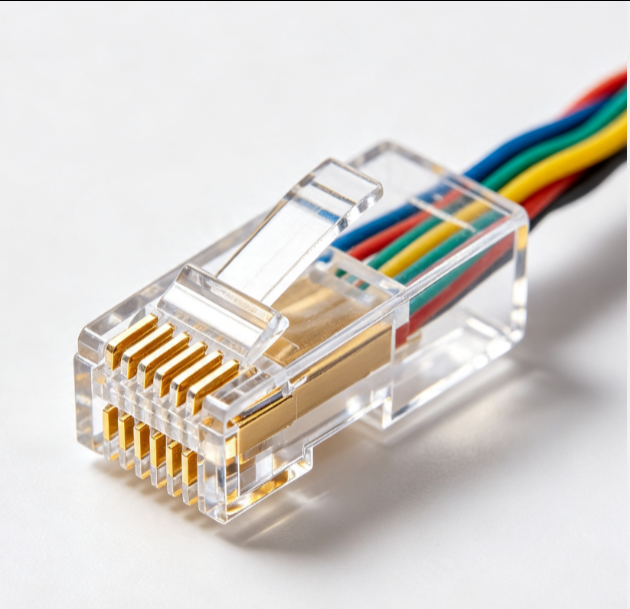
RJ45 Connector Cat6 for DIY Cable Making
Nov 20, 20261032