- Language
Shenzhen cable manufacturer
Shenzhen cable manufacturer is the core R&D and production entity of integrated wiring cables in China, specializing in various network copper cables, fiber jumpers and engineering wiring cables. Its products are widely used in data centers, smart buildings, industrial automation, security monitoring, government and enterprise network projects. In high-speed network transmission scenarios, cable energy loss is a core factor restricting network speed, transmission distance and operational energy efficiency, which directly determines link transmission stability, equipment power consumption and project acceptance qualification rate. Compared with ordinary civil cables, high-end engineering network cables have strict standards for energy loss control. Slight energy attenuation will cause high-frequency data packet loss, network speed fluctuation, insufficient PoE power supply and other faults. As a professional Shenzhen cable manufacturer, accurately controlling cable energy loss mechanism, optimizing production processes and strictly managing loss parameters are the core competitiveness to create high-performance wiring products, adapt to 10-gigabit high-speed transmission and meet complex engineering working conditions, as well as a key technical advantage distinguishing it from small and medium-sized unknown manufacturers.
Network cable energy loss is mainly divided into four categories: conductor resistance loss, high-frequency skin effect loss, dielectric insulation loss and crosstalk coupling loss. These losses overlap with each other and jointly affect cable transmission energy efficiency. Conductor resistance loss is the most basic energy loss, stemming from the inherent resistance of copper core conductors. Part of electric energy is converted into heat energy and consumed during current transmission. The longer the cable and the thinner the wire diameter, the higher the resistance value and the more significant the energy loss. The skin effect occurs under high-frequency working conditions, where high-frequency signal current only flows on the surface of the copper core, greatly reducing the effective conductive cross-sectional area and sharply increasing equivalent resistance, which intensifies energy attenuation in 10-gigabit high-frequency transmission and explains why high-speed network cables suffer greater loss than low-speed ones. Meanwhile, cable insulation sheaths and dielectric layers are not absolutely insulated, and micro dielectric loss will be generated under high-frequency electric field oscillation, continuously consuming transmission energy. In addition, crosstalk coupling between wire pairs causes signal energy leakage and forms coupling loss, further reducing transmission efficiency.
Substandard energy loss of low-end cables in the market is a common serious problem, mainly caused by the lack of production process and raw material control. To cut costs, some small manufacturers adopt low-purity mixed copper and copper-clad aluminum instead of high-purity oxygen-free copper, which greatly increases conductor resistivity and doubles basic resistance loss. Reduced wire diameter and irregular twisting pitch design damage impedance balance and aggravate high-frequency skin loss and crosstalk loss. Meanwhile, low-quality insulating dielectric materials feature uneven texture and poor sealing with excessive dielectric loss coefficient, leading to rising energy loss during long-term operation. Although such substandard cables have low procurement costs, they suffer from high transmission energy consumption and severe signal attenuation, failing to support stable high-speed data transmission and increasing the operating load of switches and power supply equipment. Their long-term energy consumption and operation and maintenance costs are far higher than qualified cables.
Professional Shenzhen cable manufacturers strictly control all types of cable energy loss through full-dimensional optimization of raw materials, structural design and production processes. High-purity oxygen-free copper cores of 23AWG/24AWG are uniformly adopted in raw material procurement, featuring high purity and low resistivity to minimize basic conductor heat loss and weaken energy attenuation caused by high-frequency skin effect. In structural design, the differentiated twisting pitch of four pairs of twisted wires is precisely calibrated, and the wire arrangement structure is optimized to suppress internal crosstalk coupling loss and ensure balanced and stable impedance of the whole cable. Low-loss polyethylene insulating materials are selected for dielectrics and sheaths to strictly control the dielectric loss coefficient and reduce energy loss under high-frequency electric fields. Integrated plastic extrusion, precise stranding and constant-temperature shaping processes are adopted in production to eliminate process defects such as uneven wire diameter and eccentric insulation layers, fundamentally reduce various energy losses, and ensure that product loss parameters fully comply with TIA/EIA and ISO international standards.
Precise control of cable energy loss has high practical value for engineering applications. Low-loss cables can effectively reduce signal attenuation, ensure stable transmission of 10-gigabit high-speed signals within the 100-meter standard link, and eliminate problems such as high-frequency stuttering, data packet loss and link interruption. They also reduce electric energy heat loss, lower the operating power consumption and heat hazards of network equipment, and extend the service life of the entire wiring system. In PoE power supply projects, low-loss cables reduce power supply energy loss, ensure stable power supply for remote equipment, and avoid equipment restart and insufficient power supply faults caused by excessive line loss. Shenzhen cable manufacturers continuously iterate low-loss production technologies and solve the pain points of high loss, high attenuation and low stability of traditional cables through standardized and refined quality control systems, providing high-performance, low-energy-consumption and high-reliability wiring products for various high-end network projects and realizing efficient, stable and energy-saving operation of network transmission.
-
-
-
-
-
-
-
-
-
-
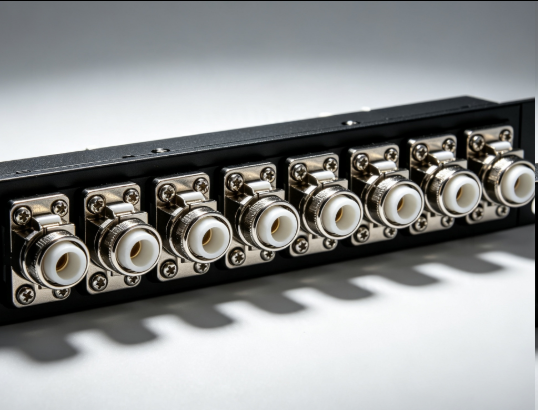
Flange Type Fixed Fiber Optic Adapter for Rack Panel
Sep 19, 2026955
-
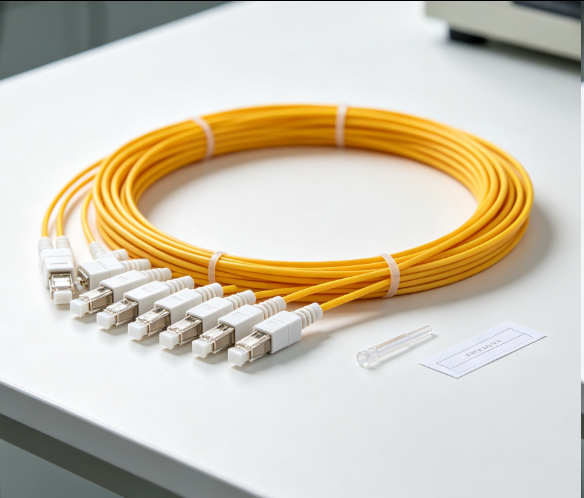
Fiber Pigtail 12 Cores SC UPC Single Mode
Sep 04, 2026930
-
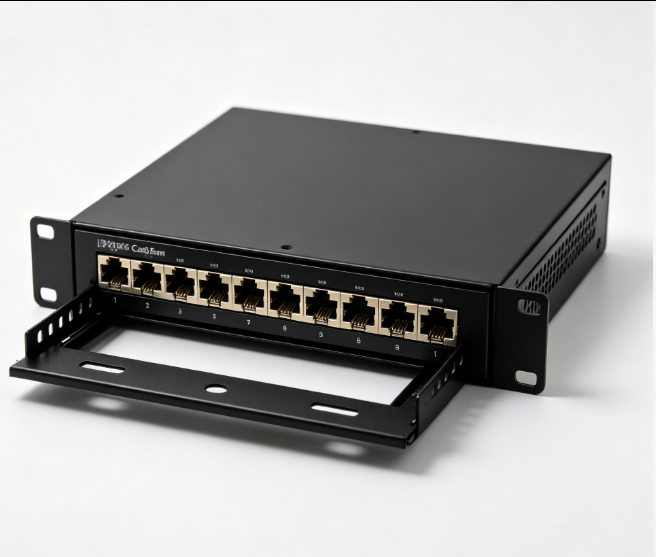
12 Port Cat6 Patch Panel Small Cabinet
Sep 12, 2026929
-
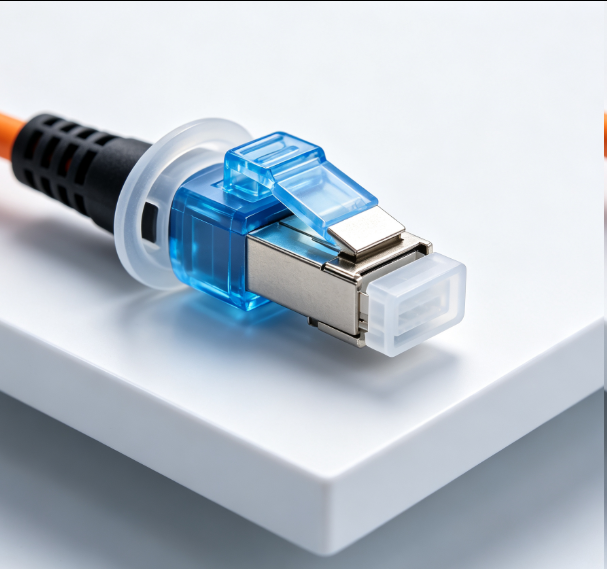
Dust Cap Equipped Fiber Patch Cable Protective
Sep 03, 2026929
-
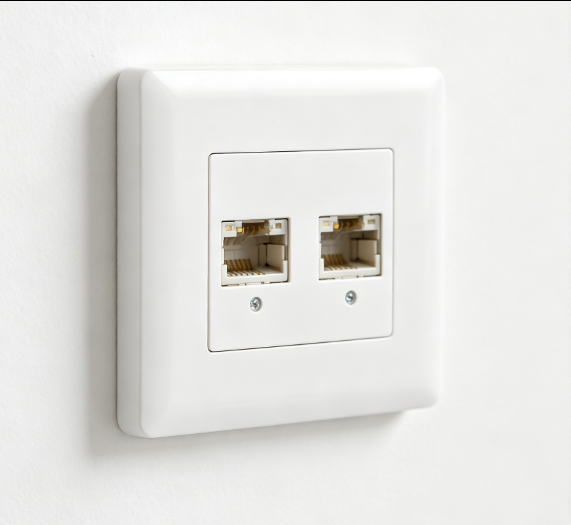
EU Standard Network Faceplate
Sep 11, 2026927