- Language
Technical Analysis and Application Guide of Cat6a Shielded Patch Cable
With the rapid popularization of 10G Ethernet networks, the stability and anti-interference ability of data transmission have become the core demands of network deployment. Especially in scenarios with dense equipment and complex electromagnetic environments, ordinary unshielded patch cables can no longer meet the purity requirements of high-frequency transmission. As a high-end derivative of Augmented Category 6 cables, the Cat6a Shielded Patch Cable inherits the 10G transmission performance of Cat6a and greatly improves the ability to resist Electromagnetic Interference (EMI) and Radio Frequency Interference (RFI) through professional shielding structure design. At the same time, it suppresses crosstalk between pairs, making it the core transmission component for high-interference scenarios such as data centers, industrial control, and high-end offices. This article will comprehensively analyze the technical advantages and application value of Cat6a shielded patch cables from the dimensions of shielding technology principle, core technical parameters, structural design highlights, applicable scenarios, and usage specifications, providing professional reference for various high-demand network deployments.
I. Core Positioning: The Nature and Value of Cat6a Shielded Patch Cables
The Cat6a Shielded Patch Cable, full name Augmented Category 6 Shielded Patch Cable, strictly complies with international standards ISO/IEC 11801 and ANSI/TIA-568.2-D. It is a high-speed transmission patch cable specially designed for high-frequency and high-interference environments. Its core value lies in the dual advantages of "10G transmission + high-efficiency shielding" — it not only has the 500MHz bandwidth and stable 10Gbps transmission capacity of the Cat6a standard, which can meet the needs of large-file high-speed transmission, 4K/8K streaming media, high-frequency data interaction, etc.; but also blocks the impact of external electromagnetic interference on signals through the wrapping design of the metal shielding layer, and at the same time suppresses crosstalk between pairs inside the cable, ensuring the purity of signal transmission. It solves the problems of freezes, packet losses, and transmission rate attenuation that are prone to occur in high-interference scenarios with ordinary Unshielded Twisted Pair (UTP) patch cables.
Compared with unshielded Cat6a patch cables, the shielded version focuses more on anti-interference performance. Although there are slight differences in wiring flexibility and cost, it can adapt to high-interference scenarios that unshielded patch cables cannot handle; compared with ordinary Cat6 shielded patch cables, the bandwidth of Cat6a shielded patch cables is doubled (from 250MHz to 500MHz), which can stably support 10G transmission and has stronger future expandability, making it the preferred transmission solution that balances "high speed" and "stability".
II. Shielding Technology Principle: Analyzing the Anti-Interference Core of Cat6a Shielded Patch Cables
The anti-interference ability of Cat6a shielded patch cables comes from their professional shielding structure design. According to the different shielding methods, mainstream Cat6a shielded patch cables are mainly divided into two categories (both are commonly used industrial-grade specifications), and their technical principles and applicable scenarios have their own focuses, as follows:
(I) Common Shielding Types and Principles
S/FTP (Screened/Foil Twisted Pair): The most commonly used Cat6a shielding structure, that is, each pair of cores is wrapped with an independent foil shielding layer (pair-wise shielding), and then the 4 pairs of cores are integrally wrapped with a layer of aluminum-magnesium braided mesh or foil (overall shielding). The double shielding design can achieve "double protection": the inner foil shields crosstalk between pairs (NEXT, FEXT) to ensure the purity of the signal of each pair of cores; the outer overall shielding blocks external electromagnetic and radio frequency interference, adapting to scenarios with dense equipment and many interference sources (such as data centers and computer rooms). The crosstalk suppression capability is more than 30dB higher than that of unshielded patch cables.
FTP (Foil Twisted Pair): Only a layer of overall shielding layer (foil or aluminum-magnesium braided mesh) is wrapped outside the 4 pairs of cores. Its core function is to block external interference, and at the same time simplify the structure and improve wiring flexibility, with a slightly lower cost than the S/FTP type. It is suitable for scenarios with moderate interference intensity and non-extreme requirements for crosstalk control (such as high-end offices and ordinary monitoring computer rooms), and can meet the basic anti-interference needs of 10G transmission.
(II) Core Advantages of Shielding
The shielding structure of Cat6a shielded patch cables essentially forms an "electromagnetic shield" through the metal shielding layer (foil, aluminum-magnesium braided mesh). According to the principle of electromagnetic induction, external interference signals are introduced into the ground terminal to avoid interference signals invading the core and affecting transmission; at the same time, it suppresses the outward radiation of the core's own signals, reduces interference to surrounding equipment, and achieves "two-way anti-interference". Its core advantages are reflected in two points: first, high-frequency transmission stability — in 500MHz high-frequency scenarios, the interference attenuation is ≤5%, which is far better than that of unshielded patch cables (interference attenuation can reach 15%-25%); second, signal purity — key indicators such as crosstalk and return loss are better than the Cat6a unshielded standard, ensuring no freezes or packet losses in 10Gbps transmission.
III. Core Technical Parameters: Laying the Foundation for 10G Shielded Transmission
The technical parameters of Cat6a shielded patch cables strictly follow the Augmented Category 6 shielding standard, and all indicators are designed around "10G transmission" and "high-efficiency shielding". The key parameters are as follows, which accurately match the transmission needs of high-interference scenarios:
Transmission Performance: The rated bandwidth is 500MHz, which can stably carry the 10GBASE-T 10G Ethernet transmission rate, with a transmission distance ≤100 meters (applicable to conventional patch cable lengths such as 0.5m-30m); the signal attenuation of 3m length patch cable is ≤3.5dB, the delay skew is ≤45ns/100m, the return loss is ≤-24dB, and the crosstalk (NEXT) is ≤-39dB, ensuring the stability and signal purity of high-frequency transmission, and fully meeting the high-speed transmission needs of 10G networks.
Conductor Specifications: It adopts 26AWG (7/0.16mm) stranded pure bare copper conductors, with 24AWG available for high-end models, and the copper core purity is ≥99.99%; the loop resistance at 20℃ is ≤150Ω/km, and the NVP (Nominal Velocity of Propagation) value reaches 76%, featuring excellent conductivity, which can effectively reduce signal transmission loss. Combined with the shielding structure, it further improves transmission efficiency. The stranded design also has good flexibility, facilitating bending and wiring, and not easy to break.
Shielding Parameters: S/FTP type: The coverage rate of pair-wise foil shielding is ≥40%, and the overall shielding adopts aluminum-magnesium braided mesh (braiding density ≥85%); FTP type: The coverage rate of overall shielding foil is ≥90% or the braiding density is ≥85%; the grounding resistance of the shielding layer is ≤1Ω/m, ensuring that interference signals are effectively derived and avoiding the shielding layer becoming an "interference source".
Sheath Material: The outer layer adopts two types of sheath materials: PVC (CM grade) and LSZH (Low Smoke Zero Halogen), adapting to different scenario needs: PVC sheath has good wear resistance and corrosion resistance, and is flexible, suitable for conventional indoor scenarios; LSZH sheath is flame-retardant, low-smoke, and non-toxic, releasing no toxic gases when burned, complying with the IEC 60332-1 flame-retardant standard, suitable for scenarios with high safety and environmental protection requirements such as computer rooms, hospitals, and schools. Both materials meet RoHS and CE environmental certifications.
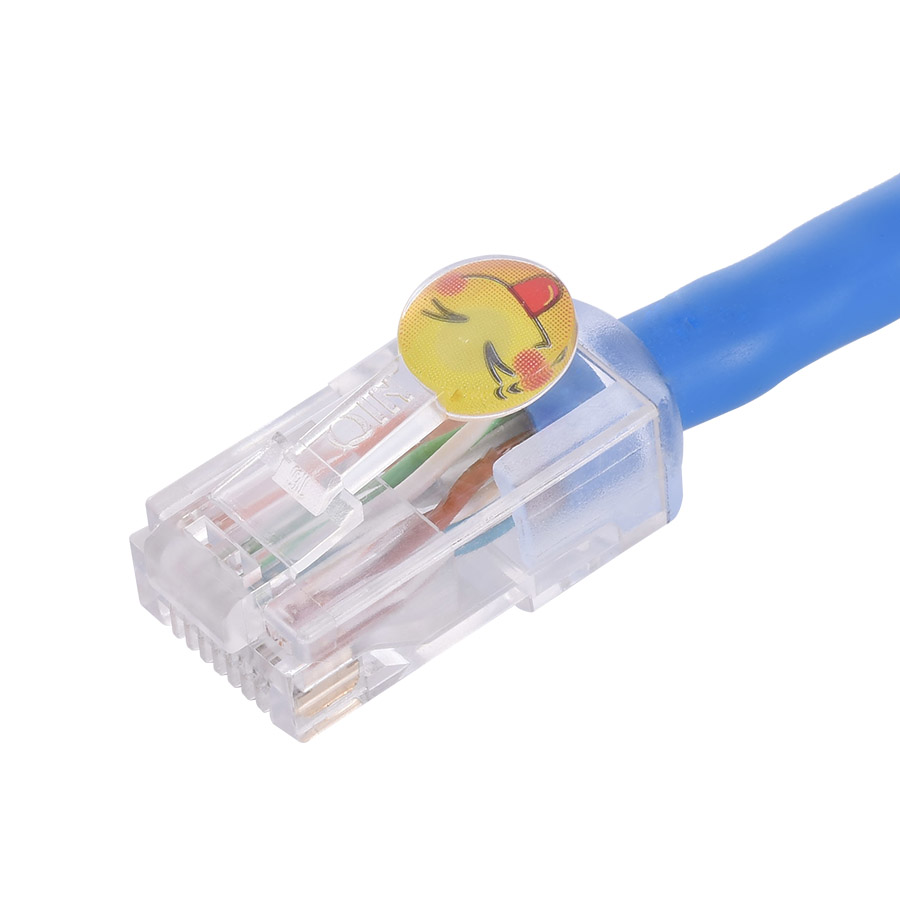
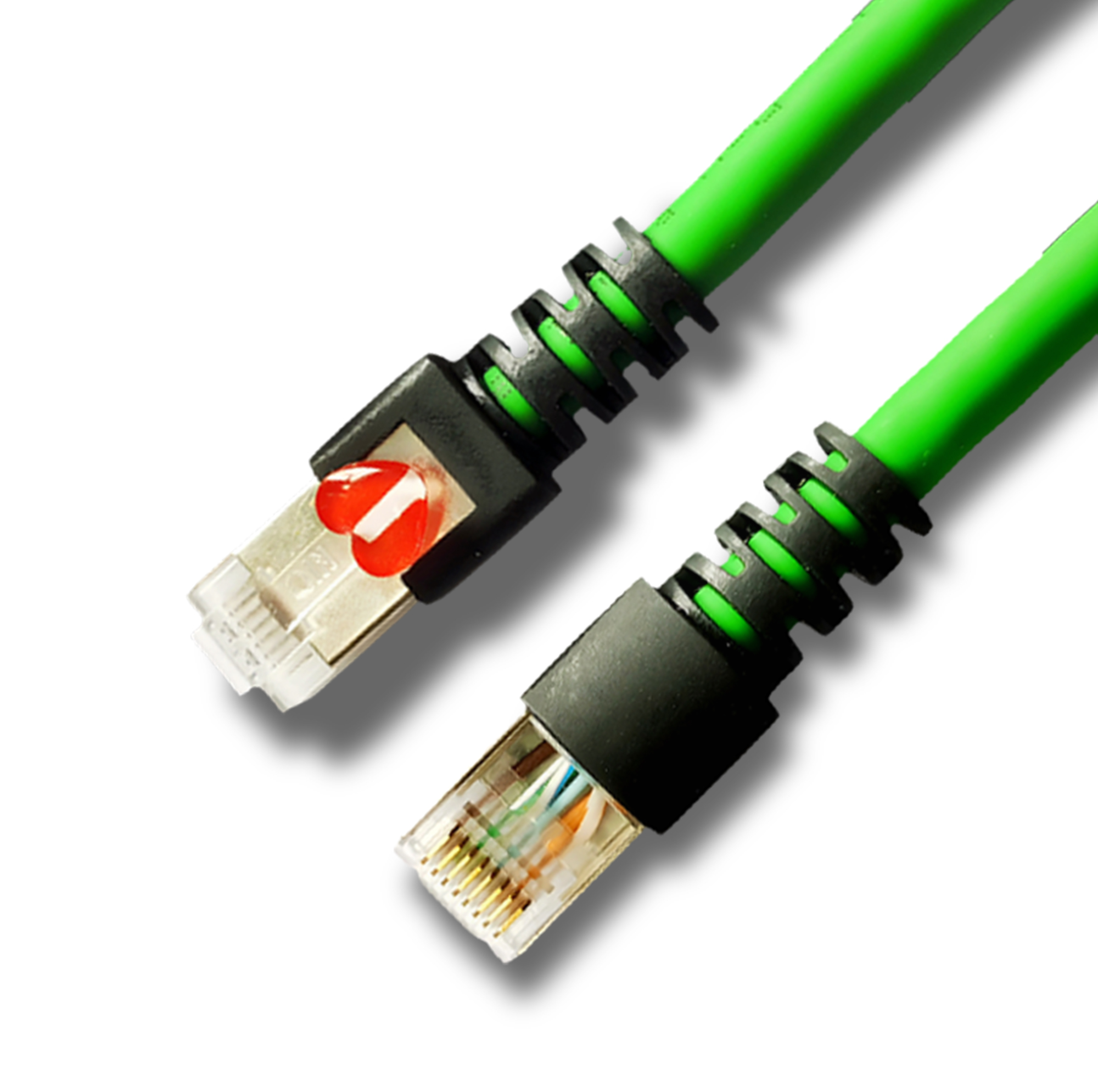
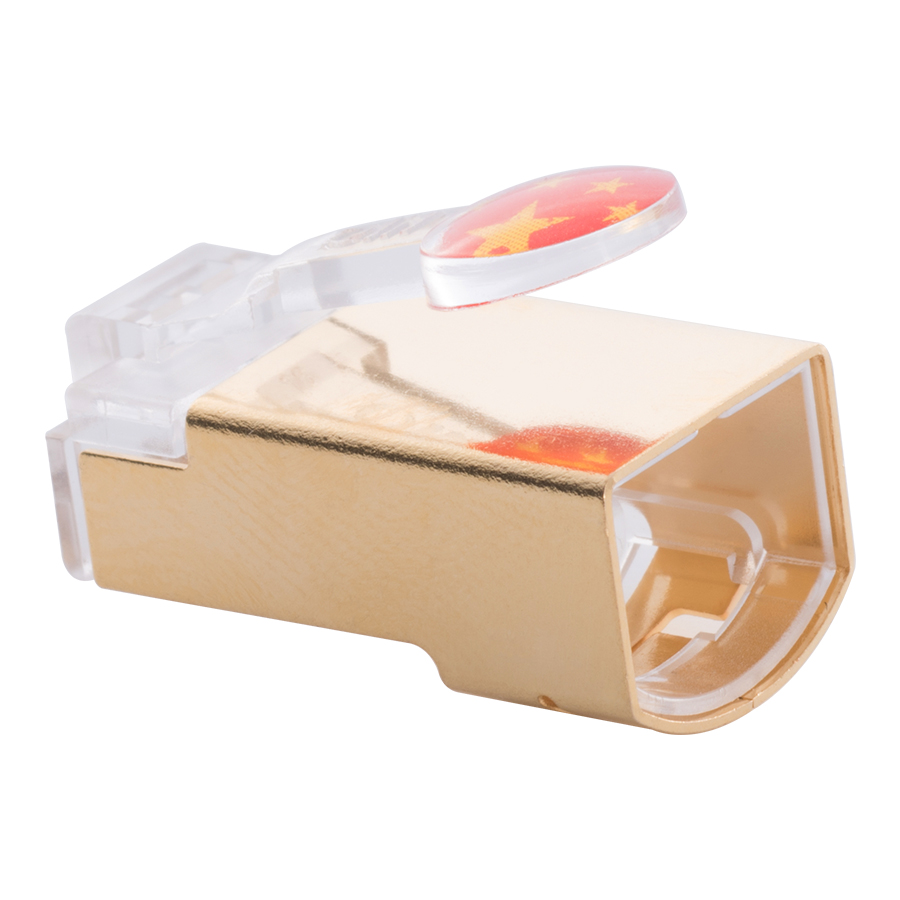
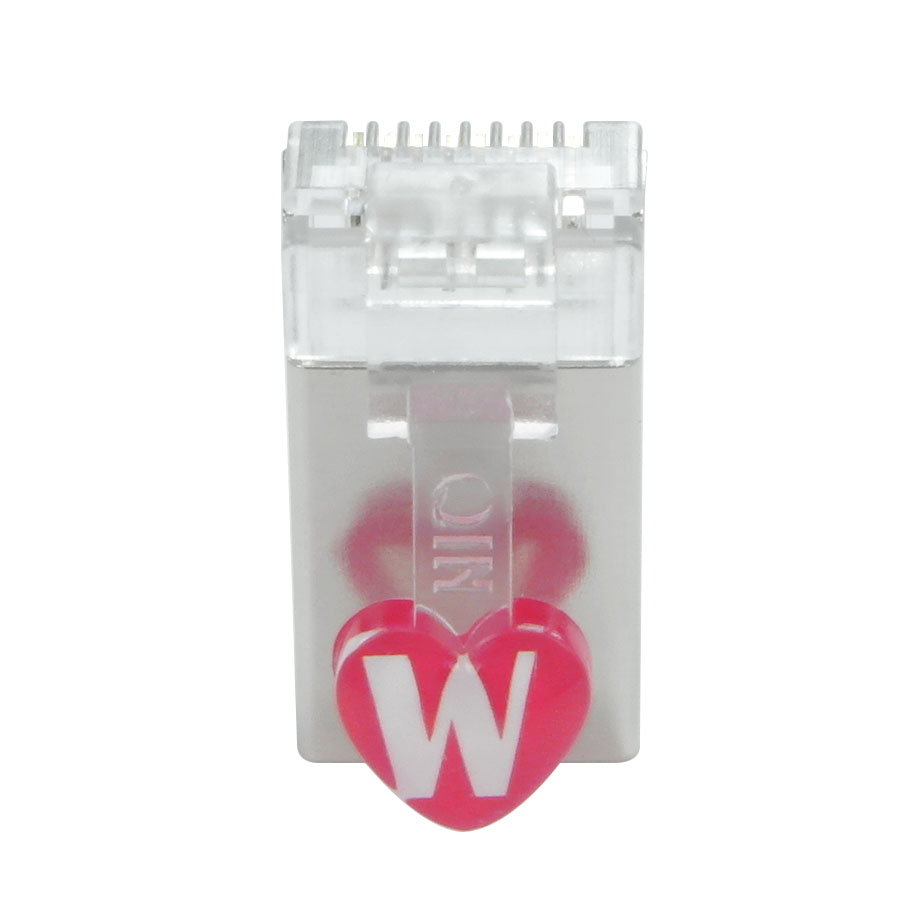
Connector Specifications: Equipped with standard shielded RJ45 crystal heads (reliably connected to the shielding layer), with a contact gold plating thickness of ≥50 microinches and a nickel underlayer to prevent contact oxidation and corrosion, with a plug-in life of ≥1250 times; the crystal head is integrally injection-molded with the cable and the shielding layer, paired with a snagless boot to relieve stress at the connection between the connector and the cable, avoid connector detachment and shielding layer damage caused by frequent plugging and pulling, and ensure shielding continuity without "shielding breakpoints".
Physical Characteristics: The cable outer diameter is 6.5±0.3mm (slightly larger than the unshielded version), the static bending radius is ≥4× the cable outer diameter, and the dynamic bending radius is ≥8× the cable outer diameter; the operating temperature range is -20℃~60℃, without embrittlement in low-temperature environments or softening in high-temperature environments, adapting to different indoor and short-term outdoor working environments; the sheath surface is printed with clear specification marks (including "Cat6a Shielded"), facilitating identification and later maintenance.
IV. Structural Design Highlights: Balancing Performance, Durability and Wiring Convenience
The structural design of Cat6a shielded patch cables takes "shielding continuity, transmission stability, and use convenience" as the core, and conducts targeted optimization on key parts such as the shielding layer, conductor, and connector. Different from the extensive design of ordinary shielded patch cables, it is more in line with actual deployment needs. The specific highlights are as follows:
Optimization of Shielding Continuity: From the core to the connector, full-link shielding without breakpoints is achieved — the core shielding layer, overall shielding layer are reliably connected to the metal shell of the shielded RJ45 crystal head, and the shielding layer is seamlessly connected to the crystal head during connector injection molding, avoiding interference intrusion caused by shielding breakpoints and maximizing the shielding effect. At the same time, the shielding layer is treated with anti-oxidation to extend the service life and avoid attenuation of shielding performance after long-term use.
Optimization of Twist Pitch and Insulation: The 4 pairs of cores adopt a differentiated precise twist pitch design, with each pair of cores having a different twist pitch and staggered arrangement. Combined with the foamed PE insulation layer (insulation diameter 1.01±0.05mm), it can further suppress crosstalk between pairs, forming "double anti-crosstalk" protection with the shielding layer; the surface of the insulation layer is smooth, reducing loss during signal transmission, and at the same time reducing cable weight and improving wiring flexibility.
Integrated Connector Molding: The shielded RJ45 crystal head is integrally injection-molded with the cable and the shielding layer at high temperature, with no looseness or gaps, which can effectively prevent moisture and dust from entering the connector and avoid poor contact caused by oxidation; the boot adopts a humanized non-slip design, facilitating plugging and pulling, and at the same time playing a good role in stress relief, protecting the connection between the shielding layer and the cable, and adapting to scenarios with frequent plugging and pulling (such as test equipment and office terminals).
Upgraded Quality Control: Each patch cable undergoes Fluke channel testing, focusing on testing shielding performance, insertion loss, crosstalk and other indicators to ensure compliance with the Cat6a shielding standard; during the production process, it additionally undergoes withstand voltage testing (1kV DC/1min), insulation resistance testing (≥150MΩ/km), and shielding continuity testing to eliminate unqualified products from leaving the factory; the finished products undergo repeated plug-in, pull, and bending tests to ensure that the connector is firm, the shielding layer is intact, and the cable is durable. Some high-end products can provide a lifetime warranty.
V. Applicable Scenarios: Accurately Matching High-Interference and High-Demand Transmission Needs
The core advantage of Cat6a shielded patch cables is high-efficiency anti-interference, so they are mainly suitable for scenarios with complex electromagnetic environments and high transmission requirements. They can perfectly replace ordinary unshielded patch cables and solve transmission pain points in high-interference scenarios. The specific applicable scenarios are as follows:
Data Center and Computer Room Scenarios: As the core patch cable for the access layer and aggregation layer of computer rooms, it is used for interconnection between equipment such as servers, switches, patch panels, and optical modules. The equipment in the computer room is dense, the distance between cabinets is close, and various equipment generate a lot of electromagnetic interference. Cat6a shielded patch cables can effectively block interference, ensure high-speed transmission of 10G data, and avoid abnormal operation of computer room equipment caused by interference; different length specifications are adapted to internal cabinet wiring and cross-area wiring in computer rooms, supporting batch deployment and facilitating later maintenance.
Industrial Control Scenarios: Suitable for interconnection of industrial PLCs, industrial computers, industrial switches, sensors and other equipment. There are high-interference equipment such as frequency converters and motors on the industrial site, and the electromagnetic environment is complex. Cat6a shielded patch cables can stably transmit industrial high-frequency data, avoid control command errors and data loss caused by interference, ensure the stable operation of industrial control systems, and adapt to scenarios such as industrial workshops and control rooms.
High-End Office and Financial Scenarios: Suitable for high-end office areas of large and medium-sized enterprises, financial institutions (banks, securities), government and enterprise office areas, etc. Such scenarios have dense terminal equipment (computers, printers, servers, etc.) and high requirements for the security and stability of data transmission (such as financial data, confidential documents). Cat6a shielded patch cables can ensure high-speed transmission while preventing signal leakage and external interference, improving office efficiency and data security.
High-End Monitoring and Security Scenarios: Suitable for 4K/8K high-definition monitoring systems and intelligent security systems, especially monitoring scenarios with dense equipment and many interference sources such as airports, stations, and large shopping malls, used for connecting monitoring cameras, NVRs, and hard disk recorders; it supports PoE++ power supply (up to 90W), which can realize integrated power supply and data transmission of monitoring equipment, and the shielding performance ensures clear, freeze-free and interference-free monitoring videos.
Testing and Experimental Scenarios: Suitable for experimental scenarios such as network equipment testing, Electromagnetic Compatibility (EMC) testing, and high-frequency signal testing. The precise shielding design and stable transmission performance can ensure the accuracy and reliability of test data, avoid interference affecting test results, and adapt to various high-demand test needs in laboratories.
VI. Usage Specifications and Notes
Whether the shielding performance of Cat6a shielded patch cables can be fully exerted depends not only on the quality of the product itself but also on the correct use and wiring methods. Improper use may lead to attenuation of shielding effect and transmission abnormalities. The key usage specifications and notes are as follows:
(I) Wiring Specifications
Avoid parallel wiring with high-voltage lines, keep a distance of ≥50cm from high-voltage lines of 220V and above to prevent electromagnetic interference generated by high-voltage electricity from invading; if cross wiring is required, the cross angle should be ≥90° to reduce interference coupling.
Avoid excessive bending and pulling of the cable during wiring, the bending angle should not be less than 90° to avoid damage to the shielding layer and core breakage; avoid wrapping the cable around metal objects to prevent the shielding layer from being scratched and affecting the shielding effect.
During batch wiring, avoid excessive extrusion and stacking of cables to prevent deformation of the shielding layer and poor contact; select the length specification matching the deployment distance to avoid excessive cable redundancy and reduce signal loss and interference risks.
(II) Connector Usage Specifications
When plugging and pulling the RJ45 connector, hold the tail of the connector (not the cable) with moderate force to avoid damaging the connector buckle, shielding layer or core due to excessive force; when inserting into the equipment interface, ensure it is inserted tightly to avoid transmission abnormalities caused by poor contact.
Avoid frequent plugging and pulling of the connector. If you need to frequently replace the connected equipment, it is recommended to choose a high-end model with a longer plug-in life to prevent connector wear and shielding layer detachment, which will affect shielding performance and transmission stability.
Regularly check the appearance of the connector. If connector oxidation, shielding layer exposure, buckle damage, etc. are found, it should be replaced in time to avoid affecting transmission and shielding effects.
(III) Daily Maintenance and Storage
Avoid exposing the cable to high-temperature, humid, oily, and direct sunlight environments. The PVC sheath model is not suitable for long-term outdoor deployment; special outdoor shielded patch cables should be selected for outdoor scenarios; although the LSZH sheath model has flame-retardant characteristics, it still needs to be kept away from fire sources.
Regularly check the appearance of the cable. If sheath damage, shielding layer exposure, core oxidation, etc. are found, it should be replaced in time; patch cables that are not used for a long time should be properly stored to avoid extrusion, moisture, and wear.
In computer room and industrial scenarios, regularly check the grounding of the shielding layer to ensure good grounding, avoid interference signals from being unable to be derived, and affect the shielding effect.
VII. Summary
As a high-end transmission component in the 10G network era, the Cat6a shielded patch cable has the core advantages of "500MHz bandwidth, 10Gbps transmission, and high-efficiency shielding". Through professional shielding structure design, it solves the transmission pain points of ordinary patch cables in high-interference scenarios and achieves a dual breakthrough of "high speed and stability". It strictly follows international standards, balances durability, wiring convenience, and scenario adaptability, and can be widely used in various high-demand scenarios such as data centers, industrial control, high-end offices, and high-definition monitoring, becoming the core choice for 10G network deployment in high-interference environments.
Compared with unshielded Cat6a patch cables, although Cat6a shielded patch cables have slight differences in cost and wiring flexibility, they have irreplaceable advantages in anti-interference performance; compared with ordinary Cat6 shielded patch cables, their bandwidth is doubled, their transmission performance is better, and they have stronger future expandability. With the continuous improvement of network transmission requirements and the increasingly complex electromagnetic environment, Cat6a shielded patch cables can not only meet the current 10G transmission needs but also adapt to future network upgrades, providing stable, reliable, and pure transmission guarantee for various high-demand scenarios, and are a cost-effective transmission solution that balances performance and practicality.
-
-
-
-
-
-
-
-
-
-
Flange Type Fixed Fiber Optic Adapter for Rack Panel
Sep 19, 2026956
-
Fiber Pigtail 12 Cores SC UPC Single Mode
Sep 04, 2026930
-
12 Port Cat6 Patch Panel Small Cabinet
Sep 12, 2026929
-
Dust Cap Equipped Fiber Patch Cable Protective
Sep 03, 2026929
-
EU Standard Network Faceplate
Sep 11, 2026927