- Language
cat6 ethernet cable
In enterprise office networking, smart park operation and maintenance, commercial monitoring systems, industrial intelligent equipment networking, and cross-border computer room operation, most network failures are not caused by core devices such as switches and routers, but by hidden operational risks derived from non-standard bottom-layer cabling. Many enterprises and engineering teams choose low-cost, non-standard, falsely marked and inferior cables to reduce upfront procurement costs, which saves minimal expenses in the short term but leaves long-term, high-loss and uncontrollable hidden dangers for network operation. Network cabling is a one-time embedded and long-term service infrastructure. Once completed, the cost of later rectification, rework and replacement is extremely high. Moreover, inferior cables continuously bring operational risks including business interruption, data packet loss, potential safety hazards, high maintenance consumption and limited expansion throughout the project lifecycle. As a compliant basic wire for enterprise networking, standard Cat6 Ethernet cables deliver core value not only in realizing Gigabit high-speed transmission, but also in avoiding various hidden operational risks at the bottom layer. They solve long-standing industry pain points of non-standard cabling such as unstable network, high maintenance cost, frequent business interruption, unqualified compliance and limited future upgrading, providing long-term safe, low-risk and iterable operation guarantee for commercial, industrial and government-enterprise networks.
Cat6 cables eliminate random business interruption risks caused by hidden packet loss and dynamic network jitter. Non-standard cables are the primary invisible cause of enterprise business downtime. Massive operational data shows that networking projects with non-standard cabling suffer far higher annual random failure frequency than compliant cabling systems. Inferior cables commonly have impure copper cores, excessive internal resistance, disordered twist pitch and weak insulation. Under peak office hours, multi-device concurrency, high-definition video transmission and full-load PoE equipment operation, they easily trigger intermittent packet loss, link jitter, instantaneous disconnection and bandwidth fluctuation. These irregular hidden faults are difficult for IT operation teams to locate and troubleshoot accurately, resulting in unstable network connection, system stuttering, office system offline, conference live interruption and blurry monitoring footage. In scenarios such as enterprise office work, store operation, industrial production and security monitoring, short-term network fluctuations will cause office process stagnation, failed business data uploads, production equipment shutdown and missing surveillance records, bringing immeasurable long-term operational losses. Standard Cat6 cables fully comply with the 250MHz high-frequency transmission standard with compliant impedance, crosstalk and attenuation parameters. They maintain stable transmission under high-frequency heavy-load conditions without hidden packet loss or link fluctuation, fundamentally preventing random business interruption and ensuring 24/7 stable enterprise operation.
They reduce full-cycle operation risks and cut implicit costs of manual troubleshooting and emergency rectification. The core hidden cost of network operation is not equipment depreciation, but manual consumption caused by frequent fault investigation, emergency maintenance and repeated debugging due to non-standard cabling. According to industry operational statistics, non-standard cabling systems require 47.3 hours of annual fault handling labor per thousand points, more than 2.5 times that of standard Cat6 cabling systems. The derived labor, rectification and downtime losses reach 2.3 times the cable procurement cost. After long-term operation, inferior cables suffer from aging and cracked jackets, oxidized cores, failed insulation and structural deformation. In high-temperature computer rooms, humid weak current wells and high-interference industrial environments, failure frequency increases year by year. Operation teams have to continuously spend time troubleshooting hidden faults, replacing cables regularly and fixing equipment offline issues, occupying massive human resources and increasing enterprise maintenance burdens. Engineered standard Cat6 cables adopt high-purity oxygen-free copper cores, high-density insulation layers and anti-aging outer structures with stable full-lifecycle parameters and negligible later faults. They realize one-time wiring and years of maintenance-free operation, completely avoiding repeated troubleshooting and frequent rectification risks, freeing enterprise manpower and reducing long-term operational costs.
Cat6 cables prevent electrical safety hazards and equipment damage to consolidate the bottom line of network operational security. Non-standard inferior cables pose serious electrical safety risks and are major triggers of safety accidents in enterprise computer rooms and weak current systems. Most low-cost cables use copper-clad aluminum or recycled impure copper with poor conductivity and excessive internal resistance. Under PoE power supply conditions, they generate massive heat, causing continuous line temperature rise, equipment restart instability and port burnout. Meanwhile, non-standard cables feature uneven insulation thickness and inferior materials, prone to insulation breakdown, micro electric leakage and wire pair short circuits in long-term humid and high-temperature environments, potentially triggering weak current fires, equipment burnout and computer room circuit failures. In addition, inferior cables lack flame-retardant protection and are easily ignited under high-temperature overload, failing commercial fire safety compliance standards. Standard Cat6 cables adopt flame-retardant LSZH/PVC outer jackets with qualified voltage resistance and insulation performance. Their compliant internal resistance ensures stable PoE power supply without overheating, providing flame retardant, moisture-proof, high-temperature resistant and short-circuit resistant performance. They effectively avoid three major operational risks including electrical faults, equipment damage and safety accidents, adapting to enterprise 24/7 safe operation requirements.
They eliminate network iteration and expansion risks to avoid repeated investment in secondary wiring renovation. With continuous digital upgrading of enterprise networks, emerging services such as 4K high-definition office, cloud desktop, big data transmission and IoT device networking put forward higher requirements for network bandwidth and stability. Ordinary Cat5e cables only support 100MHz bandwidth and cannot carry high-frequency and high-speed services, while most non-standard Cat6 cables have reduced parameters that fail to support full-speed Gigabit transmission and future bandwidth upgrading. Enterprises have to dismantle and rewire entirely during business expansion, resulting in high secondary renovation costs and disrupting normal operation. Standard Cat6 cables feature sufficient 250MHz high-bandwidth redundancy, stably supporting full Gigabit transmission and short-distance 10G transmission. They perfectly adapt to enterprise network iteration, equipment expansion and business upgrading demands for the next 5-10 years. No secondary wiring or link modification is required to support high-speed services including high-definition video, cloud office and intelligent device networking, completely avoiding operational risks such as backward wiring, insufficient bandwidth and limited iteration, protecting upfront wiring investment and eliminating repeated construction waste.
Cat6 cables prevent environmental adaptation failure risks to ensure long-term stable operation in complex commercial working conditions. Enterprise wiring scenarios feature complex environments including enclosed high-temperature computer rooms, humid and dusty weak current wells, high-electromagnetic-interference workshops and alternating seasonal temperature and humidity, requiring high cable weather resistance and anti-interference capability. Inferior non-standard cables have narrow temperature tolerance, poor aging resistance and weak anti-interference performance. Long-term operation in complex conditions easily causes parameter drift, transmission attenuation, jacket embrittlement and internal core breakage, leading to yearly declining network performance. In contrast, engineered standard Cat6 cables pass strict environmental tests with wide temperature tolerance, moisture and dust resistance, strong anti-electromagnetic interference and anti-deformation performance. They maintain stable parameters and no performance degradation in long-term complex commercial and industrial scenarios. Featuring regular structure, extrusion resistance and tensile durability, they sustain stable performance after embedded wiring, bridge routing and concealed construction, preventing network faults caused by environmental factors and ensuring full-season, full-condition and long-term stable operation of enterprise network systems.
From the perspective of full-cycle enterprise network operation, the short-term cost savings of inferior non-standard cables cannot cover the comprehensive losses caused by later business interruption, maintenance consumption, potential safety hazards, iterative renovation and environmental failure. With core advantages of compliant parameters, stable performance, long durability and reliable safety, standard Cat6 Ethernet cables comprehensively eliminate all hidden operational risks in enterprise networking, reduce network maintenance pressure and operational losses. Fully adaptable to long-term operation scenarios such as government and enterprise office work, smart parks, commercial monitoring, industrial networking and computer room construction, they serve as the fundamental core guarantee for stable, safe and low-cost operation of enterprise digital networks.
-
-
-
-
-
-
-
-
-
-
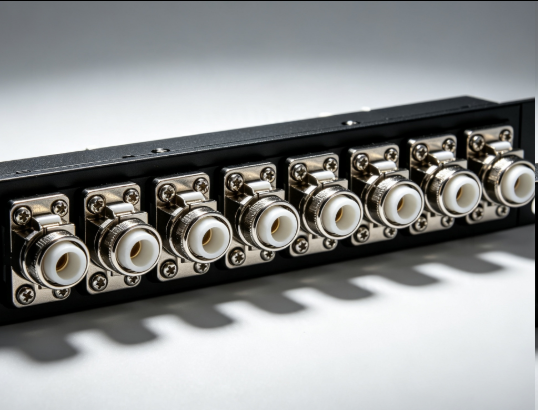
Flange Type Fixed Fiber Optic Adapter for Rack Panel
Sep 19, 2026955
-
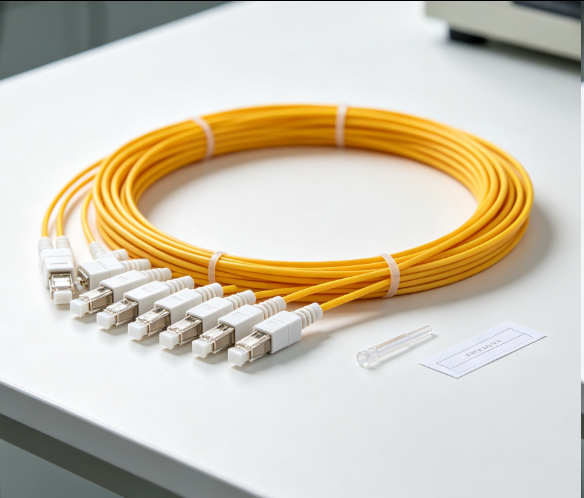
Fiber Pigtail 12 Cores SC UPC Single Mode
Sep 04, 2026930
-
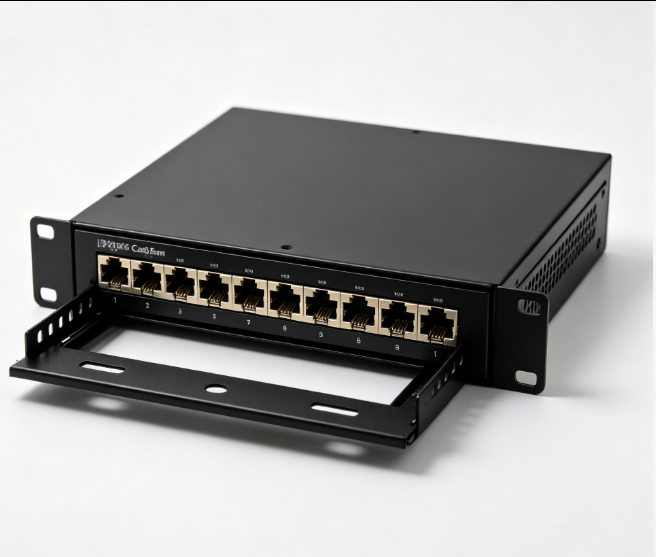
12 Port Cat6 Patch Panel Small Cabinet
Sep 12, 2026929
-
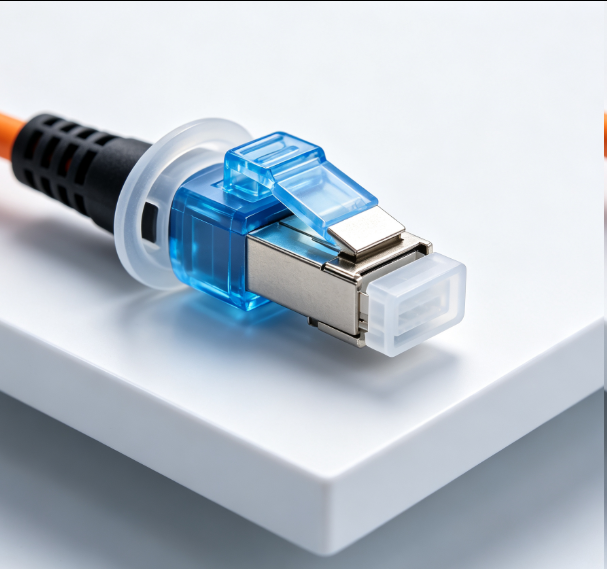
Dust Cap Equipped Fiber Patch Cable Protective
Sep 03, 2026929
-
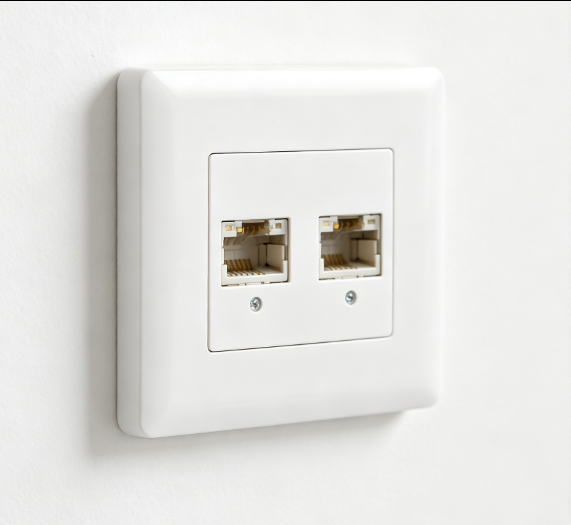
EU Standard Network Faceplate
Sep 11, 2026927