- Language
cat6a copper UTP patch cable
In high-speed network cabling, patch cables are key components for connecting equipment, and their performance directly affects the quality of network transmission. The transmission capability of a patch cable is closely related to the frequency range it can support. The Cat6a copper UTP patch cable is a common network patch cable, and its frequency characteristics determine the bandwidth and transmission rate it can support. Understanding the frequency performance of the patch cable helps reasonable selection and application. This article introduces the Cat6a copper UTP patch cable, covering the concept of frequency, frequency range, frequency and bandwidth, transmission indicators, application adaptation, quality influence and selection and use.
Understanding the basic concept of frequency is the foundation for recognizing the performance of the patch cable. In network transmission, signals are transmitted at a certain frequency, and the frequency reflects how fast the signal changes. The transmission frequency range of the patch cable determines the signal types and rates it can carry. The higher the frequency, the higher the requirement for the transmission medium. The structure, material and craftsmanship of the patch cable affect its performance at different frequencies. Understanding the concept and role of frequency helps understand the performance specifications of the patch cable and its applicability in high-speed transmission.
The frequency range of the Cat6a UTP patch cable is an important basis for evaluating its performance. The Cat6a copper UTP patch cable usually supports a higher frequency and can meet the transmission needs of high-speed network applications. The frequency range determines the bandwidth that the patch cable can support, which in turn affects the data transmission rate. Compared with some lower categories, the Cat6a patch cable has advantages in frequency and bandwidth and can support higher-rate network connections. Understanding its frequency range helps judge whether the patch cable meets the application's requirements for bandwidth and speed.
The relationship between frequency and bandwidth is the key to understanding the performance of the patch cable. In network transmission, bandwidth reflects the amount of data that can be transmitted and is closely related to the frequency range. The wider the frequency range supported by the patch cable, the higher the bandwidth it can usually support. The Cat6a patch cable provides corresponding bandwidth through higher frequency support, meeting the needs of high-speed transmission. Understanding the relationship between frequency and bandwidth helps evaluate the transmission capability of the patch cable and reasonably choose the applicable specification. Frequency and bandwidth together determine the applicability of the patch cable in high-speed networks.
The transmission indicators of the patch cable reflect its performance within the frequency range. Indicators such as attenuation and crosstalk of the patch cable are closely related to frequency. Attenuation reflects the loss of the signal during transmission, and the loss tends to be greater at higher frequencies. Crosstalk reflects the interference between wire pairs and affects signal quality. The structure and craftsmanship of the patch cable affect the performance of these indicators at different frequencies. Evaluating the transmission indicators of the patch cable helps understand its performance within the target frequency range and judge whether it meets application needs.
Application adaptation needs to be combined with frequency and bandwidth needs. Different network applications have different requirements for frequency and bandwidth. Applications such as high-speed data transmission, high-definition video and data centers have higher requirements for bandwidth and frequency. The Cat6a copper UTP patch cable is suitable for corresponding high-speed transmission scenarios. During selection, the frequency and bandwidth required by the application should be evaluated and the patch cable specification supported should be chosen. At the same time, the patch cable should be ensured to match the equipment and network environment. Reasonable adaptation combined with frequency and bandwidth needs can give play to the performance of the patch cable.
Quality influence relates to the performance of the patch cable within the frequency range. The conductor material, twisted pair structure and manufacturing craftsmanship of the patch cable affect its performance in high-speed transmission. The quality of the copper core conductor affects conductivity and attenuation; the rationality of the twisted pair structure affects crosstalk control; the manufacturing craftsmanship affects consistency. A patch cable with excellent quality can maintain stable performance within the supported frequency range. Evaluating the quality of the patch cable helps choose a product that can transmit reliably in the target application and guarantee the stability of the network.
Selection and use need to be judged according to network needs. When purchasing a Cat6a copper UTP patch cable, attention should be paid to whether its frequency specification meets application needs and whether the quality is reliable. The length, interface type and applicable environment of the patch cable also need to match use conditions. During use, the cable should be correctly connected and fixed, and excessive bending or pulling should be avoided. Standardized use can guarantee the performance of the patch cable. Reasonable selection and use combined with network needs can give full play to the frequency performance of the patch cable and guarantee the stable operation of high-speed networks.
In summary, the frequency performance of the Cat6a copper UTP patch cable determines its applicability in high-speed networks. Understanding the concept of frequency, the frequency range and its relationship with bandwidth, evaluating transmission indicators and quality, and reasonably selecting and using according to application needs are the keys to giving full play to the performance of the patch cable. With the development of high-speed networks and bandwidth needs, patch cables with good frequency performance are providing reliable support for more high-speed transmission scenarios and meeting the growing data transmission needs.
-

-

-

-

-

-

-

-

-

-

Dustproof Cover Equipped Network Patch Panel
Oct 10, 20261117
-

How to wire a French switch outlet
Oct 28, 20261112
-

Network Cable Break Point Detector Tester
Oct 09, 20261089
-

Cat6 Lan Cable Length Limit for Gigabit
Oct 24, 20261085
-
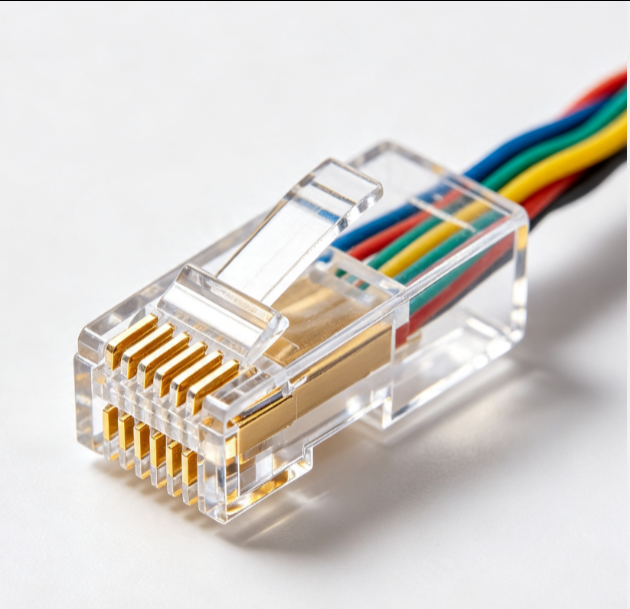
RJ45 Connector Cat6 for DIY Cable Making
Nov 20, 20261032