- Language
cat6a ethernet cable
cat6a ethernet cable: Core Technical Analysis and Global Network Application Guide for Augmented Category 6 Cables
In the new era of network infrastructure upgrading where gigabit networks are popularized and 10-gigabit networks are fully implemented, as the basic carrier of network transmission, network cables directly determine the speed limit, operational stability and long-term availability of the entire network system. The cat6a ethernet cable is a high-end copper cable transmission wire developed in accordance with international ANSI/TIA-568-C.2 and ISO/IEC 11801 industry standards, and it is also the most balanced high-performance product in civil and commercial copper network cables that adapts to future network iteration. Different from traditional Cat5e and Cat6 network cables, the core positioning of cat6a ethernet cable is to solve industry pain points such as attenuation of 10-gigabit transmission in medium and long distances, crosstalk interference in dense wiring, and unstable power supply of high-power PoE. It is a standard cable for modern structured integrated wiring, data center networking and intelligent building construction.
Many users only have a superficial understanding of cat6a ethernet cable as an "augmented category 6 network cable", ignoring its core technical attribute of "Augmented". Formalized in 2008, this cable standard is an all-round technical upgrade of ordinary category 6 cables, with core upgrades focusing on four major dimensions: bandwidth expansion, anti-interference optimization, transmission distance breakthrough and power supply performance improvement. Ordinary Cat6 network cables only support 250MHz bandwidth, and 10-gigabit transmission can only be stabilized within 50 meters. Beyond this distance, serious signal attenuation, packet loss and speed drop will occur. In contrast, cat6a ethernet cable increases the operating bandwidth to 550MHz, doubling the bandwidth capacity, and can stably output 10GBASE-T 10-gigabit Ethernet speed within the full 100-meter standard link. It truly realizes full-domain 10-gigabit transmission of copper cables and completely breaks the distance speed limit barrier of traditional network cables.
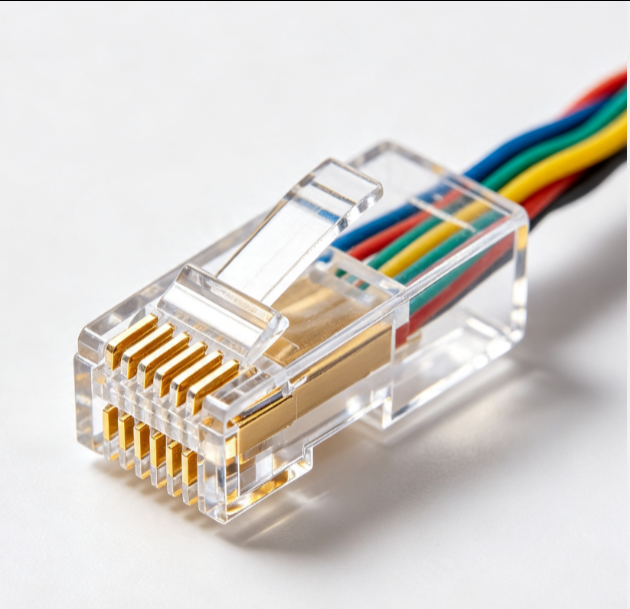
In terms of product classification, cat6a ethernet cable includes two major categories: engineering embedded cables and equipment patch cables, both adopting a four-pair eight-core twisted pair structure. It is compatible with global universal RJ45 Ethernet interfaces and all civil, commercial and industrial-grade network devices. Meanwhile, this cable fully complies with international environmental protection and safety certifications such as RoHS, CE and ETL. It adopts halogen-free environmentally friendly materials with flame retardant and anti-aging properties, balancing transmission performance and use safety. It is currently an all-round copper network cable that can simultaneously meet the needs of civil high-speed networking, enterprise precision office, uninterrupted computer room operation and intelligent equipment linkage.
The performance advantages of cat6a ethernet cable are not conceptual hype, but realized through solid technical parameters and process upgrades. Compared with previous generation network cables, all core transmission indicators have achieved leapfrog improvements, which is the core reason why it can adapt to network upgrades in the next 5-10 years. Firstly, in terms of core breakthroughs in bandwidth and speed, the hardware foundation of 550MHz ultra-high bandwidth enables the cable to carry multi-channel and high-volume concurrent data transmission. It can easily cope with high-load network scenarios such as 4K/8K ultra-high-definition video streaming, large-scale cloud data backup, 3D modeling material transmission and multi-player large-scale e-sports online gaming, completely eliminating network stuttering, delay fluctuation and data packet loss caused by bandwidth congestion.
Secondly, the comprehensive upgrade of crosstalk suppression technology is the core technical highlight of cat6a ethernet cable and the key to distinguish it from ordinary category 6 network cables. 80% of network instability problems in wiring stem from internal wire pair crosstalk and external electromagnetic interference. In scenarios with dense arrangement of multiple cables and mixed strong and weak current wiring, ordinary network cables are extremely prone to signal coupling interference, resulting in transmission distortion. The cat6a ethernet cable adopts a precise differentiated twist pitch process, with four pairs of cores independently and symmetrically twisted, and the twist pitch of each pair of cores is strictly distinguished, fundamentally reducing internal near-end crosstalk and far-end crosstalk. Meanwhile, the wire pair isolation structure is optimized to greatly reduce external crosstalk impact, with anti-crosstalk performance increased by more than 60% compared with ordinary Cat6 cables, making it the best choice for high-density cabinet wiring and multi-layer building integrated wiring.
In terms of transmission loss control, formal cat6a ethernet cable uniformly adopts high-purity oxygen-free copper conductors with a copper purity of 99.99%, high conductivity and extremely low resistance, which can minimize insertion loss and return loss during signal transmission. Even in the 100-meter standard full-distance transmission scenario, it can maintain complete signal integrity without obvious attenuation, fully meeting the link transmission requirements of industry standards. However, most inferior counterfeit augmented category 6 network cables on the market adopt copper-clad aluminum or copper-clad iron materials with high resistance and serious long-distance transmission loss, which cannot reach the standard performance of cat6a ethernet cable at all. This is why professional wiring projects prefer genuine cables.
In addition, cat6a ethernet cable has fully upgraded PoE power supply adaptation capabilities, compatible with the full range of IEEE 802.3af/at/bt power supply protocols, and can support stable high-power power supply of up to 100W, far exceeding the power load of ordinary network cables. While transmitting high-speed data, this cable can stably supply power to surveillance cameras, wireless APs, network access control, IoT sensors, cloud terminals and other equipment. The power supply process is stable without heating, overload or voltage fluctuation, supporting 7×24-hour uninterrupted power-on operation, greatly simplifying the wiring process of intelligent equipment and reducing engineering wiring costs and later operation and maintenance difficulties.
To clearly understand the technical value of cat6a ethernet cable, it is necessary to conduct an all-round comparison with mainstream Cat5e, Cat6 and Cat7 network cables on the market, accurately clarify the adaptation scenarios and performance gaps of various specification cables, and help users select models accurately to avoid performance surplus or insufficient performance. First, compared with Category 5e network cables, as traditional gigabit network cables, Cat5e only has a bandwidth of 100MHz and a maximum stable transmission rate of 1Gbps, which can only meet basic web browsing, ordinary video playback and simple office transmission, and cannot adapt to high-speed scenarios such as 10-gigabit broadband, high-definition streaming media and big data transmission at all, belonging to basic cables to be phased out. In contrast, cat6a ethernet cable achieves a ten-fold speed upgrade and a five-fold bandwidth increase, completely breaking the gigabit network speed bottleneck and adapting to all current mainstream high-speed network demands.
Secondly, compared with ordinary Cat6 network cables, although both belong to the category 6 series, the performance gap is huge. Ordinary Cat6 network cables have 250MHz bandwidth and only support 10-gigabit transmission within 50 meters, automatically reducing speed to gigabit beyond 50 meters, with obvious shortcomings in long-distance wiring and weak anti-crosstalk ability, resulting in poor stability in dense wiring scenarios. In contrast, cat6a ethernet cable maintains full 10-gigabit speed throughout 100 meters, with significant advantages of anti-interference, low loss and low delay. It comprehensively surpasses ordinary category 6 network cables in both short-distance equipment docking and long-distance engineering wiring stability and practicality, becoming the preferred upgrade for enterprise networking and engineering wiring.
Finally, compared with Cat7 network cables, many users have the misunderstanding that "the higher the cable specification, the better". In fact, although Cat7 network cables support higher transmission rates, they are non-standard civil cables with poor compatibility, high cost and difficult construction, and cannot exert their performance advantages in daily civil and commercial scenarios, resulting in serious performance surplus. As a standardized universal international cable, cat6a ethernet cable has full coverage compatibility, high cost performance and convenient construction. It balances high-speed 10-gigabit performance, excellent stability and universality, and is the high-cost-performance cable for high-speed wiring, perfectly adapting to most full-scenario network construction needs.
Genuine cat6a ethernet cable on the market is divided into two major categories: unshielded twisted pair (UTP) and shielded twisted pair (FTP/STP). The two categories have consistent core transmission parameters, only differing in anti-interference structure and adaptation scenarios. Accurate selection can maximize network operation stability. The unshielded cat6a ethernet cable is the mainstream universal model, achieving basic anti-interference through optimized wire pair twisting process and isolation structure. It has soft texture, flexible wiring, affordable cost, no additional grounding treatment required and convenient installation and construction. It is mainly suitable for conventional wiring scenarios without complex electromagnetic interference such as home networking, small offices and studios, and can fully meet the network stability needs of household high-speed e-sports, audio and video transmission and daily office work, being the preferred category for civil scenarios.
The shielded cat6a ethernet cable adopts a double-layer shielding structure of aluminum foil and woven mesh to fully wrap the wire core, which can comprehensively isolate external EMI electromagnetic interference and RFI radio frequency interference, resist strong interference signals brought by high-voltage wires, high-power electrical appliances, industrial equipment and strong and weak current mixed wiring, and completely eliminate network fluctuation, packet loss and disconnection caused by external environments. This category requires grounding technology with higher wiring specification requirements and more stable performance. It is mainly suitable for high-demand scenarios such as data centers, enterprise core computer rooms, industrial intelligent networking, building integrated wiring and security monitoring systems, adapting to professional network systems with long-term uninterrupted operation.
Both categories of cat6a ethernet cable follow unified augmented category 6 technical standards, with completely consistent transmission rate, bandwidth and power supply performance. The core difference lies only in anti-interference ability and applicable working conditions. Users can select flexibly according to the interference intensity of the wiring environment and the professional level of the usage scenario to avoid resource waste and network faults caused by insufficient performance.
With all-round technical advantages and ultra-high adaptability, cat6a ethernet cable has become the core cable for current global network construction, covering four major fields: civil, commercial, engineering and light industrial scenarios, providing bottom-level support for the stable and high-speed operation of networks in different scenarios. In home scenarios, with the popularization of 10-gigabit broadband, whole-house WiFi 6/7, NAS private cloud, e-sports hosts and 8K smart TVs, traditional gigabit network cables have become network speed bottlenecks. Cat6a ethernet cable can perfectly run full-house high-speed bandwidth, realizing ultra-low game delay, second-level loading of high-definition videos and extreme-speed synchronization of cloud files, creating a stutter-free and delay-free ultimate home high-speed network ecosystem. Meanwhile, the cable has strong durability, enabling long-term use after one-time wiring without subsequent iteration and replacement.
In enterprise office scenarios, daily multi-person collaborative office work, large file transmission, high-definition video conferencing and cloud system operation have extremely high requirements for network speed and stability. Once network fluctuation occurs, it will directly affect office efficiency. Cat6a ethernet cable supports simultaneous high-speed networking of multiple devices with no crosstalk or stuttering in dense office wiring, continuously and stably outputting high-speed networks, ensuring smooth enterprise office processes and avoiding work delays and data loss risks caused by network faults, adapting to the networking needs of modern intelligent offices.
In computer room and data center scenarios, the interconnection of core network devices such as servers, switches, storage devices and firewalls requires cables with low loss, low crosstalk, high stability and long durability. Cat6a ethernet cable passes professional full-item Fluke testing with all parameters up to standard. It can adapt to high-density cabinet wiring and long-distance computer room link construction, support 7×24-hour uninterrupted operation of equipment, provide stable bottom-level link guarantee for data transmission, data storage and equipment linkage, and is the core cable for standardized wiring of small and medium-sized data centers and enterprise computer rooms.
In intelligent security and IoT scenarios, modern intelligent buildings, smart parks and security monitoring systems are equipped with a large number of high-definition cameras, intelligent sensing devices and wireless base stations, with numerous equipment, dense wiring and long-term power-on operation. The stable PoE power supply capacity and strong anti-interference performance of cat6a ethernet cable can meet the dual needs of equipment power supply and high-speed data transmission, effectively avoiding problems such as stuttering monitoring pictures, offline equipment and data loss, ensuring the efficient and stable operation of intelligent security systems and IoT equipment, and helping the digital upgrading of smart scenarios.
At present, the network cable market is uneven with a large number of falsely marked and inferior counterfeit products. Most of the so-called "augmented category 6 network cables" purchased by users do not meet the formal standards of cat6a ethernet cable, resulting in substandard speed, unstable network and easy damage after use. To purchase genuine cat6a ethernet cable, first check the cable identification. Formal products are clearly printed with complete specification parameters of Cat6a, 550MHz and 10Gbps on the cable body, with clear, wear-resistant and non-fading fonts. Products without identification or fuzzy parameters are inferior counterfeits and should not be purchased.
Secondly, identify cable materials and craftsmanship. Genuine cat6a ethernet cable adopts high-purity oxygen-free copper eight-core wire core with uniform thickness, bright luster and strong toughness, not easy to break when bent. The outer sheath is made of environmentally friendly PVC or LSZH low-smoke zero-halogen material, featuring flame retardancy, wear resistance, aging resistance and high flexibility. Inferior products are mostly copper-clad aluminum with dull and uneven wire cores, easy oxidation and fracture, and rough outer sheath materials prone to cracking and aging, with completely substandard use safety and transmission performance. Meanwhile, genuine products have complete industry certifications such as CE, ROHS and ETL, and can provide Fluke test reports with all parameters fully complying with international standards.
Finally, standardize wiring and use. When installing cat6a ethernet cable, avoid violent bending, excessive pulling and 90-degree right-angle hard bending to prevent internal core damage and affect transmission performance; separate strong and weak current wiring to reduce hidden dangers of electromagnetic interference; perform grounding treatment for shielded cables to maximize anti-interference advantages; avoid long-term high temperature, humidity and sunlight exposure during daily use, regularly sort out wiring to reduce cable extrusion and winding, which can effectively extend the service life of the cable and maintain long-term stable network transmission performance.
In terms of comprehensive technical parameters, performance advantages, scenario adaptation and long-term cost performance, cat6a ethernet cable is the most cost-effective and forward-looking high-speed wiring product among current copper network cables. Compared with traditional low-spec network cables, it breaks through the gigabit transmission limitation, realizes 100-meter full-domain stable 10-gigabit transmission, with all-round upgrades in bandwidth, anti-interference, power supply and durability, perfectly adapting to the current popularization trend of 10-gigabit networks. Compared with high-end Cat7 network cables, it has the core advantages of standardization, high compatibility, low cost and easy construction without performance surplus, adapting to most civil and commercial networking scenarios. Whether for home high-speed network upgrading, enterprise office networking, computer room engineering wiring, or intelligent security and IoT construction, cat6a ethernet cable can build a solid bottom foundation for network transmission with professional-grade technical performance, balancing current practicality and future iteration space, and serving as the golden standard cable for new-generation high-speed network wiring.
-

-

-

-

-

-

-

-

-

-

Dustproof Cover Equipped Network Patch Panel
Oct 10, 20261117
-

How to wire a French switch outlet
Oct 28, 20261112
-

Network Cable Break Point Detector Tester
Oct 09, 20261089
-

Cat6 Lan Cable Length Limit for Gigabit
Oct 24, 20261085
-
RJ45 Connector Cat6 for DIY Cable Making
Nov 20, 20261032