- Language
cat6a patch cable
In high-density networking scenarios such as data centers, computer room cabinets and enterprise core weak current cabinets, wiring uniformity, transmission stability, operation and maintenance convenience and space utilization are the core criteria for measuring the quality of cabinet network deployment. Ordinary network cables suffer from rigid bodies, severe crosstalk and poor adaptability, which easily cause messy wiring, blocked heat dissipation, signal attenuation and difficult operation and maintenance in cabinets, failing to meet the 7×24-hour uninterrupted and high-concurrency 10G transmission requirements of cabinets. Specially optimized for professional cabinet wiring scenarios, Cat6a patch cables perfectly fit the docking deployment of 19-inch standard cabinets, patch panels, switches and servers with mature structural technology and adaptive design, serving as the standard cable for high-density cabinet wiring and old cabinet network upgrades.
Targeting the pain points of high-density cabinet wiring, Cat6a patch cables adopt a lightweight and flexible cable body design with a slim diameter and excellent bending performance, featuring a smaller standard bending radius. They are suitable for construction in narrow cabinet interlayers and port-intensive areas, avoiding bending jams and core damage of ordinary cables. Compared with conventional cables, their compact structure greatly improves the internal space utilization of cabinets, prevents wiring congestion, optimizes the internal air circulation and heat dissipation environment, and effectively reduces the risk of equipment high-temperature shutdown. Meanwhile, the cables have outstanding toughness, adapting to repeated sorting and fine adjustment of wiring in cabinets, and are not prone to sheath damage and cable fracture, meeting the long-term stable operation needs of closed cabinets.
The concentrated equipment and mixed layout of strong and weak current in cabinets easily cause electromagnetic crosstalk. With an ultra-high bandwidth of 500MHz and ultra-low crosstalk design, Cat6a patch cables fundamentally solve the signal interference problem of dense cabinet wiring. Shielded versions are equipped with a multi-layer shielding structure, which can effectively isolate electromagnetic radiation generated by switches, power equipment and dense cables in cabinets, avoid packet loss and delay caused by internal and external signal crosstalk, and stably support 10Gbps high-speed transmission in cabinets. All products comply with the standard T568B wiring sequence and are compatible with various cabinet patch panels, network switches and server ports. The cables fit tightly after plugging in, and the snagless design prevents loosening and falling off under cabinet vibration and slight pulling, ensuring continuous link conduction.
In terms of cabinet operation, maintenance and long-term deployment, Cat6a patch cables deliver excellent forward-looking performance and practicality. They are wear-resistant, aging-resistant, flame-retardant and corrosion-resistant, adapting to the long-term constant-temperature closed use environment of cabinets. Their service life is much longer than ordinary cables, reducing the operation and maintenance cost of frequent cable replacement. Clear specification markings facilitate the classification and sorting of cabinet wiring, keep the wiring neat and orderly, and greatly improve the efficiency of subsequent troubleshooting and line maintenance. Meanwhile, they are backward compatible with various low-specification network devices and adapt to the iteration and upgrading of new and old cabinet equipment. One-time wiring can meet the long-term 10G networking needs of cabinets, making them an efficient, stable and worry-free professional wiring solution for computer room cabinets.
-

-

-

-

-

-

-

-

-

-

Dustproof Cover Equipped Network Patch Panel
Oct 10, 20261117
-

How to wire a French switch outlet
Oct 28, 20261112
-

Network Cable Break Point Detector Tester
Oct 09, 20261089
-

Cat6 Lan Cable Length Limit for Gigabit
Oct 24, 20261085
-
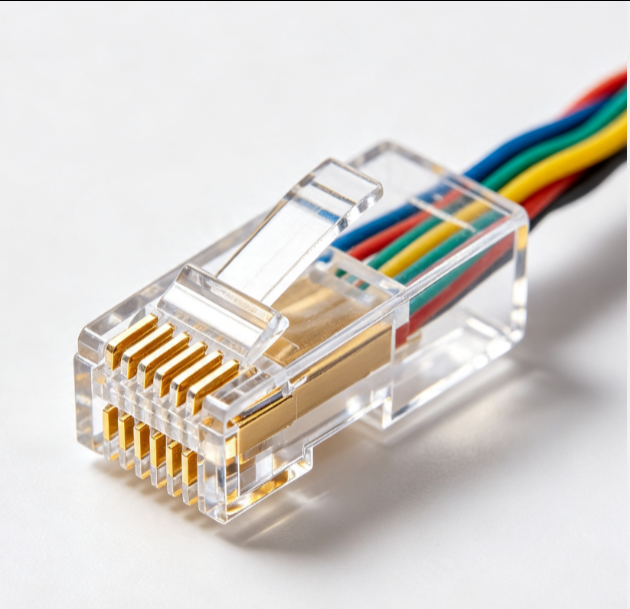
RJ45 Connector Cat6 for DIY Cable Making
Nov 20, 20261032