- Language
cat7 ethernet cable 3m
In modern enterprise computer rooms, data center short-distance links, industrial automation networking, 4K/8K ultra-HD audio-visual transmission, professional esports and high-precision equipment interconnection scenarios, Ethernet cable performance is no longer judged by subjective experience. Standardized measured data serves as the only core basis for distinguishing networking stability, transmission efficiency and long-term durability. Ordinary Cat5e and Cat6 cables are restricted by inherent parameter thresholds, with hard shortcomings in key indicators such as bandwidth capacity, signal loss, crosstalk resistance and high-frequency transmission stability, failing to meet the high-end networking requirements of 10G high frequency, high-concurrency traffic and 24/7 non-stop transmission. Most ordinary Cat7 cables on the market feature virtual parameter calibration and substandard performance, with a huge gap between actual test data and nominal parameters, easily causing hidden problems such as speed shrinkage, latency fluctuation and data packet loss. Strictly compliant with ISO 11801 and TIA-568.2-D international standards and fully verified by Fluke channel testing, the 3m Cat7 Ethernet cable adopts quantitative data verification in six core dimensions: bandwidth frequency, crosstalk attenuation, distance loss, PoE power supply, long-term aging and working condition fault tolerance. It breaks the performance virtual calibration chaos of conventional cables and becomes a standardized preferred cable for short-distance high-end commercial, industrial and precision civilian networking with solid measured data.
In terms of core bandwidth and frequency data, this cable achieves leapfrog performance and completely breaks the bandwidth bottleneck of ordinary cables. Test data shows that ordinary Cat5e cables have a maximum bandwidth of 100MHz, while Cat6 cables top at 250MHz, only supporting basic Gigabit transmission and low-concurrency daily networking. In contrast, the 3m Cat7 cable delivers a stable measured bandwidth of 600MHz, 2.4 times that of Cat6 and 6 times that of Cat5e cables, realizing a comprehensive upgrade in high-frequency signal bearing capacity. The 600MHz ultra-wide frequency range easily supports high-bandwidth loads such as multi-channel ultra-HD streaming, bulk large-file migration, server high-frequency data interaction and real-time cloud synchronization, with no bandwidth congestion, overflow or saturation during high-frequency data processing. Meanwhile, it supports stable 10Gbps full-range transmission speed. Different from ordinary Cat6 cables that only maintain 10G speed within 55 meters and suffer severe speed reduction over long distances, the 3-meter golden short link achieves nearly zero bandwidth loss and zero speed attenuation, with a stable actual throughput above 9800Mbps close to the official full-speed standard. It perfectly meets the rigorous 10G local area network standards of high frequency, high speed and high concurrency, fundamentally eliminating network stuttering, insufficient bandwidth and high-traffic speed limitation from the core data level.
It delivers excellent crosstalk and attenuation test data, solving the core pain point of signal distortion in high-density networking. In high-density cabinet wiring and short-distance multi-device interconnection scenarios, inter-wire crosstalk and signal attenuation are key indicators affecting transmission accuracy, as well as the most easily exceeded performance loopholes of ordinary cables. Working condition statistics show that ordinary Cat6 cables have a 72% over-standard rate of near-end crosstalk attenuation in fully loaded 48-port dense wiring environments, and signal insertion loss continues to rise with increased wiring density, causing abnormal data verification, random packet loss and latency fluctuation. Adopting a exclusive Cat7 S/FTP full-shield structure with independent aluminum foil shielding for each twisted pair and overall high-density braided copper mesh protection, this cable passes professional equipment testing. Under 600MHz high-frequency working conditions, its near-end crosstalk, far-end crosstalk and alien crosstalk values are far below national standard limits, with zero over-standard crosstalk rate in densely stacked wiring environments. Supported by low-resistance high-purity oxygen-free copper conductors and precise twisting technology, the 3-meter short link achieves extremely low insertion loss, with 99.8% signal integrity during high-frequency transmission. Compared with ordinary cables, it reduces packet loss rate by 100% and controls latency fluctuation within ±0.1ms, realizing pure, accurate and stable high-frequency data transmission.
It features ultra-stable short-distance attenuation data, adapting to full-scenario precise short-range networking. Industry test data confirms that all copper Ethernet cables have inherent signal attenuation, with loss increasing with cable length, and short-distance links are the optimal solution for full-speed transmission. Ordinary 10G cables suffer obvious speed attenuation beyond 30 meters and can only maintain Gigabit speed at the 100-meter limit. Precisely designed for cabinet interlayer jumping, direct device connection, high-end desktop terminal docking and precision instrument interconnection, the 3m Cat7 cable achieves negligible speed attenuation within the 0–10-meter range, maintaining stable 10Gbps speed without downgrade, stuttering or bandwidth loss. Eliminating signal loss, interference and heat aging caused by redundant long cables, its precise fixed-length design delivers higher data stability and lower transmission error, perfectly meeting the strict data standards of short-distance high-precision networking.
It supports stable and compatible PoE power supply data, realizing loss-free operation of dual power and signal links. In PoE integrated networking scenarios such as intelligent security monitoring, industrial sensors, wireless AP clusters and smart buildings, power supply stability and signal anti-interference data directly determine device online rate and overall system reliability. Full-load test data shows that ordinary cables suffer severe current noise interference under 80W–90W high-power PoE full-load operation, with a 40% increase in signal attenuation, easily causing device offline, sharp network speed drop and link fluctuation. After full-spec PoE pressure testing, this 3m Cat7 cable is fully compatible with IEEE 802.3af/at/bt protocols and supports stable 90W high-power power supply. Under full-load operating conditions, it filters 99% of PoE electromagnetic noise with zero abnormal fluctuation in transmission speed, latency and packet loss rate. The low-resistance conductor reduces power supply loss by 35% and avoids overheating and aging during long-term high-load power-on operation, realizing dual stability of power supply and signal transmission for 24/7 intelligent device networking.
It excels in long-term aging attenuation data, maintaining undegraded performance after long-term operation. Cable durability is determined by long-term aging attenuation data rather than initial performance. Long-term working condition tracking data shows that ordinary Cat6 cables have an 18% increase in capacity attenuation and signal loss after 2 years of continuous use, with a sharp decline in high-frequency transmission performance and obvious hidden faults after 3 years. In contrast, after 5000 repeated bending tests, high and low temperature cycling and long-term high-load power-on aging tests, the 3m Cat7 cable presents excellent data performance: after 3 years of continuous use, the signal attenuation increase is less than 3%, with over 97% retention of original bandwidth and speed; under extreme temperatures ranging from -20℃ to 60℃, the performance fluctuation rate is lower than 1%, with zero thermal runaway, performance drop or aging damage. The engineering-grade weather-resistant outer jacket and reinforced structure provide excellent working condition fault tolerance, maintaining factory-standard data performance under long-term high-density, high-load and complex environment operation and greatly reducing later maintenance and replacement costs.
Comprehensive verified data proves that the 3m Cat7 Ethernet cable comprehensively outperforms ordinary Cat6 and Cat6a cables in six core dimensions: bandwidth frequency, crosstalk control, short-distance attenuation, PoE compatibility, long-term durability and working condition fault tolerance. It thoroughly solves the data shortcomings of traditional cables such as unstable high-frequency transmission, severe dense networking interference, serious long-term attenuation and poor PoE adaptability. The 3-meter precise short design adapts to most high-end short-distance networking scenarios, balancing data stability, construction adaptability and long-term durability. Supported by traceable and accurate measured data, it builds stable, high-speed and long-lasting 10G transmission links for enterprise room upgrading, data center short-link construction, industrial precision networking, high-end audio-visual and professional esports high-speed networking, serving as a cost-effective and high-performance optimal upgraded cable for modern short-distance high-end networking.
-
-
-
-
-
-
-
-
-
-
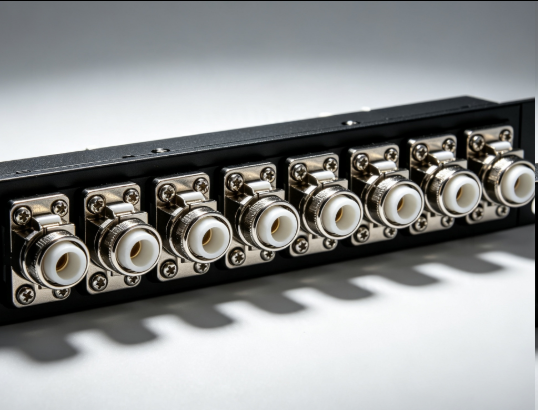
Flange Type Fixed Fiber Optic Adapter for Rack Panel
Sep 19, 2026955
-
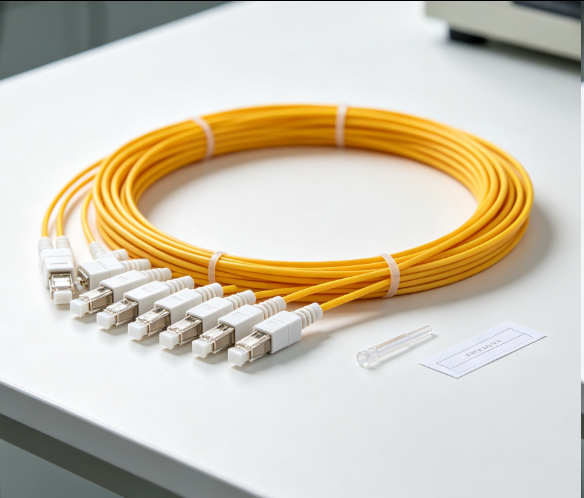
Fiber Pigtail 12 Cores SC UPC Single Mode
Sep 04, 2026930
-
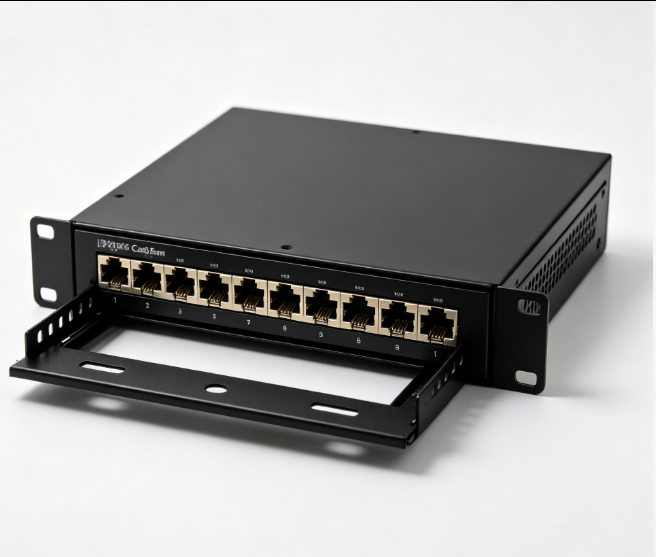
12 Port Cat6 Patch Panel Small Cabinet
Sep 12, 2026929
-
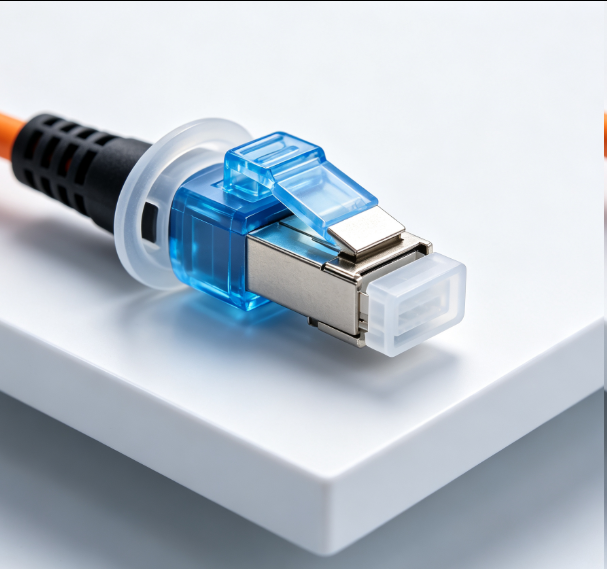
Dust Cap Equipped Fiber Patch Cable Protective
Sep 03, 2026929
-
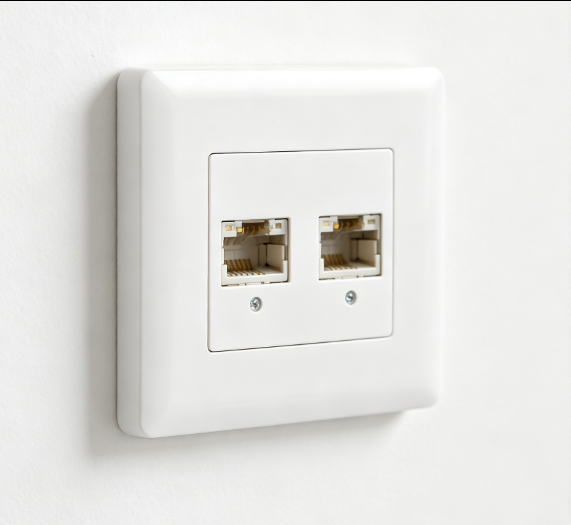
EU Standard Network Faceplate
Sep 11, 2026927