- Language
cat7 ethernet cable
In modern structured integrated wiring systems, network cables serve as the fundamental carrier of the entire network system. Wiring design and cable selection directly determine the network transmission upper limit, long-term operational stability and project delivery quality. Whether for integrated wiring of intelligent buildings, data center computer room wiring, enterprise park full-area networking, whole-house intelligent home wiring, or industrial weak current system integration, ordinary CAT5E and CAT6 network cables are limited by shielding structure and transmission bandwidth. They cannot adapt to the current high-frequency, high-speed and high-density wiring conditions, and are prone to wiring problems such as crosstalk interference, bandwidth bottlenecks, transmission attenuation and frequent operational failures. Tailored for high-standard structured wiring projects, CAT7 Ethernet cables comply with international ISO/IEC and TIA/EIA wiring specifications. With a double-layer full-shielded wiring structure, 600MHz ultra-wideband transmission capability, low-attenuation wiring characteristics and full-scenario wiring adaptability, they thoroughly solve the performance shortcomings and construction hidden dangers of traditional wiring solutions. Suitable for new wiring construction and old line upgrading and renovation, CAT7 cables have become the preferred core cables for high-end commercial, civil and industrial wiring.
The standardized wiring architecture adapts to the structured wiring system and complies with engineering construction specifications. Modern professional wiring projects emphasize systematic, standardized and regular construction, with strict requirements on cable structure, transmission parameters and construction adaptability. Adopting an industry-standard S/FTP twisted pair structure, the CAT7 cable features a rigorous double-layer wiring design with independent shielding for each group of wire pairs and overall outer shielding, which achieves more thorough signal isolation than single-shielded or unshielded ordinary cables and fully conforms to the hierarchical construction standards of structured integrated wiring. Supporting a standard compliant wiring distance of 100 meters with low attenuation and low crosstalk throughout the entire process, it eliminates network speed loss and signal distortion caused by long-distance wiring and meets the full-process construction requirements of vertical computer room wiring, floor horizontal wiring and distributed point wiring. With moderate flexibility, the cable is easy to bend, shape and bind, adapting to multiple mainstream wiring processes such as bridge wiring, concealed pipe wiring, regular cabinet wiring and wall invisible wiring. It offers a high construction fault tolerance, requires no special modification and adaptation, greatly simplifies the wiring process, improves the overall regularity and aesthetics of the project, and easily passes the acceptance of various professional wiring projects.
Powerful anti-interference wiring performance adapts to mixed strong and weak current wiring conditions and solves complex wiring challenges. In actual wiring construction, most scenarios adopt dense wiring modes with strong and weak current cables laid in the same pipe or bridge. Electromagnetic radiation generated by power cables and radio frequency interference from high-frequency equipment are the core hidden dangers leading to network stuttering, delay fluctuation, packet loss and disconnection. Ordinary network cables have weak shielding capability and suffer from severe crosstalk in dense wiring environments, resulting in a sharp decline in network stability and failure to meet long-term stable operation requirements. Benefiting from the exclusive double-layer full-shielded wiring design, the CAT7 cable adopts independent aluminum foil isolation for each twisted pair and high-density metal braided overall shielding, which comprehensively isolates external electromagnetic interference and internal wire pair crosstalk and eliminates signal disorder fundamentally. Even in complex wiring environments with industrial workshops and densely equipped computer rooms featuring parallel strong and weak current wiring, it can maintain pure and stable signals, avoid network faults caused by complex wiring environments, and achieve long-term stable transmission in high-density and high-interference professional wiring conditions.
The ultra-wideband high-speed wiring capability breaks the bandwidth bottleneck of traditional wiring and releases the full potential of the network. Traditional CAT6 network cables only support 250MHz bandwidth, which cannot meet the current high-load network demands such as 4K/8K high-definition transmission, big data cloud interaction, synchronous operation of multiple monitoring channels and high-speed e-sports networking. Large-area wiring is prone to bandwidth congestion and failure to reach full network speed, becoming a performance shortboard of the network system. Equipped with a 600MHz ultra-high bandwidth specification far exceeding ordinary network standards, the CAT7 cable supports stable 10Gbps 10-gigabit high-speed transmission with excellent high-frequency performance. It can easily carry high-intensity wiring scenarios such as high-density multi-point networking, simultaneous online access of multiple terminals and batch transmission of large files. The entire wiring system has no transmission bottlenecks or frequency limitations, maximizing the performance of optical modems, switches and routers and preventing high-end network equipment from being speed-limited by ordinary cables. It supports high-speed and stutter-free transmission in whole-house intelligent multi-device networking wiring, centralized wiring of thousands of enterprise office points and large-capacity data transmission wiring in data centers, adapts to network upgrading demands for years to come, and enables long-term stable use with one-time wiring without frequent cable replacement and network upgrading.
Full-compatibility wiring adapts to seamless connection of new and old lines and reduces wiring renovation costs. In engineering scenarios such as old network upgrading, partial point capacity expansion and mixed wiring of new and old equipment, cable compatibility directly affects construction efficiency and renovation costs. Featuring strong wiring versatility and a standard RJ45 interface, the CAT7 cable is perfectly backward compatible with traditional wiring systems such as CAT6 and CAT5E, adapting to full-gradient network environments including 100Mbps, Gigabit and 10-Gigabit. It requires no replacement of original wiring modules, panels and equipment, enabling seamless mixing and connection of new and old lines and greatly reducing construction costs and construction period loss during upgrading and renovation. Meanwhile, the cable adapts to POE power supply wiring conditions, supporting synchronous power supply and signal transmission for monitoring cameras, intelligent access control, IoT terminals and other equipment. It completes wiring in one step without separate power supply lines, simplifying the wiring structure and reducing line redundancy. It meets full-scenario wiring needs for household, commercial, industrial and security applications, supports both new wiring construction and old line iteration, and flexibly adapts to personalized and differentiated wiring solutions to meet diverse engineering demands.
Durable wiring materials adapt to long-term static wiring and greatly reduce operation and maintenance costs. As a one-time constructed and long-term service concealed project, the aging resistance, wear resistance and temperature resistance of network cables directly determine the service life and later operation and maintenance pressure of the wiring system. The CAT7 cable adopts high-purity oxygen-free copper cores with excellent conductivity and extremely low transmission loss, achieving no overheating or attenuation during long-term full-load operation. The outer sheath is made of flame-retardant, wear-resistant and environmentally friendly materials with multiple properties including waterproof, dustproof, anti-aging, bending-resistant, tensile-resistant and high and low temperature resistance, adapting to complex working conditions such as indoor closed wiring, semi-outdoor wiring, high-temperature computer room wiring and humid environment wiring. With outstanding oxidation and corrosion resistance, it will not suffer from core aging, sheath damage or signal leakage after long-term concealed laying, effectively eliminating network faults such as disconnection, stuttering and offline caused by cable aging in later stages. Featuring standardized, high-stability and long-life wiring advantages, the CAT7 cable serves as a quality benchmark for modern integrated wiring projects, providing a long-term stable and low-maintenance high-quality wiring solution for various network wiring systems.
-
-
-
-
-
-
-
-
-
-
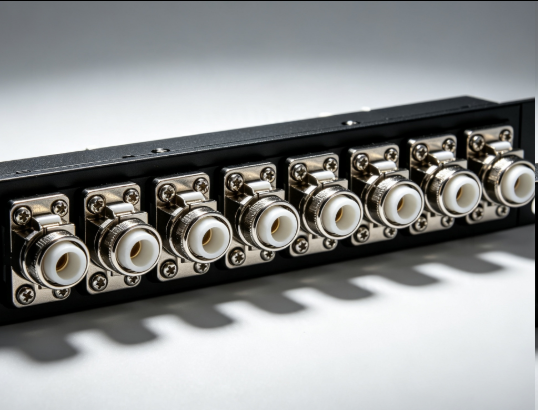
Flange Type Fixed Fiber Optic Adapter for Rack Panel
Sep 19, 2026955
-
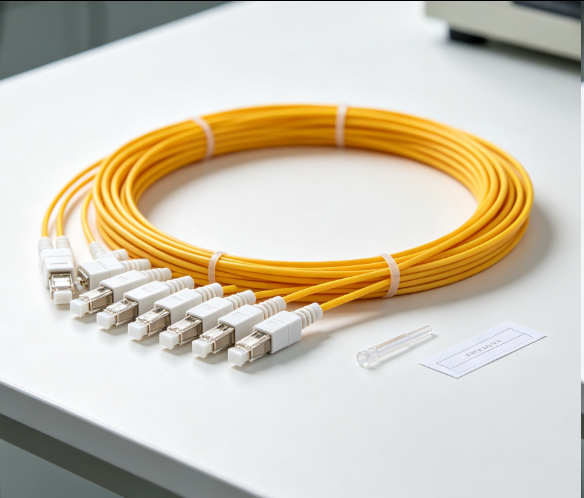
Fiber Pigtail 12 Cores SC UPC Single Mode
Sep 04, 2026930
-
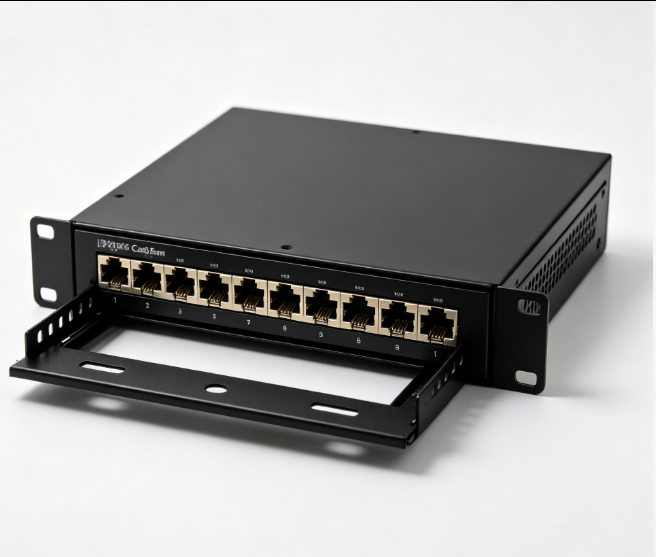
12 Port Cat6 Patch Panel Small Cabinet
Sep 12, 2026929
-
Dust Cap Equipped Fiber Patch Cable Protective
Sep 03, 2026929
-
EU Standard Network Faceplate
Sep 11, 2026927