- Language
cat7 patch cord
As network applications continue to upgrade, scenarios such as 10-gigabit Ethernet, 4K/8K video, cloud computing, and virtualization place ever-higher demands on network transmission bandwidth. As the key finished cable connecting device ports, the patch cord needs to achieve stable transmission at higher frequencies and lower loss within a limited length. A Cat7 shielded jumper, with its higher bandwidth, tighter shielding, and stronger anti-interference ability, has become an ideal choice for future-oriented high-performance network cabling, able to meet application scenarios with strict transmission quality requirements.
Cat7, namely the Category 7 cabling standard, offers a further improvement in transmission performance over Category 6 and Category 6A. Cat7 supports transmission rates up to 10Gbps and has bandwidth capability of up to 600MHz, which can be extended to 1000MHz in some application scenarios, fully meeting the needs of current mainstream high-speed applications while reserving ample space for future higher-bandwidth network upgrades. For users who are building or upgrading high-performance network systems, Cat7 provides a more forward-looking choice.
Compared with lower-grade cabling standards, Cat7 is designed with greater emphasis on high-frequency performance and electromagnetic protection. It is not only suitable for current 10-gigabit Ethernet but also better able to carry possible future high-bandwidth applications. Its higher frequency margin means more advantages in signal quality, anti-interference, and long-term reliability. For users who hope to invest once and benefit for a long time, choosing Cat7 helps reduce the repeated cabling costs caused by future network upgrades and is a rational, future-oriented plan.
Shielding performance is one of the core advantages of Cat7. Cat7 shielded patch cords generally adopt the S/FTP shielding structure, in which each pair is independently wrapped with foil shielding and then the whole cable is covered with an overall braided shield, forming dual electromagnetic protection. This tight shielding structure can effectively block the intrusion of external electromagnetic interference while suppressing mutual crosstalk between pairs. Even in strong electromagnetic environments such as motors, frequency converters, and high-voltage lines, it can still ensure clean and stable signals, significantly reducing bit error rates and packet loss and ensuring reliable data transmission.
High-frequency transmission places higher requirements on the workmanship of the cable. Category 7 shielded patch cords usually adopt a more stable twisting structure and better manufacturing process, with key parameters such as pair spacing and impedance consistency strictly controlled to ensure good crosstalk suppression and return loss performance at high frequencies. Combined with high-quality pure copper or plated conductors, this patch cord can maintain low signal attenuation in high-frequency long-distance transmission, laying a solid foundation for high-speed stable transmission.
It should be noted that although Category 7 shielded patch cords have excellent performance, bringing out their advantages also depends on the matching of the overall link and standardized construction. The shielding system needs continuous grounding throughout, and the parameters of connectors, patch panels, and horizontal cables should also be coordinated so that the entire link can achieve the expected performance. When planning a high-performance network, users should consider patch cords as part of a unified cabling system to ensure consistency of all parts and truly bring out the value of Cat7.
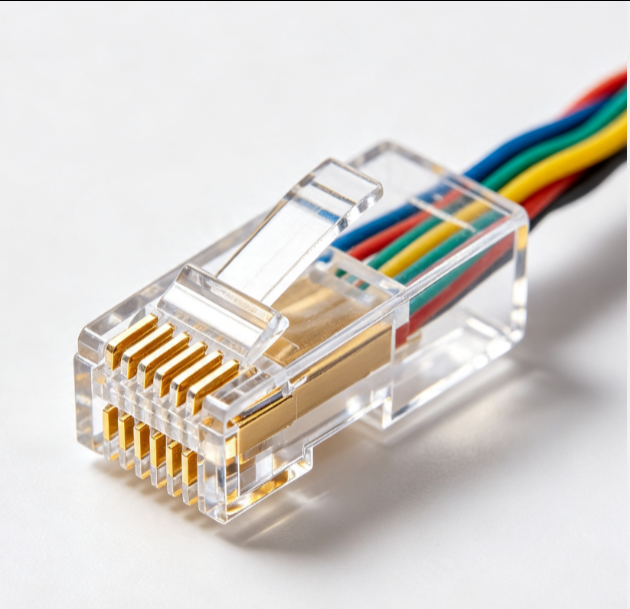
Interface compatibility is an important consideration for Cat7 application. The traditional RJ45 interface is the most widely used form of Ethernet connection. If a Category 7 shielded patch cord uses the RJ45 interface, it can be conveniently connected to existing switches, routers, and terminal devices for plug-and-play use, and is well compatible with Category 6 and 6A systems. At the same time, some Cat7 products support interfaces such as GG45 or TERA, which can further bring out the higher-frequency performance of Cat7. Users can choose the appropriate interface form according to the existing device interfaces, balancing compatibility and performance.
Conductor material and connector workmanship also affect the quality and life of the patch cord. High-quality Category 7 shielded patch cords mostly use pure copper or oxygen-free copper conductors, with excellent conductivity, stable impedance, oxidation resistance, and bending resistance, giving a longer service life. The plugs use high-strength materials and professional crimping processes, with gold-plated contacts that reduce contact resistance and enhance oxidation resistance, maintaining good electrical contact during repeated plugging and unplugging and ensuring reliable and stable connection.
In terms of quality assurance, high-quality Category 7 shielded patch cords usually undergo strict performance testing before leaving the factory, with indicators such as insertion loss, return loss, and crosstalk checked one by one to ensure that actual transmission performance reaches the marked grade. Manufacturers also carry out plugging life and aging tests on products according to standards to verify long-term reliability. Choosing regular products with complete certification and warranty is an important premise for ensuring the stable operation of high-performance networks.
Correct shield grounding is the key to bringing out the shielding performance of Cat7. Category 7 shielded patch cords are usually equipped with metal shielded connectors and grounding structures. During cabling, reliable grounding through shielded patch panels and device ends forms a complete loop for the shield layer, which is necessary to effectively guide and discharge interference current. Standard shield grounding design lets the shielding system perform at its best. Users should choose matching shielded connectors and construct according to standards to ensure continuous and reliable shielding and stable link transmission.
In terms of structural details, high-quality Category 7 shielded patch cords often adopt a snagless design with an elastic protective boot at the end of the plug, preventing the connector from catching on adjacent ports during insertion and facilitating plugging and maintenance in dense port environments. The connection between the boot and the cable is reinforced for better tensile and bending resistance, able to withstand frequent plugging without easy damage. Jacket materials can be selected as PVC or LSZH (low smoke, zero halogen), balancing flexibility, wear resistance, and environmental safety to meet the fire protection and environmental requirements of different places.
From the perspective of application scenarios, Category 7 shielded patch cords are widely used in data centers, enterprise core networks, high-performance computing, HD video transmission, security surveillance, and various Ethernet environments with high transmission quality requirements. For places requiring long-distance stable transmission, high-bandwidth carrying, and strong anti-interference ability, this kind of patch cord can provide reliable transmission assurance and is a common choice for network engineers and system integrators for high-end applications.
In actual operation and maintenance, the stability of high-speed links is closely related to daily management. Frequent port plugging and unplugging, and bending and pulling of lines, can all affect the connection quality of the patch cord. Designs with snagless and reinforced boots, combined with standardized cable management and fixing, can effectively reduce stress and extend the life of the patch cord. Regular inspection of link status and timely replacement of aging or damaged patch cords help maintain stable network performance and avoid single-point failures affecting overall business operation.
During selection, users should comprehensively consider network bandwidth needs, cabling length, anti-interference environment, and interface compatibility, choose the appropriate interface form, wire gauge, length, and jacket material, and select regular products that have passed strict performance testing and certification to ensure that indicators such as insertion loss, return loss, and crosstalk meet the standard. Standardized management and regular maintenance, such as keeping lines tidy and replacing aging patch cords in time, help keep the network in good condition and ensure continuous business operation.
For large data centers and high-performance networks, it is recommended to combine the overall cabling plan, unify patch cord specifications and interface forms for easy port identification and later maintenance, and reserve necessary spare patch cords to cope with equipment expansion and emergency replacement needs. The combination of scientific planning and high-quality patch cords allows the network system to remain stable, clear, and easy to manage during long-term operation, providing reliable network support for the continuous development of business.
It is foreseeable that, with the in-depth development of high-speed networks and digital applications, Category 7 shielded patch cords will play a key role in more high-end scenarios. Higher bandwidth, tighter shielding, and more stable transmission make them an ideal choice for future-oriented high-performance network cabling. Rational selection and standardized use will help users build a faster, more stable, and more scalable network system, providing solid support for the continuous and efficient operation of digital business and laying a reliable foundation for the long-term stable operation of high-end network systems.
-

-

-

-

-

-

-

-

-

-

Dustproof Cover Equipped Network Patch Panel
Oct 10, 20261117
-

How to wire a French switch outlet
Oct 28, 20261112
-

Network Cable Break Point Detector Tester
Oct 09, 20261089
-

Cat6 Lan Cable Length Limit for Gigabit
Oct 24, 20261085
-
RJ45 Connector Cat6 for DIY Cable Making
Nov 20, 20261032