- Language
network cable management
Preface: Core Influence and Application Value of Road Conditions on network cable management
network cable management is the core construction and operation and maintenance link for outdoor security monitoring, field base stations, road monitoring, rural weak current engineering, and temporary outdoor networking projects. It covers the whole process including network cable planning and laying, fixed protection, circuit sorting, fault troubleshooting, and long-term maintenance, which directly determines the stability, safety and service life of outdoor network transmission. Different from the indoor standard wiring environment with constant temperature, no dust and no vibration, outdoor network cable laying is completed relying on various road scenarios. Road flatness, road surface vibration intensity, terrain fluctuation, traffic load and superimposed outdoor working conditions are the core factors affecting the wiring quality, line loss, damage probability and later operation and maintenance cost of network cables. Most outdoor network engineering constructions only focus on network cable specifications, laying length and basic on-off performance, ignoring hidden damages such as line pulling, rolling, vibration, wear and water immersion caused by different road conditions, resulting in frequent faults such as network congestion, signal attenuation, circuit breakage and leakage after completion, which greatly increases later operation and maintenance pressure and rework cost. Urban flat municipal roads, bumpy rural dirt roads, undulating mountain roads, temporary construction site roads and low-lying waterlogged road sections have completely different external force damage and environmental erosion degrees, putting forward differentiated adaptation requirements for the wiring technology, fixing methods, protection standards and operation strategies of network cable management. Therefore, systematically analyzing the wiring difficulties, line loss mechanisms and construction misunderstandings of various outdoor road conditions from the perspective of road conditions, and formulating highly adaptive network cable management schemes can avoid circuit faults caused by road conditions from the source, improve the stability and durability of outdoor network systems, and provide professional technical support for standardized construction, long-term operation and maintenance, and cost reduction and efficiency improvement of outdoor weak current engineering.
Classification of Various Outdoor Road Conditions and Analysis of Wiring Difficulties for network cable management
Outdoor network cable laying scenarios cover municipal roads, rural roads, mountain roads, temporary construction site roads, low-lying waterlogged roads and other diverse scenarios. Different road conditions have significant differences in terrain characteristics, traffic working conditions and environmental conditions, forming different construction difficulties and line loss risks for network cable management, which are the core basis for formulating differentiated wiring schemes. Firstly, for flat municipal road conditions, the road surface is flat and hard without obvious deformation and bump, and the passing vehicles are mainly small private cars with uniform load and weak vibration, making it the optimal outdoor wiring road condition. The core difficulty of network cable management under this condition is recessive line fatigue caused by long-term traffic vibration and road surface thermal expansion and cold contraction. The temperature alternation of municipal roads will cause road surface telescopic deformation, and the buried network cables will be pulled with micro deformation of the road surface for a long time. In addition, the low-frequency vibration generated by passing vehicles will cause slight fatigue of internal copper cores of network cables, loosening of crystal heads and wiring terminals, and increased circuit contact resistance, resulting in gradual network signal attenuation and intermittent disconnection after long-term accumulation. Meanwhile, municipal roads have dense pipelines with many crossed and parallel strong and weak current pipelines, which are prone to electromagnetic interference. Non-standard wiring spacing will directly affect network transmission rate and stability.
Secondly, rural bumpy sand and gravel road conditions have the highest network cable fault rate. Rural dirt roads and sand gravel roads have uneven surfaces with scattered gravels, and are mainly passed by agricultural tricycles and freight vehicles with severe body bumping and disordered loads. Sustained high-frequency vibration is the core feature of this road condition. The biggest difficulties of network cable management under this working condition are continuous mechanical vibration and gravel wear. Overhead laid network cables will shake continuously due to vehicle vibration, resulting in easy loosening and falling off of fixed wiring buckles. The network cable sheath repeatedly rubs against walls, brackets and gravels, causing shell wear and cracking and internal core dislocation. Buried network cables are prone to extrusion by road surface gravels and pulling caused by subgrade settlement, leading to hidden circuit breakage and insulation layer damage. In addition, rural road conditions lack perfect drainage systems, resulting in ponding and silt accumulation on the road surface in rainy days. Network cables are immersed in muddy water for a long time, and water vapor penetrates into the circuit from damaged parts, causing core oxidation, signal interference and circuit short circuit, and greatly shortening the service life of network cables.
Thirdly, mountainous undulating road conditions are characterized by large terrain drop, steep slopes, dense curves, strong wind and easy subgrade loosening and settlement, which put forward extremely high requirements for gradient wiring, overhead protection and line tensile performance of network cable management. Most mountain road wiring is overhead laying along the mountain terrain, and the lines need to be bent and stretched with the height drop of mountain roads. Conventional flat wiring technology cannot adapt, easily causing excessive line tension, dead angle bending and uneven stress. In strong wind weather, the suspended network cables swing and pull greatly, aggravating the stress loss of line joints and fixed points, and frequently causing loose joints and broken lines. The mountain road subgrade is easily loosened and settled by rainwater scouring, and buried network cables are prone to pulling and tearing. Meanwhile, mountain areas have heavy fog and high humidity all year round, and the long-term high-humidity environment will accelerate the aging of network cable sheaths and corrosion of metal accessories, leading to failure of wiring fixed structures and downgrade of line protection, and inducing various network faults.
Finally, temporary muddy construction road conditions and low-lying waterlogged road conditions belong to extremely harsh wiring working conditions. Construction site roads are muddy and soft with heavy overloaded vehicles and frequent mechanical operations, resulting in random road surface deformation, pit collapse, and extremely high risk of rolling damage and violent pulling of network cables. Low-lying road sections have long-term water accumulation and poor drainage in rainy days, and network cables are immersed in water for a long time. The core difficulties of network cable management under these working conditions are sudden external force damage and continuous water immersion corrosion. Conventional simple wiring protection cannot adapt at all, easily causing sudden faults such as network cable rolling and breaking, mechanical hooking and falling off, and water immersion leakage and short circuit, which are the scenarios with the highest operation and maintenance difficulty and rework rate for outdoor network cables.
Network Cable Fault Mechanism and Operation and Maintenance Pain Points Caused by Different Road Conditions
Continuous effects of external force deformation, vibration wear, water immersion and wind pulling caused by road conditions will cause irreversible damage to network cables from four dimensions: physical structure, transmission performance, connection ports and fixed systems, forming various regular faults, which are the core operation and maintenance pain points of outdoor network cable management for a long time. The core fault of flat municipal road conditions is recessive performance attenuation with no obvious external damage traces and high concealment. Long-term road surface micro deformation pulling and traffic vibration will change the twisted pair degree of internal network cables and cause core fatigue, gradually attenuating network transmission bandwidth, resulting in network congestion, delayed fluctuation and increased packet loss rate. Long-term vibration loosening of wiring terminals and crystal heads will cause poor contact and frequent equipment disconnection and restart. Electromagnetic interference caused by non-standard spacing between strong and weak current wiring will further aggravate abnormal network transmission. Such faults are difficult to quickly troubleshoot and easy to recur, greatly increasing operation and maintenance investigation costs.
The core faults of rural bumpy road conditions are physical wear and moisture corrosion, which are the most common dominant faults. Continuous friction of road surface gravels and shaking and collision of lines will gradually wear and break the PVC insulating sheath of network cables, and the exposed internal cores are prone to moisture oxidation and short circuit adhesion. High-frequency vibration caused by vehicle traffic will loosen and fall off wiring buckles and fixed brackets, aggravating line damage due to suspended pulling. Muddy water immersion in rainy days will accelerate corrosion of damaged parts, causing local leakage, signal interruption and failure of whole sections of lines. The core reason for repeated faults and frequent line replacement of rural outdoor networks is that the wiring management fails to adapt to bumpy road conditions with insufficient protection level and simple fixing methods, which cannot resist long-term vibration and wear loss.
The core faults of mountain road conditions are line tensile fracture and joint failure. A large number of bending and stretching points exist in wiring lines due to mountain terrain fluctuation, and long-term stress accumulation will cause fracture of internal cable cores and tearing of external sheaths, especially at line corners and suspended span points with the highest fault probability. Strong wind swinging and pulling will cause continuous stress on network cable joints and waterproof interfaces, resulting in sealing failure, loose joints and corrosion of metal accessories, inducing signal disconnection and unstable transmission. The long-term high humidity and fog environment in mountain areas will accelerate the aging of wiring fixed structures, resulting in rusting and falling off of brackets and embrittlement and failure of buckles, leading to loosening of the whole wiring structure and risk of large-area network paralysis.
The core faults of construction site and low-lying waterlogged road conditions are sudden destructive faults and water immersion failure. Rolling of heavy vehicles and mechanical hooking will directly cause network cable fracture and crushing damage of external sheaths, belonging to irreversible sudden faults. Long-term water immersion will cause water absorption and aging of network cable insulation layers and failure of sealing structures. Water vapor penetrates into the cable cores, causing oxidation, mildew and short circuit scrapping of whole sections of lines. Meanwhile, water-immersed lines have potential leakage safety hazards, which do not comply with outdoor weak current construction safety specifications. In general, the problems of premature scrapping, high-frequency faults and excessive operation and maintenance cost of most outdoor network cables are essentially caused by the failure of network cable management schemes to adapt to actual road conditions, and the adoption of unified indoor wiring standards to cope with complex outdoor road conditions, resulting in insufficient protection redundancy and poor structural adaptability.
Standardized Construction and Operation & Maintenance Scheme of network cable management Based on Full Road Condition Adaptation
According to the loss characteristics and fault laws of different outdoor road conditions, it is necessary to abandon the unified wiring mode and formulate differentiated construction, fixed protection and inspection maintenance schemes adapted to road conditions, comprehensively optimize the network cable management system, and fundamentally reduce line loss and fault probability caused by road conditions. For network cable management under flat municipal road conditions, the core focuses are anti-vibration loosening, anti-electromagnetic interference and slow release of line stress. During wiring, strictly follow national standards for strong and weak current separation, keep the parallel spacing with strong current pipelines above 30cm, and adopt vertical crossing layout to eliminate electromagnetic interference. Reserve 5%-8% expansion margin for line laying to offset line stress caused by road surface thermal expansion and cold contraction and micro deformation. Adopt reinforced locking structure for all wiring points, crystal heads and distribution frames, and fix with shockproof buckles to avoid loosening caused by long-term vibration. Regularly detect line transmission parameters, timely troubleshoot abnormal signal attenuation and packet loss, and fasten loose ports to ensure transmission stability.
The core management focuses for rural bumpy road conditions are anti-wear, anti-vibration and anti-water moisture. Prioritize outdoor special network cables with thickened PVC sheath and aging resistance instead of ordinary indoor network cables. Encrypt wiring fixing buckle points, shorten fixing spacing to prevent line suspended shaking, and install wear-resistant protective sleeves at the contact parts of lines with walls and gravels to isolate friction loss. Add protective sleeves and cushions for buried wiring to avoid extrusion damage by gravels. Clean silt and water on the line surface in time after rainy days, check the integrity of the outer sheath, perform waterproof sealing treatment on slightly damaged parts, and regularly replace aging and loose fixed accessories to strengthen the overall stability of lines.
The core management focuses for mountainous undulating road conditions are tension control, swing prevention, aging resistance and moisture proof. Plan the wiring path reasonably according to mountain slope, reduce right-angle bending, adopt arc transition treatment for all corners and height drop points, and reserve sufficient stretching margin to avoid line stress tension. Install windproof pull lines and shock-absorbing hanging parts for suspended span sections to suppress swinging and pulling caused by strong wind. Adopt waterproof sealed joints for all joints and interfaces with double-layer waterproof protection to prevent fog and rainwater penetration in mountain areas. Regularly check the corrosion of brackets, buckles and metal accessories, timely derust and reinforce, and replace aging accessories to prevent failure and loosening of wiring structures.
The core management focuses for construction site muddy and low-lying waterlogged road conditions are anti-rolling, anti-immersion and anti-external force damage. Adopt overhead high-level laying for temporary wiring to avoid vehicle traffic and mechanical operation areas. Low-level lines must be equipped with thickened high-strength protective sleeves for anti-rolling protection. Ordinary network cables are prohibited from direct laying in low-lying waterlogged road sections, and special waterproof network cables are adopted. All line joints are fully sealed against water immersion, and wiring height is raised to avoid long-term water immersion. Inspect lines regularly during construction, timely repair damaged lines hooked and rolled, and sort and store temporary lines in time after operation to reduce outdoor exposed loss.
In terms of general operation and maintenance, establish a road condition graded inspection system, and formulate differentiated inspection cycles according to road condition loss intensity: inspect municipal road conditions once a month, focusing on troubleshooting port loosening and signal attenuation; inspect rural bumpy road conditions once every two weeks, focusing on checking sheath wear and fixed loosening; inspect harsh mountain and construction site road conditions every week to comprehensively check structural aging, line damage and potential safety hazards. Uniformly standardize line identification, mark road condition areas, wiring dates and line purposes in classification, realize rapid fault location and accurate operation and maintenance, and greatly improve the standardization and refinement level of network cable management.
Conclusion
Road condition working condition is the core key that determines the construction quality, service life and operation and maintenance cost of outdoor network cable management. Different municipal flat, rural bumpy, mountain undulating and construction waterlogged road conditions correspond to different fault risks such as vibration fatigue loss, friction wear, tensile fracture and water immersion scrapping, which directly affect the transmission stability and operation safety of outdoor network systems. The traditional unified wiring management mode cannot adapt to complex and changeable outdoor road conditions, which is the core reason for high-frequency faults, premature aging and high operation and maintenance cost of network cables. Accurately distinguishing the wiring difficulties and loss mechanisms of various road conditions, and targeted optimizing the wiring technology, fixing methods, protection standards and inspection and maintenance system can comprehensively resist external force damage and environmental erosion caused by road conditions, and effectively solve various common problems of outdoor networks such as signal attenuation, circuit breakage, port loosening and water immersion short circuit. The standardized and road condition adaptive network cable management scheme can not only greatly extend the service life of outdoor network cables and reduce fault rework rate and operation and maintenance cost, but also comprehensively improve the network operation stability of outdoor monitoring, road monitoring, field networking and rural weak current projects, provide solid technical support for the long-term safe operation of various outdoor network projects, and realize the core goals of standardized wiring construction, refined operation and maintenance management and efficient project operation.
-
-
-
-

-
-
-

-
-
-
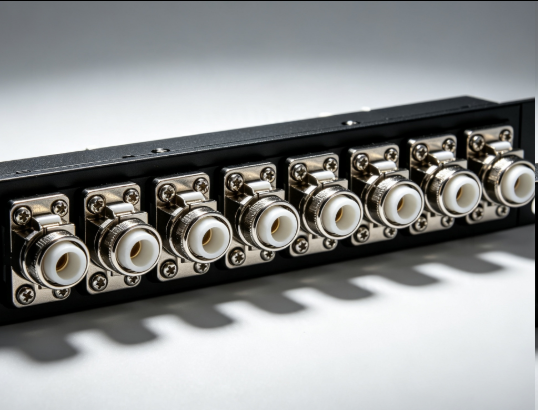
Flange Type Fixed Fiber Optic Adapter for Rack Panel
Sep 19, 2026955
-
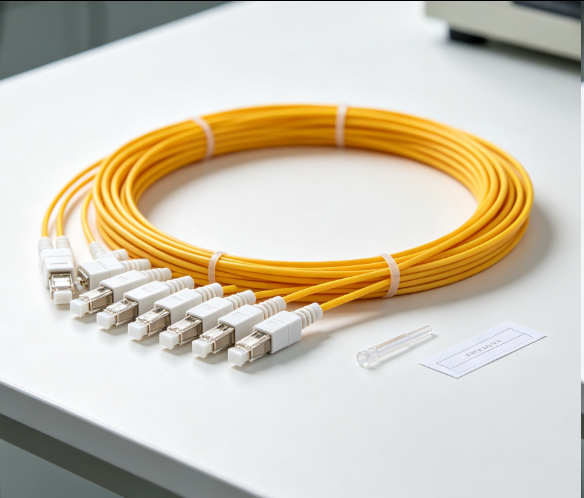
Fiber Pigtail 12 Cores SC UPC Single Mode
Sep 04, 2026930
-
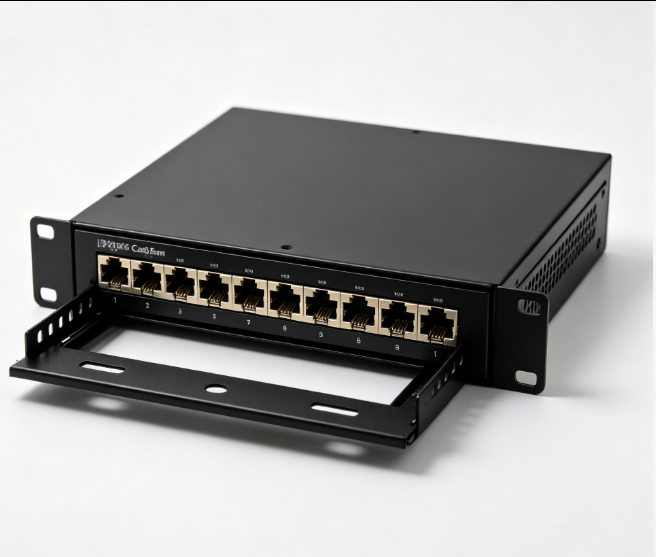
12 Port Cat6 Patch Panel Small Cabinet
Sep 12, 2026929
-

Dust Cap Equipped Fiber Patch Cable Protective
Sep 03, 2026929
-
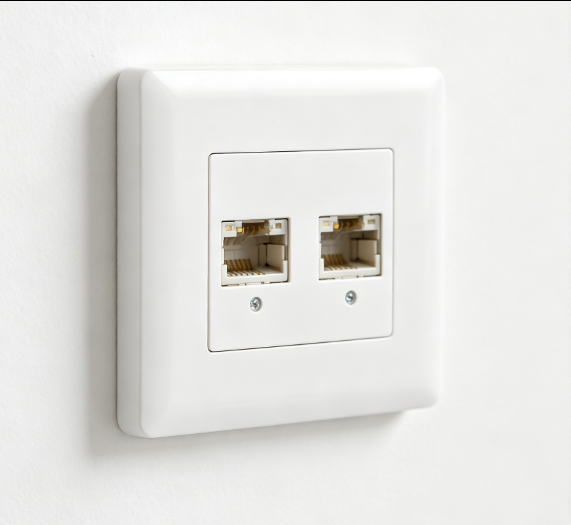
EU Standard Network Faceplate
Sep 11, 2026927