- Language
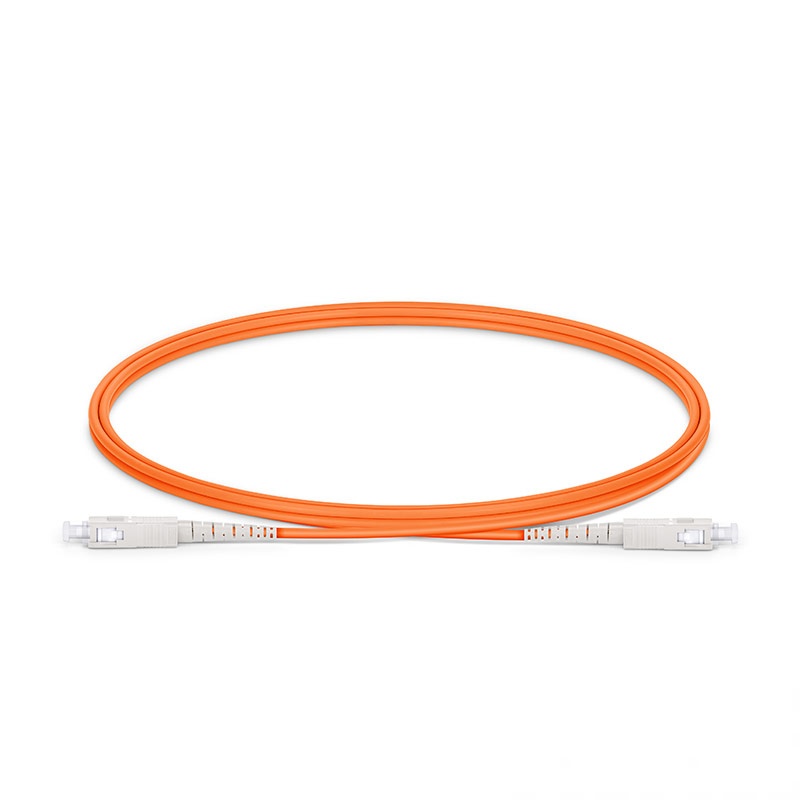
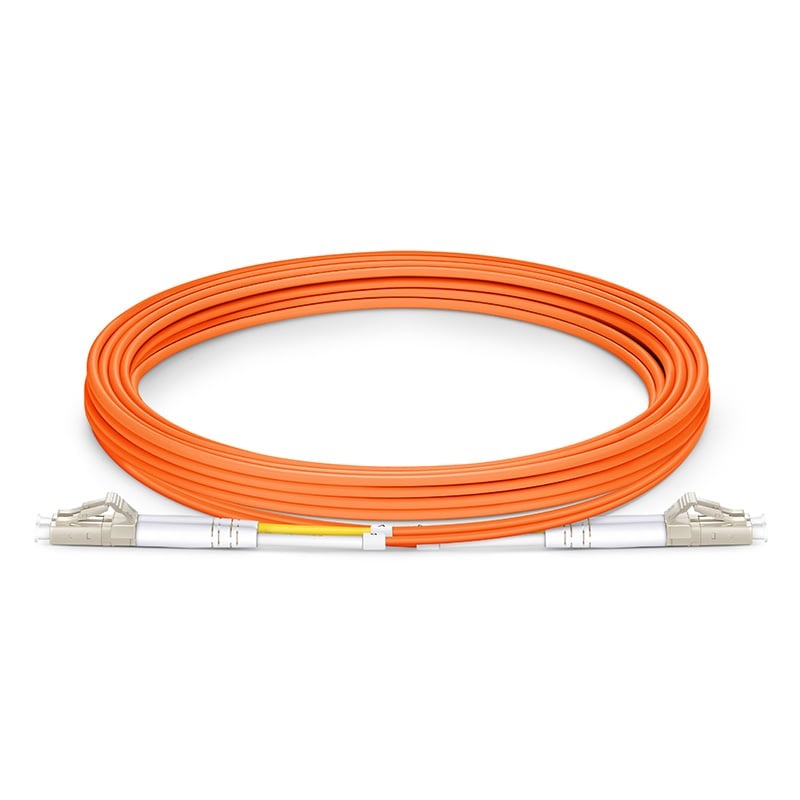
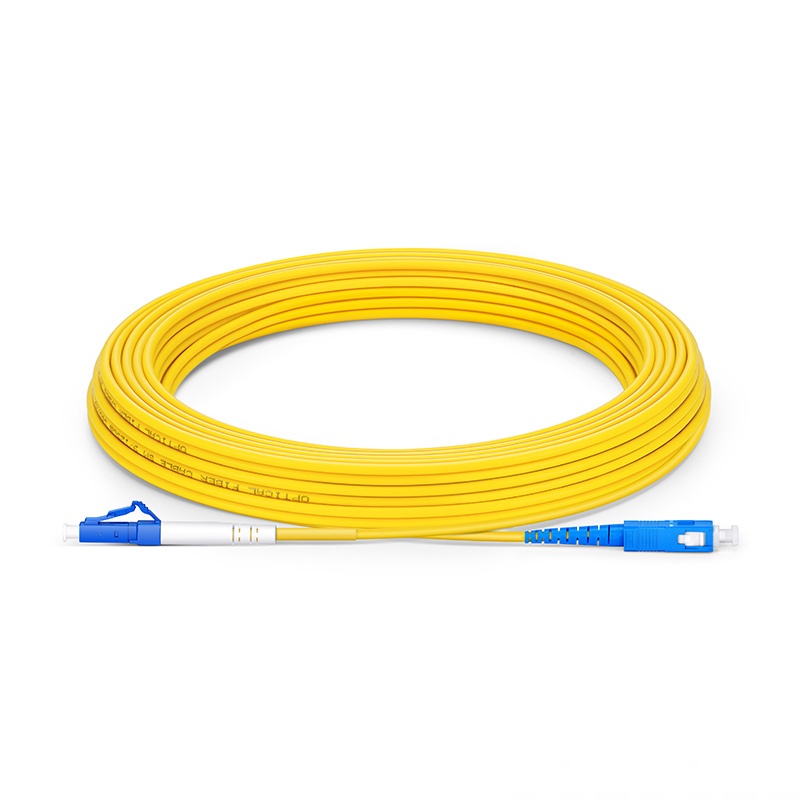
om3 fiber patch cord
In the industrial system of structured cabling, data center construction, government and enterprise weak current renovation, security private network integration, and storage area network deployment, the selection of fiber patch cords is not merely a matter of parameter matching, but a systematic decision that complies with industry standards, project budgets, scenario adaptation, long-term iteration and large-scale implementation. With the development of domestic communication cabling industry, OM3 laser-optimized multimode fiber patch cords have long occupied a mainstream position in mid-to-high-speed networking projects by virtue of mature technical standards, balanced performance configuration, high project adaptability and prominent cost performance. They have become standardized essential products for engineering contractors, system integrators and government and enterprise procurement teams. Compared with outdated OM1/OM2 multimode fibers that suffer from insufficient bandwidth and inability to support 10G transmission, and high-cost OM4 cables with performance surplus that are uneconomical for small and medium-sized projects, OM3 accurately targets the mid-range high-speed cabling track. It perfectly adapts to most 10G/40G short-distance high-speed networking scenarios, covering four core industry requirements including compliance acceptance, convenient construction, worry-free operation and maintenance, and controllable budget, emerging as the most widely adapted, highly implementable and versatile 10G baseline cabling solution in the current engineering field.
In terms of industry standard systems, OM3 is a 10G-compliant cabling product certified by TIA-568 and ISO/IEC 11801, establishing a universal industry selection benchmark. The core prerequisite of industrial cabling projects is compliant parameters, unified standards and controllable acceptance. Non-standard cables easily cause project rework, acceptance rejection and system incompatibility, increasing project implementation risks. Adopting a standard 50/125μm core-cladding structure and professional VCSEL laser optimization technology, OM3 fiber patch cords deliver a rated modal bandwidth of 2000MHz·km, completely outperforming ordinary traditional multimode fibers and fully complying with IEEE 802.3 Ethernet industry transmission standards. At the mainstream 850nm operating wavelength, it stably supports 10G Ethernet transmission up to 300 meters and 40G high-speed parallel transmission up to 100 meters, fully covering the transmission distance requirements of most engineering scenarios such as computer room cabinet interconnection, server docking, SAN storage networks and floor backbone jumping. With precise and controllable optical parameters, UPC end-face grinding ensures insertion loss ≤0.35dB and return loss ≥35dB. Featuring stable parameters and high fault tolerance, it fully meets government and enterprise bidding standards, computer room acceptance specifications and weak current engineering quality inspection requirements, serving as a recognized compliant, low-risk and standardized wire solution in the industry.
From the perspective of industry scenario adaptation, OM3 accurately matches the working conditions of most domestic commercial and engineering networks with far superior compatibility than similar products. The mainstream projects in the current domestic cabling industry are dominated by small and medium-sized data centers, government and enterprise office computer rooms, park weak current systems, high-definition security private networks and enterprise storage networks. The transmission distance of such projects is mostly concentrated between 10 and 300 meters, exactly the optimal performance range of OM3 fibers. Outdated OM2 cables can only support low-speed transmission of 100M and Gigabit, failing to meet current industrial demands for 4K high-definition transmission, cloud data interaction and multi-device concurrent networking, and have gradually withdrawn from the mainstream engineering market. In contrast, OM4 ultra-high-bandwidth cables are designed for long-distance 10G and 100G transmission with excessive performance and high procurement cost, squeezing the profit margin of small and medium-sized projects and unsuitable for large-scale popularization. With precise performance positioning, OM3 perfectly balances speed, distance and cost, fully meeting current 10G networking rigid demands without redundant performance waste. It adapts to full-category industrial projects including government and enterprise old computer room upgrading, new park cabling, commercial building intelligent renovation, full-network high-definition security acceleration and industrial control network construction, serving as the optimal solution for large-scale engineering construction and standardized implementation.
From the perspective of industry iteration and upgrading, OM3 features comprehensive upward and downward compatibility, adapting to the industry trend of new and old network replacement. The current cabling industry is in a critical transition stage from Gigabit to 10G, with mixed use of new and old equipment and phased system upgrading. A large number of engineering projects involve old link reuse, new equipment installation and phased capacity expansion, where cable compatibility directly determines project transformation cost and implementation efficiency. As the core wire for industrial transition and iteration, OM3 is highly downward compatible with traditional OM1 and OM2 multimode fiber links. It enables network bandwidth upgrading without dismantling the original old cabling architecture, greatly reducing the engineering cost and construction cycle of old computer room renovation and park network upgrading. Meanwhile, it is upward compatible with mainstream 40G optical modules, switches and storage devices, supporting enterprise network capacity expansion and iteration for the next 5–8 years and effectively avoiding industry pain points such as backward cabling, wire elimination and secondary transformation. For system integrators and engineering parties, the unified adoption of OM3 standardized cabling realizes universal wires, equipment and operation and maintenance for projects, greatly simplifying product selection procedures, reducing inventory pressure and improving project standardization, conforming to the industry development trend of large-scale, standardized and low-cost operation.
In terms of industrial engineering implementation and operation & maintenance ecology, OM3 features high construction fault tolerance and long-term stability, adapting to long-term large-scale project implementation. The cabling industry advocates one-time construction and years of maintenance-free operation, where the construction adaptability and long-term stability of cables directly determine project reputation and later maintenance costs. Optimized with internal stress structure, OM3 fiber patch cords deliver excellent bend-insensitive performance with a minimum bending radius suitable for dense computer room wiring, bridge corner routing and compact cabinet storage. No large arc reserved space is required during construction, effectively avoiding construction faults such as hidden core cracks, increased loss and parameter drift caused by bending, and significantly improving the efficiency of large-scale construction and one-time acceptance rate. Equipped with industry-standard LSZH low-smoke halogen-free flame-retardant or eco-friendly PVC outer jackets, the cables feature excellent high and low temperature resistance, moisture and dust proof performance and aging resistance, adapting to complex engineering environments such as 7×24-hour uninterrupted computer room operation, humid and dusty weak current wells and variable indoor temperatures. No obvious attenuation of optical parameters occurs during long-term operation. Meanwhile, industry-general LC/SC/FC/ST multi-specification connectors are compatible with all mainstream optical devices on the market. The strong universality simplifies later maintenance replacement, fault troubleshooting and equipment expansion without customized production, greatly reducing industrial operation difficulty and after-sales costs.
From the perspective of industry market cost and cost performance, OM3 sets a benchmark for high-cost-performance 10G engineering cabling, adapting to large-scale centralized procurement demands. With increasingly fierce market competition in the industry, the profit margin of engineering projects highly relies on cable cost performance. Under the premise of qualified engineering standards, controlling procurement costs and reducing redundant waste are the core demands of all engineering merchants. Compared with OM4 cables, OM3 greatly reduces procurement costs without performance premium while meeting the 10G engineering requirements of most short-distance scenarios, perfectly adapting to market demands for batch procurement of small and medium-sized projects and popularization in horizontal wiring of large projects. Benefiting from mature standardized mass production technology, stable quality control and sufficient supply without batch parameter deviation, it is highly suitable for engineering bidding, large-area construction and long-term project supply. Recognized as a high-compliance, low-risk and high-cost-performance 10G cabling solution in the industry, it maximizes project profit margins while ensuring qualified project acceptance and long-term stable system operation, becoming the mainstream essential wire for cabling engineering, system integration and intelligent renovation industries.
In summary, relying on compliant industry standards, precise scenario positioning, complete iterative compatibility, excellent engineering adaptability and extreme cost performance, OM3 fiber patch cords firmly occupy the mainstream position in the mid-to-high-end cabling market. It solves the industrial bottleneck of insufficient bandwidth and unavailable 10G upgrading of traditional multimode fibers, while avoiding the market pain points of excessive performance and high cost of high-end wires. Perfectly adapting to the full-scenario cabling demands of domestic government, enterprise, commercial, industrial and data center projects, it serves as the core supporting product for industrial Gigabit-to-10G upgrading, new and old system iteration and standardized engineering implementation, continuously leading the standardized cabling trend of small and medium-sized high-speed networking projects.
-
-
-
-
-
-
-
-
-
-
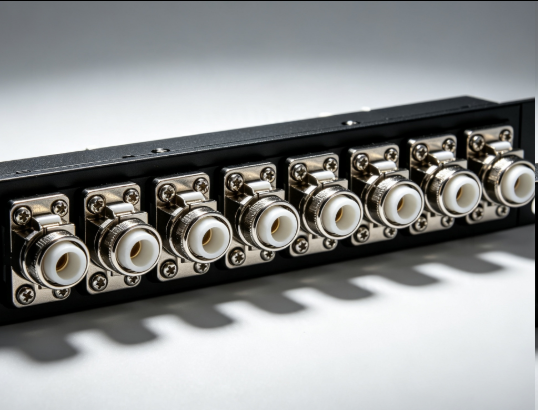
Flange Type Fixed Fiber Optic Adapter for Rack Panel
Sep 19, 2026955
-
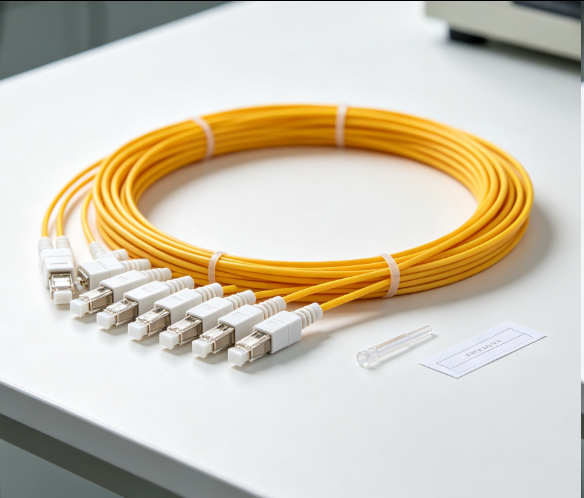
Fiber Pigtail 12 Cores SC UPC Single Mode
Sep 04, 2026930
-
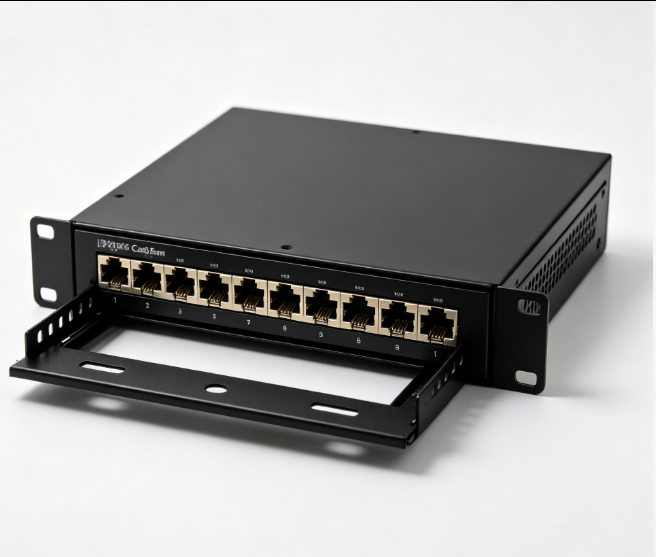
12 Port Cat6 Patch Panel Small Cabinet
Sep 12, 2026929
-
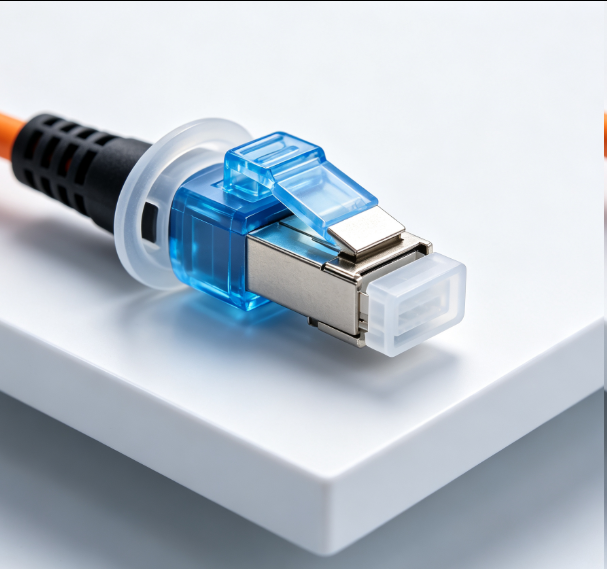
Dust Cap Equipped Fiber Patch Cable Protective
Sep 03, 2026929
-
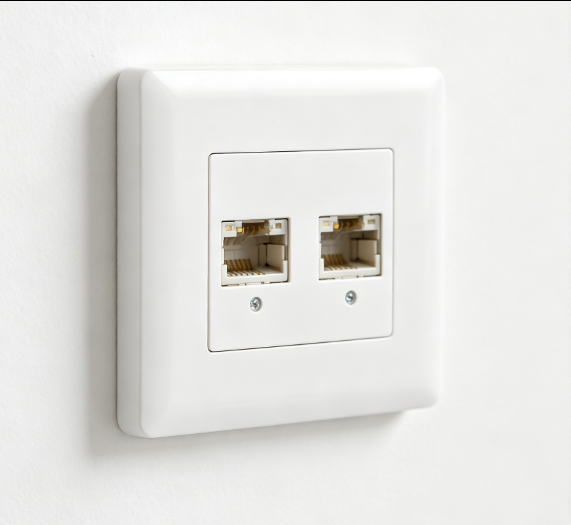
EU Standard Network Faceplate
Sep 11, 2026927