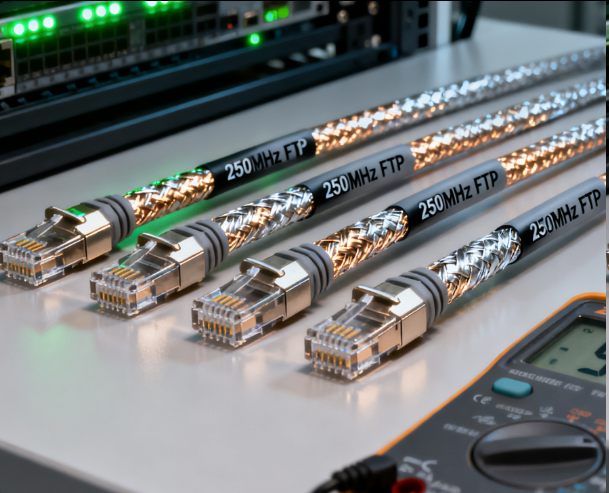
A 250MHz FTP (Foiled Twisted Pair) network patch cord is engineered for environments where moderate bandwidth and enhanced shielding are required. Operating at frequencies up to 250 MHz, these cables support 2.5 Gigabit Ethernet (2.5GBase-T) and are backward compatible with 1GBase-T networks. The "FTP" designation indicates that each twisted pair is wrapped in a metal foil shield, which significantly reduces crosstalk and EMI, making them ideal for industrial settings, server rooms, or areas
A 250MHz FTP (Foiled Twisted Pair) network patch cord is engineered for environments where moderate bandwidth and enhanced shielding are required. Operating at frequencies up to 250 MHz, these cables support 2.5 Gigabit Ethernet (2.5GBase-T) and are backward compatible with 1GBase-T networks. The "FTP" designation indicates that each twisted pair is wrapped in a metal foil shield, which significantly reduces crosstalk and EMI, making them ideal for industrial settings, server rooms, or areas
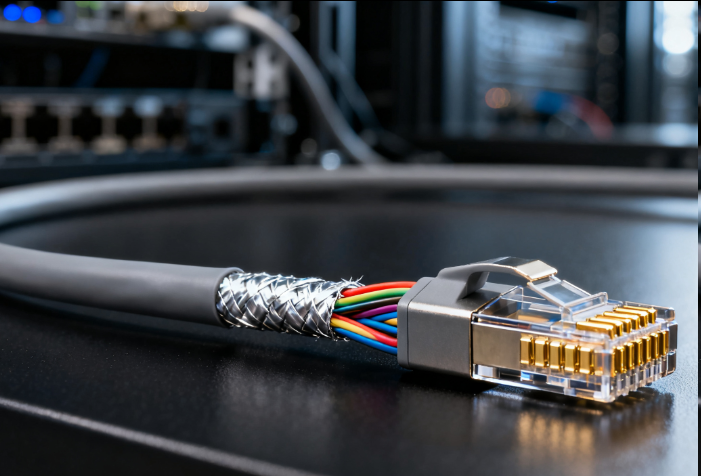
A 500MHz STP (Shielded Twisted Pair) network patch cord is designed for high-performance networking, supporting frequencies up to 500 MHz and enabling 10 Gigabit Ethernet (10GBase-T) over distances of up to 100 meters. The "STP" designation refers to the overall braided shield that surrounds the twisted pairs, providing robust protection against EMI and crosstalk. This makes them ideal for data centers, financial institutions, and enterprise networks where uninterrupted data flow is critical
A 500MHz STP (Shielded Twisted Pair) network patch cord is designed for high-performance networking, supporting frequencies up to 500 MHz and enabling 10 Gigabit Ethernet (10GBase-T) over distances of up to 100 meters. The "STP" designation refers to the overall braided shield that surrounds the twisted pairs, providing robust protection against EMI and crosstalk. This makes them ideal for data centers, financial institutions, and enterprise networks where uninterrupted data flow is critical

A wide-bandwidth network patch cord is engineered to support the highest frequencies and data rates available in copper cabling, making it ideal for cutting-edge networking applications. These cables, typically classified as Cat8 or higher, operate at frequencies up to 2000 MHz and enable 25 or 40 Gigabit Ethernet (25GBase-T/40GBase-T) over short distances (up to 30 meters). Their ultra-high performance makes them suitable for data centers, high-performance computing, and financial trading f
A wide-bandwidth network patch cord is engineered to support the highest frequencies and data rates available in copper cabling, making it ideal for cutting-edge networking applications. These cables, typically classified as Cat8 or higher, operate at frequencies up to 2000 MHz and enable 25 or 40 Gigabit Ethernet (25GBase-T/40GBase-T) over short distances (up to 30 meters). Their ultra-high performance makes them suitable for data centers, high-performance computing, and financial trading f
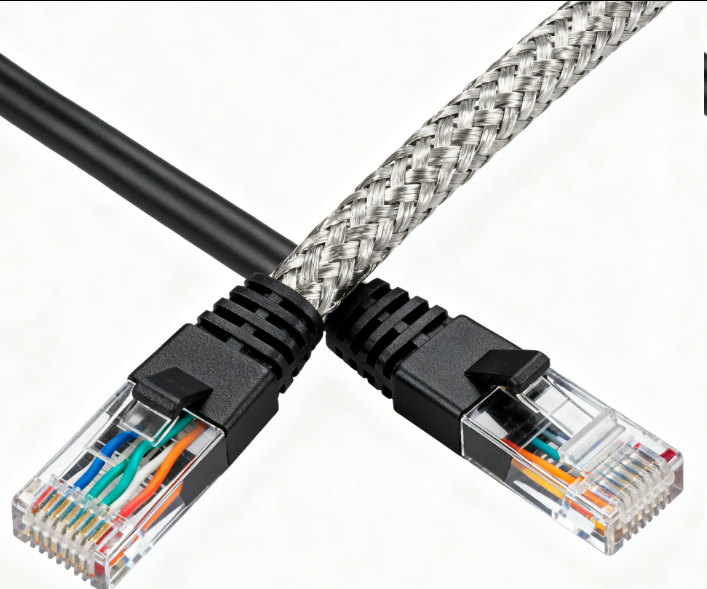
Shielded Cat6 network patch cords combine the performance of the Cat6 standard with enhanced electromagnetic interference (EMI) protection, making them a versatile choice for medium to large businesses, data centers, and environments with moderate to high interference. The Cat6 standard supports 10 Gigabit Ethernet (10 Gbps) over short distances (up to 55 meters) and Gigabit Ethernet (1 Gbps) over 100 meters, with stricter specifications for crosstalk and signal loss than Cat5e. The shieldin
Shielded Cat6 network patch cords combine the performance of the Cat6 standard with enhanced electromagnetic interference (EMI) protection, making them a versatile choice for medium to large businesses, data centers, and environments with moderate to high interference. The Cat6 standard supports 10 Gigabit Ethernet (10 Gbps) over short distances (up to 55 meters) and Gigabit Ethernet (1 Gbps) over 100 meters, with stricter specifications for crosstalk and signal loss than Cat5e. The shieldin
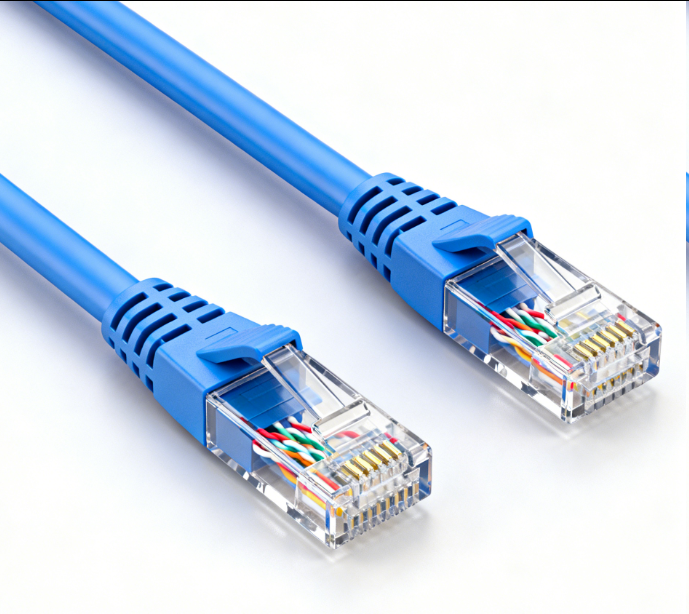
Unshielded Cat5e network patch cords are one of the most widely used Ethernet cabling solutions, offering a cost-effective balance of performance and compatibility for residential, small business, and non-critical enterprise applications. The “enhanced” designation (Cat5e) builds on the original Cat5 standard, improving crosstalk reduction and signal integrity to support Gigabit Ethernet (1 Gbps) over distances up to 100 meters—double the 500 Mbps limit of Cat5. As an unshielded cord, Cat5e
Unshielded Cat5e network patch cords are one of the most widely used Ethernet cabling solutions, offering a cost-effective balance of performance and compatibility for residential, small business, and non-critical enterprise applications. The “enhanced” designation (Cat5e) builds on the original Cat5 standard, improving crosstalk reduction and signal integrity to support Gigabit Ethernet (1 Gbps) over distances up to 100 meters—double the 500 Mbps limit of Cat5. As an unshielded cord, Cat5e

Shielded Cat8 network patch cords represent the cutting-edge of Ethernet cabling, combining robust shielding with the high-performance Cat8 standard to support ultra-fast data transmission in demanding environments. The Cat8 standard, defined by IEEE, is designed for 25/40 Gigabit Ethernet (25GBASE-T/40GBASE-T) over distances up to 30 meters, making it ideal for high-density data centers and enterprise networks where speed and signal integrity are paramount. What sets shielded Cat8 cords apa
Shielded Cat8 network patch cords represent the cutting-edge of Ethernet cabling, combining robust shielding with the high-performance Cat8 standard to support ultra-fast data transmission in demanding environments. The Cat8 standard, defined by IEEE, is designed for 25/40 Gigabit Ethernet (25GBASE-T/40GBASE-T) over distances up to 30 meters, making it ideal for high-density data centers and enterprise networks where speed and signal integrity are paramount. What sets shielded Cat8 cords apa
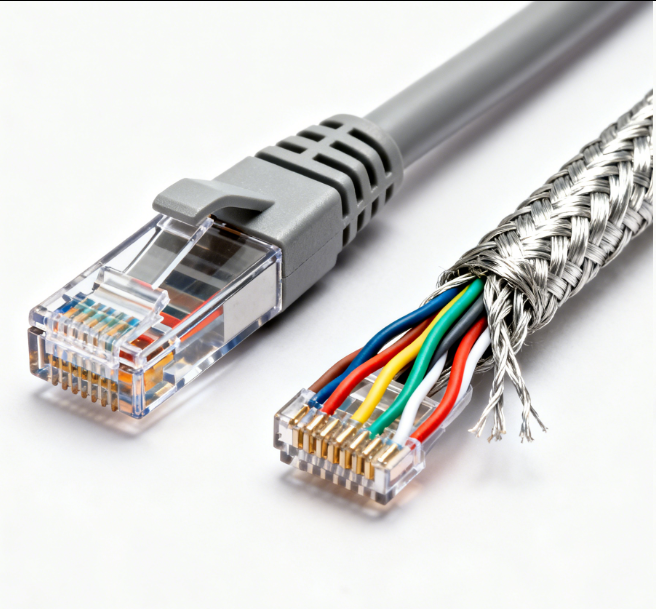
SSTP network patch cords—also known as “Double-Shielded Twisted Pair”—offer the highest level of EMI protection among common patch cord types, featuring a dual-shield design: an inner foil shield around each individual twisted wire pair, plus an outer braided shield around the entire bundle of pairs. This dual-layer shielding creates a “double barrier” against EMI, blocking even the strongest external interference and eliminating almost all internal crosstalk or signal leakage. The structur
SSTP network patch cords—also known as “Double-Shielded Twisted Pair”—offer the highest level of EMI protection among common patch cord types, featuring a dual-shield design: an inner foil shield around each individual twisted wire pair, plus an outer braided shield around the entire bundle of pairs. This dual-layer shielding creates a “double barrier” against EMI, blocking even the strongest external interference and eliminating almost all internal crosstalk or signal leakage. The structur

The 40Gbps shielded network patch cord is the pinnacle of copper-based high-speed networking, designed to meet the extreme bandwidth demands of hyperscale data centers, AI infrastructure, and HPC clusters while providing maximum interference protection. Unlike lower-speed shielded cords or even 10Gbps variants, 40Gbps signals are exponentially more sensitive to EMI/RFI and alien crosstalk—making robust shielding non-negotiable. This cord uses a triple-shielded design (S/FTP with an additiona
The 40Gbps shielded network patch cord is the pinnacle of copper-based high-speed networking, designed to meet the extreme bandwidth demands of hyperscale data centers, AI infrastructure, and HPC clusters while providing maximum interference protection. Unlike lower-speed shielded cords or even 10Gbps variants, 40Gbps signals are exponentially more sensitive to EMI/RFI and alien crosstalk—making robust shielding non-negotiable. This cord uses a triple-shielded design (S/FTP with an additiona

The 100Mbps indoor network patch cord is a compact, user-friendly twisted-pair solution tailored for low-bandwidth indoor environments—such as homes, small offices, retail stores, or educational institutions—where reliable 100 Megabits per second speeds suffice for daily tasks. Unlike outdoor or industrial cords that require heavy-duty protection, this indoor variant prioritizes flexibility, space efficiency, and affordability, making it ideal for connecting devices like desktop computers, p
The 100Mbps indoor network patch cord is a compact, user-friendly twisted-pair solution tailored for low-bandwidth indoor environments—such as homes, small offices, retail stores, or educational institutions—where reliable 100 Megabits per second speeds suffice for daily tasks. Unlike outdoor or industrial cords that require heavy-duty protection, this indoor variant prioritizes flexibility, space efficiency, and affordability, making it ideal for connecting devices like desktop computers, p