- Language
Multimode Fiber Jumper
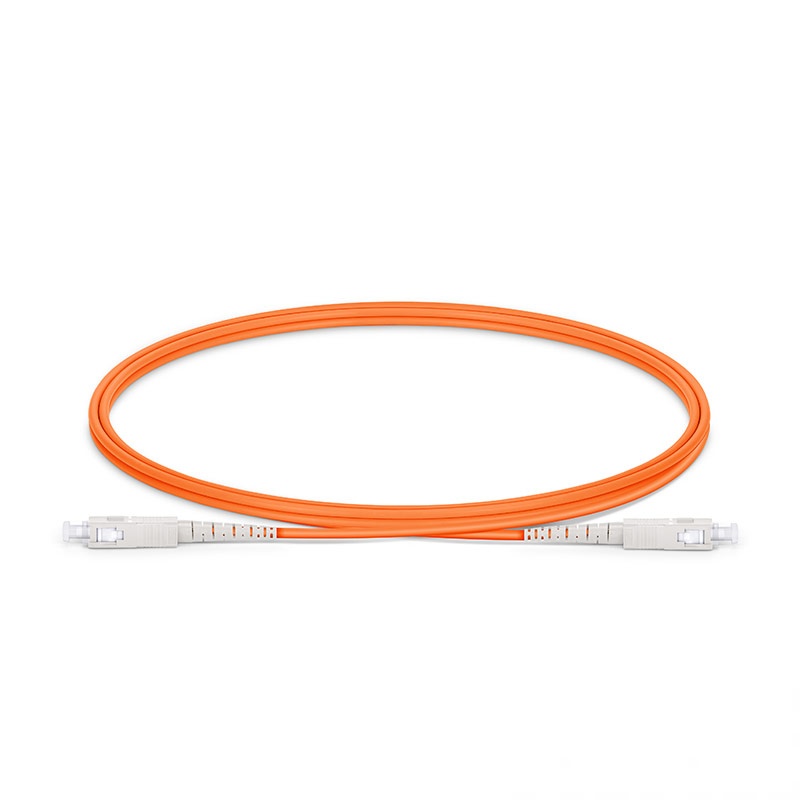
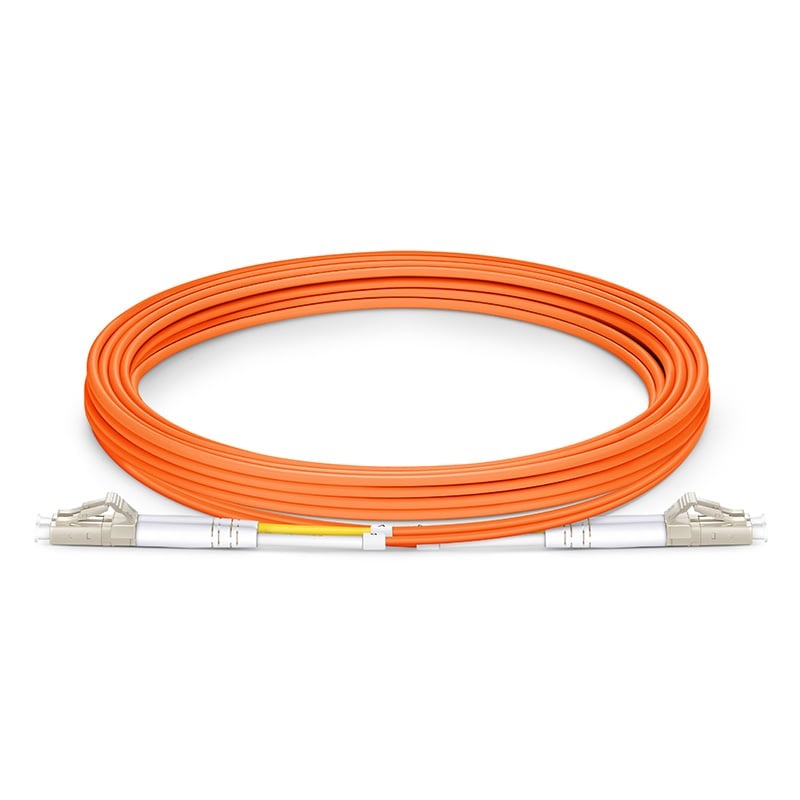
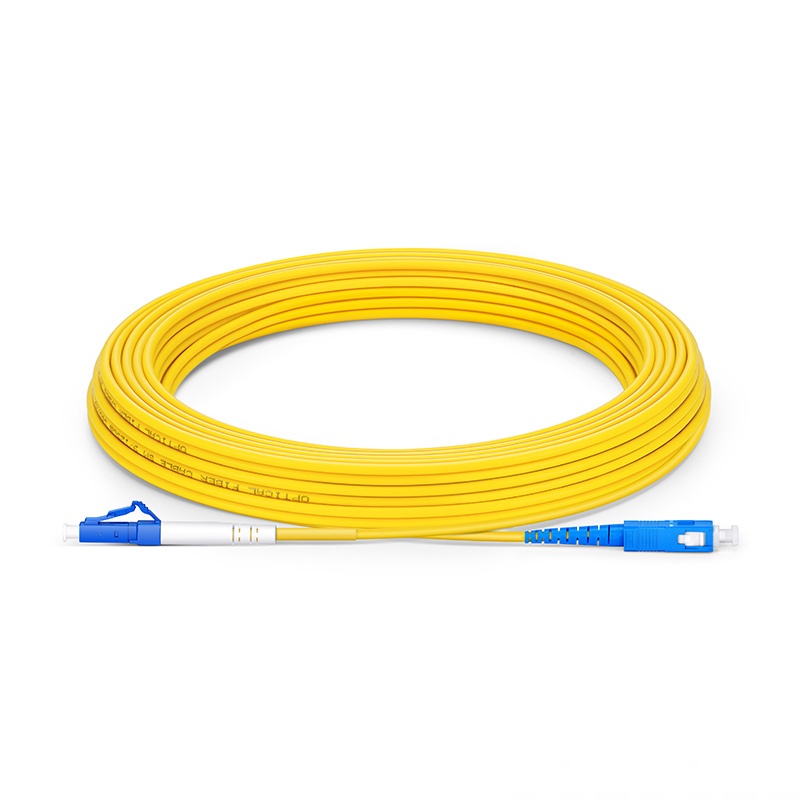
Multimode fiber jumper (MMF jumper) is a key component in short-distance optical communication systems, serving as a flexible connection between optical devices such as switches, routers, servers, and optical transceivers. Unlike single-mode fiber jumpers that transmit light through a single path, multimode fiber jumpers have a larger core diameter (typically 50μm or 62.5μm), allowing multiple light modes to propagate simultaneously. This unique multi-path transmission characteristic enables high-bandwidth data transmission over short distances, making the jumper an indispensable part of data centers, local area networks (LANs), and other short-haul communication scenarios where cost-effectiveness and high-speed performance are critical.
Multimode fiber jumpers are classified into five main categories based on performance: OM1, OM2, OM3, OM4, and OM5, each with distinct bandwidth and transmission capabilities. OM1 (62.5/125μm) is an early model with a bandwidth of 200MHz·km and a transmission distance of approximately 300 meters at 850nm wavelength, and it is gradually being replaced by higher-performance models. OM2 (50/125μm) offers a bandwidth of 500MHz·km and a transmission distance of up to 550 meters, suitable for traditional LANs but insufficient for high-speed data center needs. OM3 (50/125μm, laser-optimized) has a bandwidth of 2000MHz·km, supporting 10Gbps transmission over 300 meters at 850nm, and has become the mainstream choice for data centers due to its high cost-effectiveness. OM4 (50/125μm, ultra-laser-optimized) further increases bandwidth to 4700MHz·km, supporting 10Gbps transmission over 550 meters or 40Gbps/100Gbps short-distance transmission, making it ideal for high-performance computing and cloud data centers. OM5 (50/125μm, wideband multimode) is the latest standard, supporting shortwave wavelength division multiplexing (SWDM) technology and operating in the 850-953nm wavelength range, making it suitable for future high-speed network expansion.
In terms of structure and performance, multimode fiber jumpers are equipped with various connector types, including LC, SC, and MPO, with LC connectors being the most popular in data centers due to their small size and easy plugging. The jumper’s sheath is typically made of PVC or LSZH material, with LSZH being preferred in environments with high fire safety requirements. Key performance indicators include insertion loss (≤0.3dB for PC surface ) and return loss (≥50dB for UPC surface ), ensuring stable signal transmission. The jumper also features excellent mechanical properties, with a bending radius of no less than 10 times the core diameter and tensile strength enhanced by Kevlar reinforcement. Its applications are widespread, including data center internal interconnection, enterprise LAN deployment, fiber-to-the-desk (FTTD) systems, network testing and maintenance, and industrial automation. As 400Gbps/800Gbps Ethernet standards advance, multimode fiber jumpers are evolving toward higher bandwidth and lower loss, with OM5 and SWDM technology leading the way in enhancing link capacity.
-
-
-
-
-
-
-
-
-
-

Media Converter Network Patch Cord
Jun 27, 2026904
-
Network Cable Bandwidth Capacity
Jul 06, 2026895
-
UY2 Connector for Telephone Wire
Jul 08, 2026892
-
Wall-mounted Network Cabinet
Jun 30, 2026878
-
Four-Port Network Faceplate
Jul 03, 2026875