- Language
cat7 patch leads pass fluke test
Cat7 Patch Leads: Fluke Test Compliance Guide
1. Basic Definitions & Testing Significance
1.1 Core Characteristics of Cat7 Patch Leads
Transmission Specifications: Supports 600MHz bandwidth, maximum transmission rate of 10Gbps (100m), compliant with ANSI/TIA-568.2-D, ISO/IEC 11801 (Class F), and EN 50173 standards ;
Structural Types: Primarily adopts S/FTP (Screened/Foiled Twisted Pair) structure (individual pair foil shielding + overall braided shielding), with 4 twisted pairs of 23AWG/28AWG bare copper conductors ;
Application Scenarios: 10GBASE-T networks, data centers, enterprise backbones, and high-speed multimedia transmission. Fluke testing is mandatory to validate 600MHz band performance.
1.2 Core Value of Fluke Testing
Fluke network testers (e.g., DSX-5000/DSX-8000) are industry-recognized for Cat7 certification. Passing Fluke testing ensures:
Electrical performance compliance (minimized signal attenuation/crosstalk at 600MHz);
Compatibility with 10G Ethernet devices;
Industrial-grade reliability (operating temperature: -40°C to +65°C) .
2. Testing Standards & Core Items
2.1 Applicable Standards
ANSI/TIA-568.2-D: Supports 600MHz bandwidth, 10Gbps transmission (100m), shielding effectiveness ≥60dB; test frequency range: 1MHz-600MHz ;
ISO/IEC 11801 (Class F): Emphasizes crosstalk suppression and impedance stability (100Ω±15%); test frequency range: 1MHz-600MHz ;
Fluke DSX Series: Preloaded "Cat7/Class F" template, auto-matches standard thresholds; test frequency range: 1MHz-600MHz .
2.2 Mandatory Core Test Items (Key Indicators in Fluke Test Reports)
(1) Electrical Performance Testing
Insertion Loss: Standard requirement ≤24.8dB (600MHz); test method: Dual-end measurement method ;
Return Loss: Standard requirement ≥12dB (600MHz); test method: Time Domain Reflectometry (TDR) ;
Near-End Crosstalk (NEXT): Standard requirement ≥-35.3dB (600MHz); test method: Simultaneous 4-pair measurement ;
Far-End Crosstalk (FEXT): Standard requirement ≥-45.3dB (600MHz); test method: Cross-pair far-end measurement ;
Attenuation-to-Crosstalk Ratio (ACR): Standard requirement ≥-10.5dB (600MHz); calculated as NEXT - Insertion Loss ;
Equal-Level Far-End Crosstalk (ELFEXT): Standard requirement ≥-20.5dB (600MHz); calculated as FEXT - Insertion Loss ;
Propagation Delay: Standard requirement ≤555ns/100m (600MHz); test method: Time domain analysis ;
Delay Skew: Standard requirement ≤50ns (100m); test method: 4-pair time delay difference measurement .
(2) Shielding Performance Testing
Shield Effectiveness: ≥60dB (600MHz), test method compliant with IEC 61156-5 ;
Shield Coverage: Braided shielding coverage rate ≥90% (tinned copper material) .
(3) Physical Connection Testing
Wire Map: Complies with T568A/T568B wiring standards, no short circuits/miswiring ;
Length Verification: Actual length deviation ≤±1% (Fluke TDR auto-calibration).
3. Fluke Testing Operation Process (Taking DSX-5000 as Example)
3.1 Pre-Test Preparation
Equipment Calibration: Annual calibration with Fluke DSX-CAL-KIT to meet IEC Level VI accuracy ;
Patch Lead Preprocessing:
Inspect RJ45 connectors (no loose crimping, shield shell intact);
Clean connector end faces with Fluke fiber cleaning pen to remove contaminants;
Test Template Selection: Select "Cat7/Class F" template in DSX-5000, enable "Full Test" mode.
3.2 Test Steps
Connect the patch lead: Insert one end into DSX-5000 host port, the other into DSX-REM remote module;
Start testing: Press "Test" button for 600MHz full-band scanning (≈60 seconds per cable) ;
Result Determination:
Green "PASS": Generate compliance report with all indicators meeting standards;
Red "FAIL": Display failed items and exceeding values for troubleshooting.
3.3 Test Report Generation
Export formats: PDF/Excel. Key contents include:
Patch lead model, test date, equipment serial number;
Measured values vs. standard thresholds for all indicators;
Insertion loss trend graph and shield effectiveness curve;
Signature field for project acceptance.
4. Common Test Failure Causes & Solutions
Excessive Insertion Loss:
Typical Causes: 1. Undersized conductors (non-23AWG/28AWG); 2. Poor connector crimping ;
Solutions: 1. Select 23AWG oxygen-free copper conductors ; 2. Re-crimp with Cat7 dedicated tools ;
Substandard Return Loss:
Typical Causes: 1. Impedance mismatch (non-100Ω); 2. Excessive bending (radius ×cable diameter) ;
Solutions: 1. Use Cat7-compliant RJ45 connectors ; 2. Straighten cables to avoid sharp bends ;
Crosstalk Test Failure:
Typical Causes: 1. Damaged pair twist pitch; 2. Shield layer grounding failure ;
Solutions: 1. Avoid stretching/bending during installation; 2. Ensure shield-shell contact ;
Substandard Shield Effectiveness:
Typical Causes: 1. Shield layer damage; 2. Low braid coverage (
Solutions: 1. Replace intact S/FTP patch leads; 2. Verify ≥90% braid coverage .
5. Compliance Procurement & Acceptance Key Points
5.1 Supplier Qualification Requirements
Provide third-party test reports (SGS/Intertek) including Fluke DSX-8000 test data ;
Products comply with CE, UL 444 certifications; outer sheath material: LSZH/PVC .
5.2 Sampling Test Specifications
Bulk procurement: Sample per GB/T 2828.1 (AQL 1.5), 3 pieces per batch for Fluke full-item testing;
Focus verification: Insertion loss, NEXT, and shield effectiveness at 600MHz (critical frequency for Cat7 compliance).
6. Recommended Fluke Test Equipment Models
Fluke DSX-8000: Core advantages – Supports 600MHz precision testing, stores 10,000 reports; applicable scenarios – Data centers/project acceptance ;
Fluke DSX-5000: Core advantages – Cost-effective, Class F template preloaded, 10-second fast test; applicable scenarios – Daily maintenance/large-scale projects ;
Fluke LinkIQ: Core advantages – Portable, rapid continuity/insertion loss detection; applicable scenarios – On-site troubleshooting .
-
-
-
-
-
-
-
-
-
-
CAT6 Outdoor Shielded Cable
Apr 17, 2026242
-
CAT7 305-Meter Full Box Cable
Apr 15, 2026233
-
FTTH Pigtail Fiber Optic Cable
Apr 10, 2026214
-
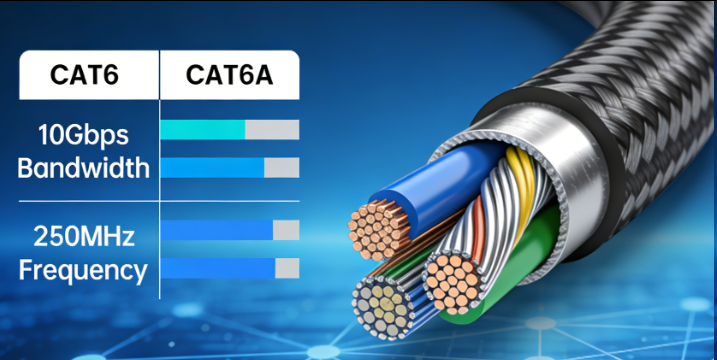
CAT6A Cable Future-Proof Upgrade for High-Demand Networks
Mar 25, 2026205
-
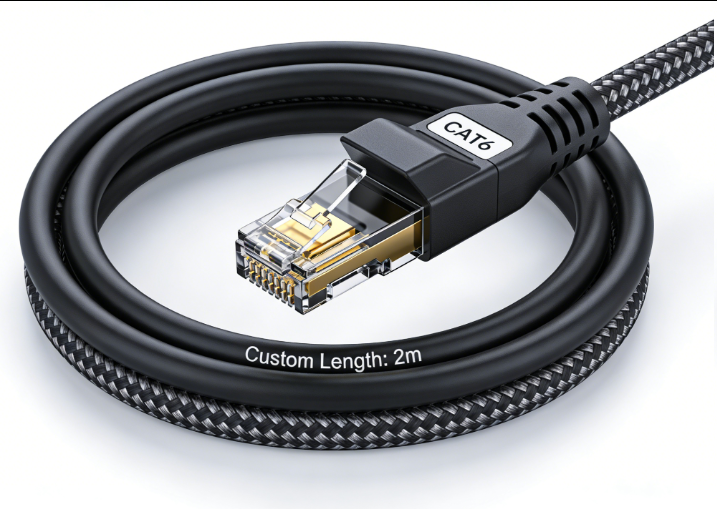
CAT6 Ethernet Custom Cable
Mar 28, 2026201