- Language
cat8 patch leads pass fluke test
Cat8 Patch Leads: Fluke Test Compliance Guide
1. Basic Definitions & Testing Significance
1.1 Core Characteristics of Cat8 Patch Leads
Transmission Specifications: Supports 2GHz bandwidth, maximum transmission rate of 25Gbps (100m) / 40Gbps (30m), compliant with TIA-568.2-D and ISO/IEC 11801-1:2017 standards;
Structural Types: Divided into Cat8.1 (Shielded Twisted Pair, STP) and Cat8.2 (Screened/Foiled Twisted Pair, S/FTP). Patch leads typically adopt S/FTP structure (double shielding with aluminum foil + braided mesh);
Application Scenarios: High-frequency and high-speed transmission scenarios such as data centers, industrial Ethernet, and 5G base stations. Professional testing is required to verify performance compliance.
1.2 Core Value of Fluke Testing
Fluke network testers (e.g., DSX-5000/DSX-1000) are recognized as authoritative cable testing equipment in the industry. Passing Fluke testing indicates that the patch lead meets:
Electrical performance requirements (no signal attenuation, crosstalk, etc.);
Compatibility assurance (compatible with Cat8 network devices);
Long-term reliability (meeting industrial-grade service life requirements).
2. Testing Standards & Core Items
2.1 Applicable Standards
ANSI/TIA-568.2-D: Supports 2GHz bandwidth, 40Gbps transmission (30m), shielding effectiveness ≥85dB; test frequency range 1MHz-2GHz;
ISO/IEC 11801-1:2017: Classified into Class I (Cat8.1) and Class II (Cat8.2), emphasizing crosstalk suppression; test frequency range 1MHz-2GHz;
Fluke DSX-5000: Preloaded with Cat8 test template, automatically matching the above standard thresholds; test frequency range 1MHz-2GHz.
2.2 Mandatory Core Test Items (Key Indicators in Fluke Test Reports)
(1) Electrical Performance Testing
Insertion Loss: Standard requirement (Cat8.2) ≤40.7dB (2GHz); test method: Dual-end measurement method;
Return Loss: Standard requirement (Cat8.2) ≥10dB (2GHz); test method: Time Domain Reflectometry (TDR) technology;
Near-End Crosstalk (NEXT): Standard requirement (Cat8.2) ≥-23.1dB (2GHz); test method: Simultaneous measurement of 4 pairs;
Far-End Crosstalk (FEXT): Standard requirement (Cat8.2) ≥-32.1dB (2GHz); test method: Cross-pair far-end measurement;
Attenuation-to-Crosstalk Ratio (ACR): Standard requirement (Cat8.2) ≥-13.0dB (2GHz); calculation method: NEXT - Insertion Loss;
Equal-Level Far-End Crosstalk (ELFEXT): Standard requirement (Cat8.2) ≥-22.0dB (2GHz); calculation method: FEXT - Insertion Loss;
Propagation Delay: Standard requirement (Cat8.2) ≤548ns/100m (2GHz); test method: Time domain analysis;
Delay Skew: Standard requirement (Cat8.2) ≤50ns (100m); test method: Measurement of time delay difference among 4 pairs.
(2) Shielding Performance Testing
Shield Effectiveness: ≥85dB (1GHz-2GHz), test method compliant with IEC 62153-4-10;
Transfer Impedance: ≤50mΩ/m (2GHz), measured by current injection method.
(3) Physical Connection Testing
Wire Map: Verify that the 8-conductor sequence complies with T568A/T568B standards, with no short circuits/miswiring/reversed connections;
Length Verification: Deviation between actual length and nominal length ≤±1% (Fluke automatically calibrates via TDR).
3. Fluke Testing Operation Process (Taking DSX-5000 as Example)
3.1 Pre-Test Preparation
Equipment Calibration: Perform annual calibration using Fluke calibration kit (e.g., DSX-CAL-KIT) to ensure test accuracy;
Patch Lead Preprocessing:
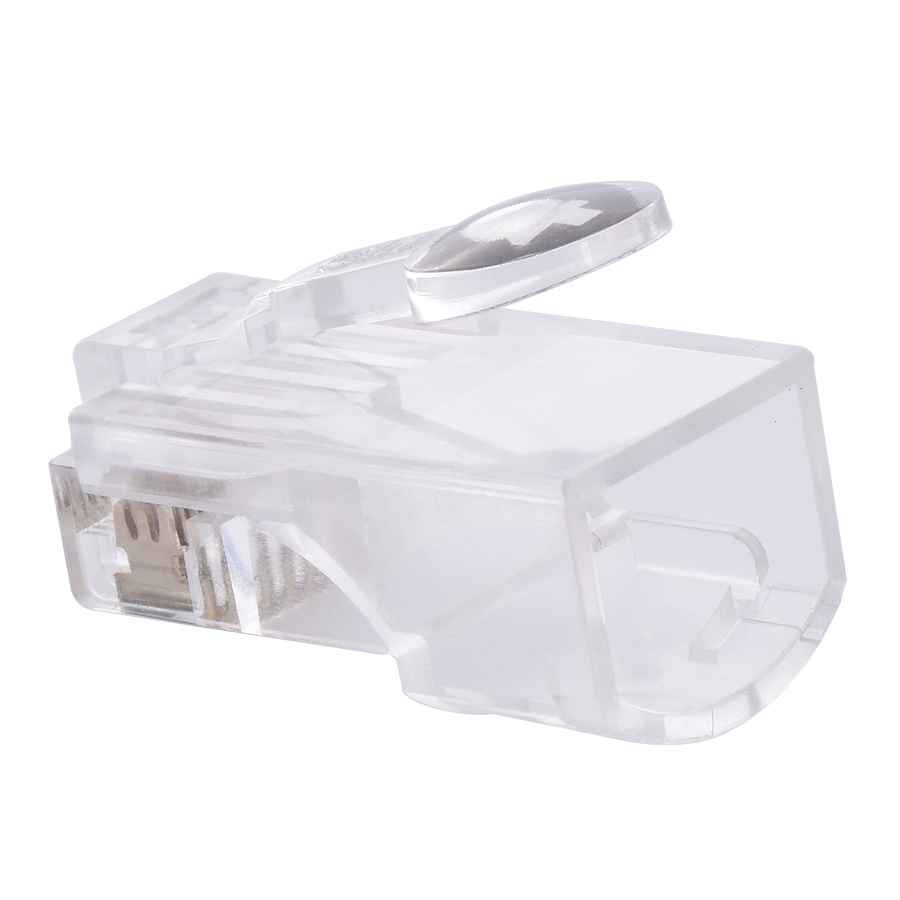
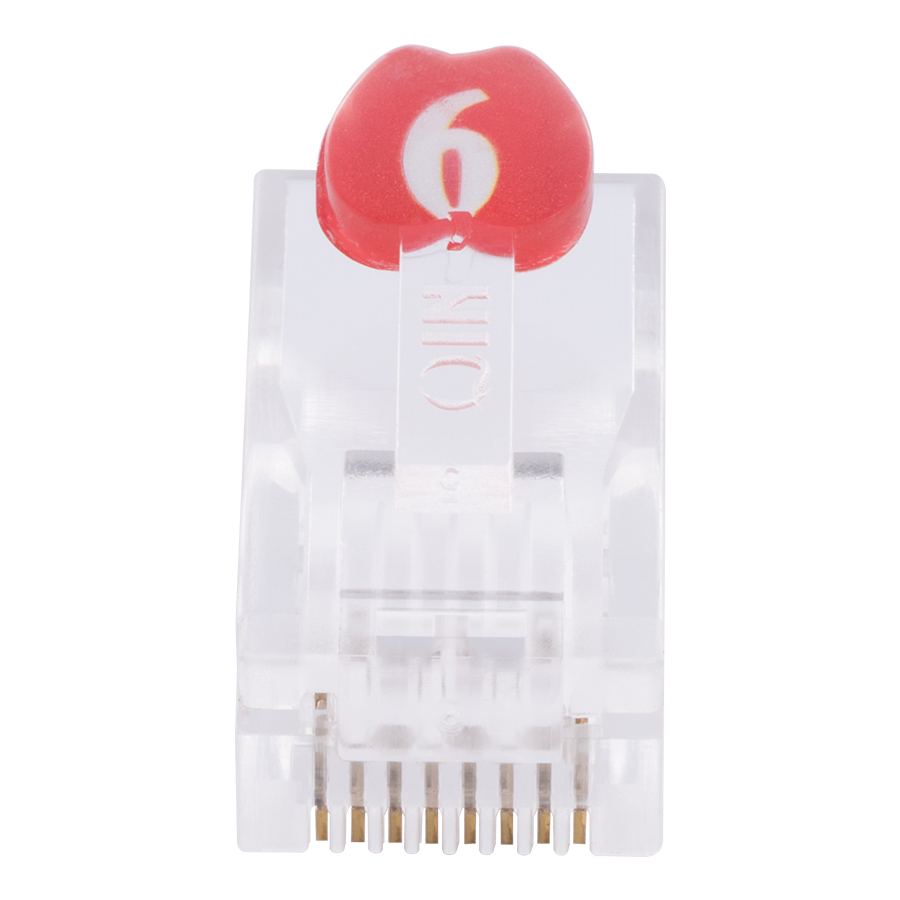
Inspect the integrity of RJ45 connectors at both ends of the patch lead (no loose crimping or damaged shielding layer);
Clean the connector end face (remove dust/oxide layer with Fluke fiber cleaning pen);
Test Template Selection: Select "Cat8/Class II" test template in DSX-5000 and check "Full Test".
3.2 Test Steps
Connect the patch lead: Insert one end of the Cat8 patch lead into the DSX-5000 host port, and the other end into the remote test module (e.g., DSX-REM);
Start testing: Press the "Test" button, and the device automatically performs 2GHz full-band scanning (approximately 90 seconds per cable);
Result Determination:
Green "PASS": All indicators meet standards, generating a compliance report;
Red "FAIL": Display failed items and exceeded values, requiring troubleshooting.
3.3 Test Report Generation
Supports export in PDF/Excel formats. The report includes:
Patch lead model, test date, and equipment serial number;
Comparison between measured values and standard thresholds for all test indicators;
Shield effectiveness curve and insertion loss trend graph;
Test personnel signature field (for project acceptance).
4. Common Test Failure Causes & Solutions
Excessive Insertion Loss:
Typical Causes: 1. Insufficient diameter of cable conductors (standard AWG 22/23); 2. Poor crimping of connectors;
Solutions: 1. Select qualified Cat8 cables (e.g., AWG 22 oxygen-free copper); 2. Re-crimp connectors (using professional Cat8 crimping tools);
Substandard Return Loss:
Typical Causes: 1. Connector impedance mismatch (standard 100Ω±15%); 2. Excessively small cable bending radius (≤8 times cable diameter);
Solutions: 1. Replace compliant RJ45 connectors (e.g., Belden Cat8 dedicated connectors); 2. Straighten the patch lead to avoid excessive bending;
Crosstalk Test Failure:
Typical Causes: 1. Damaged pair twist pitch; 2. Poor grounding of the shielding layer;
Solutions: 1. Avoid excessive stretching/bending of the patch lead; 2. Ensure reliable connection between the shielding layer and the connector shield shell;
Substandard Shield Effectiveness:
Typical Causes: 1. Damaged shielding layer; 2. Poor contact of the connector shield;
Solutions: 1. Replace undamaged patch leads; 2. Select S/FTP double-shielded structure patch leads.
5. Compliance Procurement & Acceptance Key Points
5.1 Supplier Qualification Requirements
Provide third-party test reports (SGS/Intertek) for Cat8 patch leads, including Fluke test data;
Products comply with UL 444 and CE certifications, with the shielding layer made of tinned copper braided mesh (coverage rate ≥95%).
5.2 Sampling Test Specifications
For bulk procurement, sample according to GB/T 2828.1 standard (AQL 1.5), and conduct Fluke full-item testing on at least 3 pieces per batch;
Focus on verifying insertion loss, crosstalk, and shield effectiveness in the 2GHz band to avoid "compliance in low-frequency bands but exceeding standards in high-frequency bands".
6. Recommended Fluke Test Equipment Models
Fluke DSX-5000: Core advantages - Supports 2GHz full-band testing, can store 10,000 reports; applicable scenarios - Data centers/project acceptance;
Fluke DSX-1000: Core advantages - Cost-effective, supports basic Cat8 testing (1MHz-2GHz); applicable scenarios - Daily maintenance/small-scale projects;
Fluke LinkIQ: Core advantages - Portable, quickly detects continuity and basic performance of Cat8 patch leads; applicable scenarios - On-site rapid troubleshooting.
-
-
-
-
-
-
-
-
-
-

Media Converter Network Patch Cord
Jun 27, 2026904
-
Network Cable Bandwidth Capacity
Jul 06, 2026895
-
UY2 Connector for Telephone Wire
Jul 08, 2026892
-
Wall-mounted Network Cabinet
Jun 30, 2026878
-
Four-Port Network Faceplate
Jul 03, 2026875