- Language
china cat7 patch cord price
China Cat7 Patch Cord Price: Technical Foundations and Cost Drivers
China stands as a leading producer of Cat7 patch cords, offering high-performance solutions tailored for demanding network environments. The pricing of these patch cords is deeply rooted in their advanced technical design, premium material selection, and compliance with global standards—reflecting a balance between cutting-edge performance and market competitiveness. Understanding the link between technical attributes and cost helps buyers make informed decisions aligned with their application needs and budget.
Core Technical Specifications Defining Value
Cat7 patch cords adhere to rigorous standards including ISO/IEC 11801 and IEC 61156-5, supporting a bandwidth of 600 MHz and stable 10 Gbps transmission over 100 meters. Laboratory tests confirm potential for 40 Gbps at 50 meters and 100 Gbps at 15 meters, making them future-proof for next-generation networks.
The defining technical feature driving cost is the S/FTP (Shielded Foiled Twisted Pair) structure—each of the four wire pairs is individually wrapped in aluminum foil, with an additional overall braided shield (typically tinned copper). This dual shielding eliminates electromagnetic interference (EMI) and radio frequency interference (RFI), critical for industrial settings and data centers but increasing production complexity.
Conductor materials further impact pricing: high-purity oxygen-free copper (OFC) is standard for optimal conductivity and low signal attenuation, while conductor gauge ranges from 22 to 26 AWG—thicker 22/23 AWG conductors offer superior performance but higher material costs. Terminations feature 50μ" or thicker gold-plated contacts to ensure corrosion resistance and reliable connectivity over 750+ plug-in cycles.
Key Factors Influencing Pricing
Material Quality and Shielding Complexity
Raw material costs form a significant portion of the price. The dual-shielding system (foil + braid) requires more precise manufacturing and higher-grade materials than Cat6 alternatives. Flame-retardant jackets—available in PVC CM, LSZH, or FRLSOH—add cost, with environmentally friendly RoHS-compliant materials commanding a slight premium for low-toxin formulations.
Conductor quality is non-negotiable: OFC conductors, essential for meeting Cat7’s transmission specs, are more expensive than copper-clad aluminum (CCA) used in lower-category cords. The drain wire (tinned copper) integrated into the shielding system for grounding also contributes to material costs.
Certification and Quality Control
Compliance with international certifications (UL, CE, ETL) involves rigorous testing for crosstalk, return loss, and coupling attenuation. Products passing 100% Fluke testing—verifying parameters like NEXT, PSNEXT, and ACR-F—are priced higher due to the additional quality assurance step. Manufacturers investing in ISO 9001 quality management systems also reflect these costs in their pricing.
Production and Customization
Cat7’s complex structure demands advanced production equipment for precise wire twisting, uniform shielding application, and consistent insulation thickness. Tool-less termination compatibility, while convenient, adds engineering costs.
Customization options increase prices: non-standard lengths (beyond common 1m-10m), specialized jacket colors, plenum-rated (CMP) sheaths for air-handling spaces, or PoE++ compatibility (supporting IEEE 802.3af/at/bt) all require tailored production processes. Standard lengths benefit from mass production economies, offering more competitive pricing.
Order Volume and Market Dynamics
Bulk orders (500+ units) leverage economies of scale, with per-unit prices decreasing by 15-30% compared to small batches. Manufacturers with integrated production facilities—from conductor drawing to final assembly—reduce supply chain margins, offering more competitive pricing.
Market factors include regional demand fluctuations (peak seasons for data center upgrades or industrial projects) and logistics costs for raw material sourcing and finished product delivery. Export-compliant packaging and documentation for international markets may add modest cost adjustments.
Application-Specific Pricing Alignment
Pricing correlates directly with intended use:
Data centers and enterprise networks: Premium-priced models with 22/23 AWG OFC conductors, LSZH jackets, and 50μ" gold plating justify costs with ultra-low latency and 24/7 reliability.
Industrial environments: Cords with rugged LSZH jackets and enhanced shielding (resistant to -20°C to 75°C operating temperatures) command higher prices for durability in harsh conditions.
High-end residential or small offices: Entry-level Cat7 cords with 26 AWG OFC and PVC jackets offer cost-effective performance for 4K streaming, VR gaming, or smart home hubs—without overinvesting in industrial-grade shielding.
Specialized scenarios: Cat7a variants (extending bandwidth to 1000 MHz) are priced 20-30% higher, targeting 40 Gbps data center interconnects.
Cost-Optimization Tips for Buyers
Prioritize shielding based on environment: Avoid overpaying for S/FTP in low-interference spaces; reserve dual shielding for industrial or high-density data center use.
Verify certification documents to ensure compliance—avoid premium pricing for unsubstantiated "Cat7" claims from non-certified manufacturers.
Opt for standard lengths (1m, 2m, 5m) and bulk orders to reduce per-unit costs. Flexible MOQs (minimum order quantities) from Chinese manufacturers accommodate smaller projects cost-effectively.
Inspect critical components: Look for uniform gold plating on connectors, clear standard markings (Cat7, bandwidth, jacket type), and consistent shielding coverage—substandard materials lead to premature failure and higher long-term costs.
In summary, China’s Cat7 patch cord pricing reflects the advanced engineering required for ultra-high bandwidth and interference immunity. While more expensive than Cat6 alternatives, their cost is justified by dual shielding, premium conductors, and future-proof performance. The competitive manufacturing landscape in China offers a range of options—from cost-effective standard models to specialized industrial-grade solutions—catering to diverse network demands.
-
-
-
-
-
-
-
-
-
-
Flange Type Fixed Fiber Optic Adapter for Rack Panel
Sep 19, 2026955
-
Fiber Pigtail 12 Cores SC UPC Single Mode
Sep 04, 2026930
-
12 Port Cat6 Patch Panel Small Cabinet
Sep 12, 2026929
-
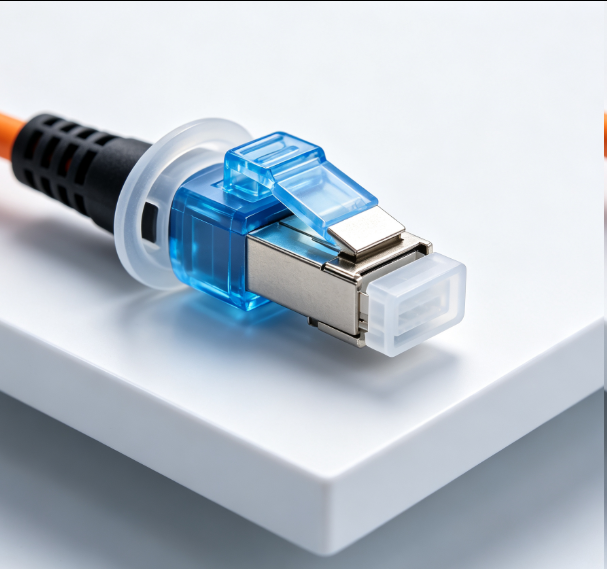
Dust Cap Equipped Fiber Patch Cable Protective
Sep 03, 2026929
-
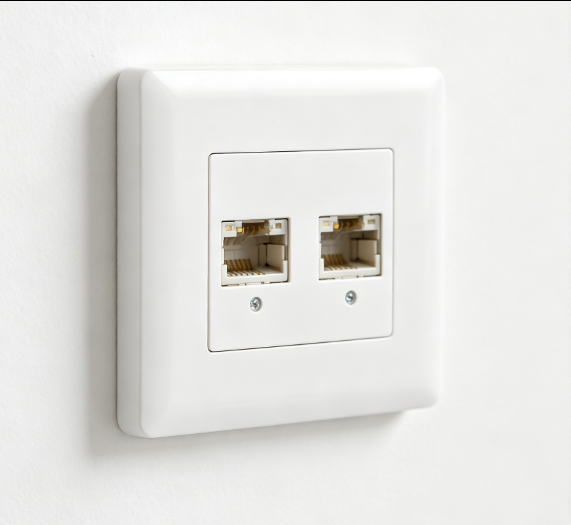
EU Standard Network Faceplate
Sep 11, 2026927